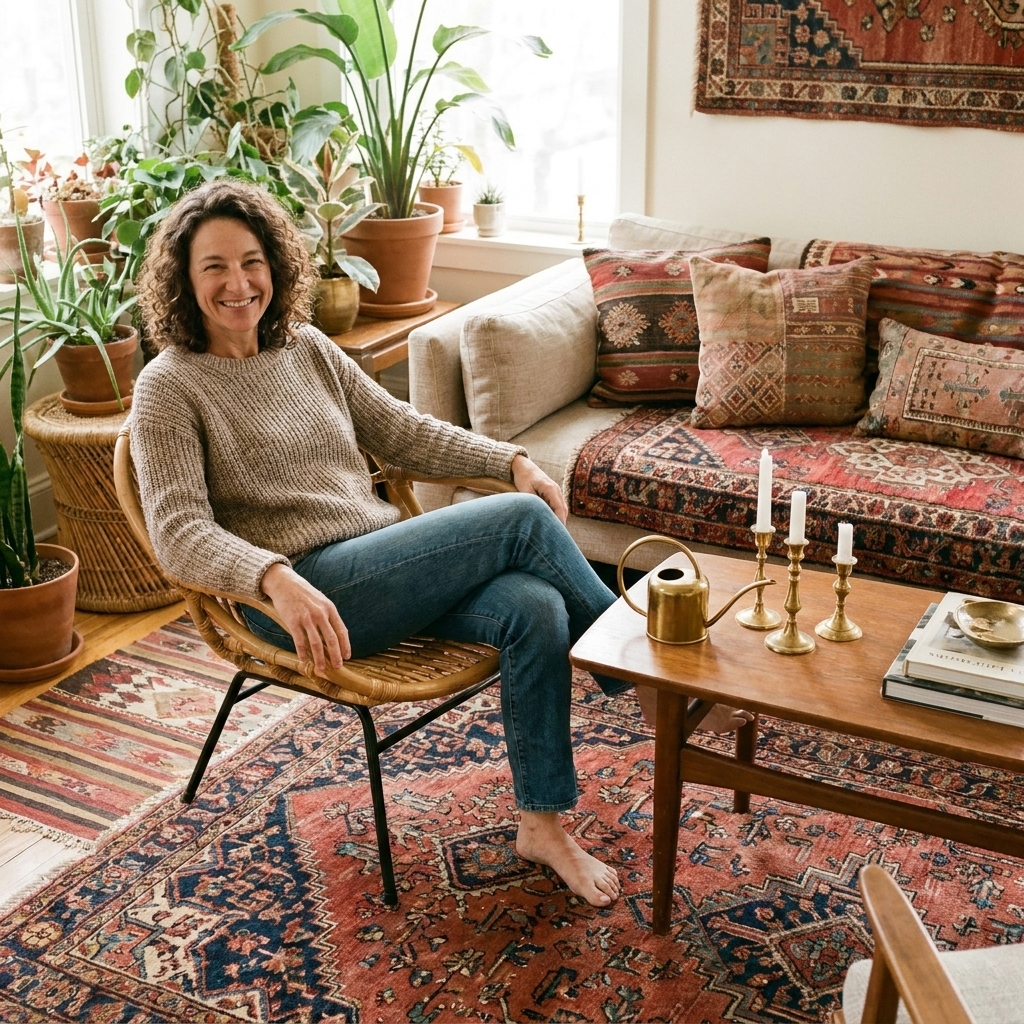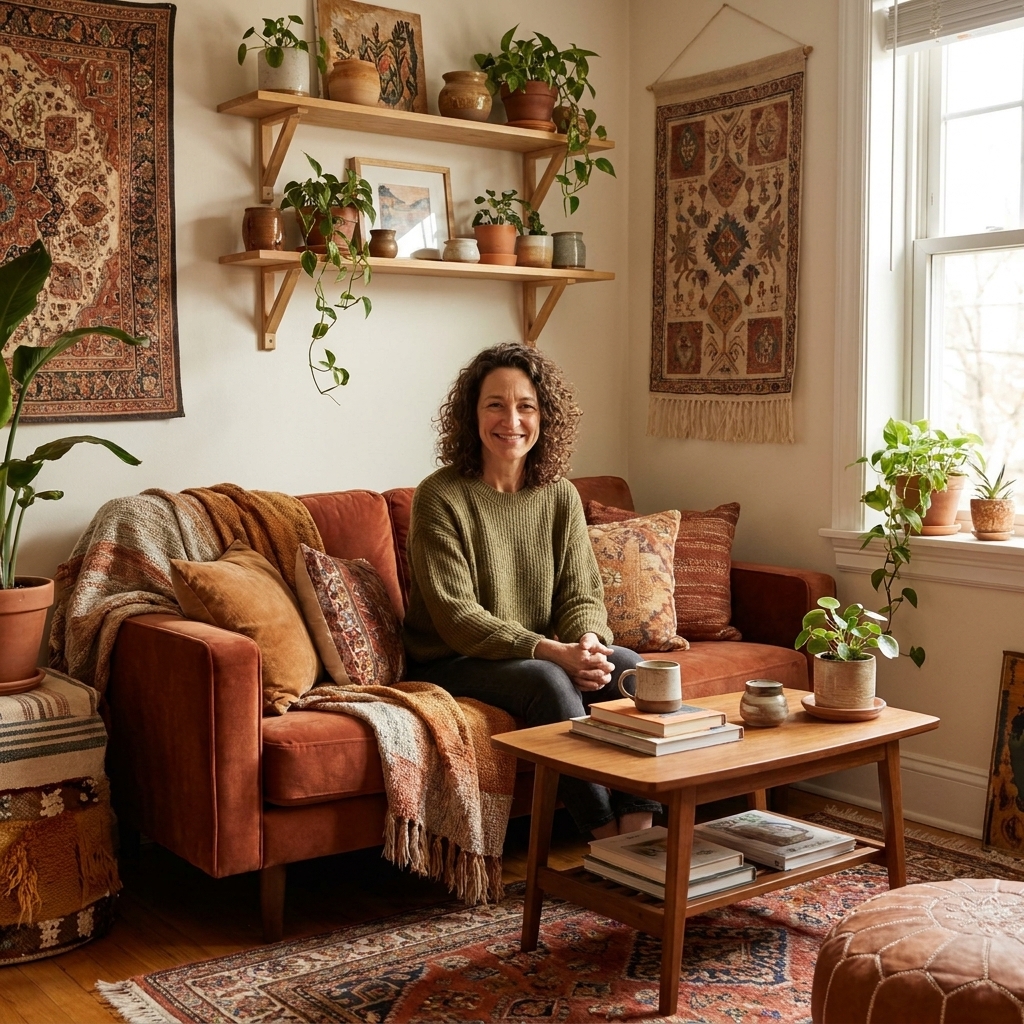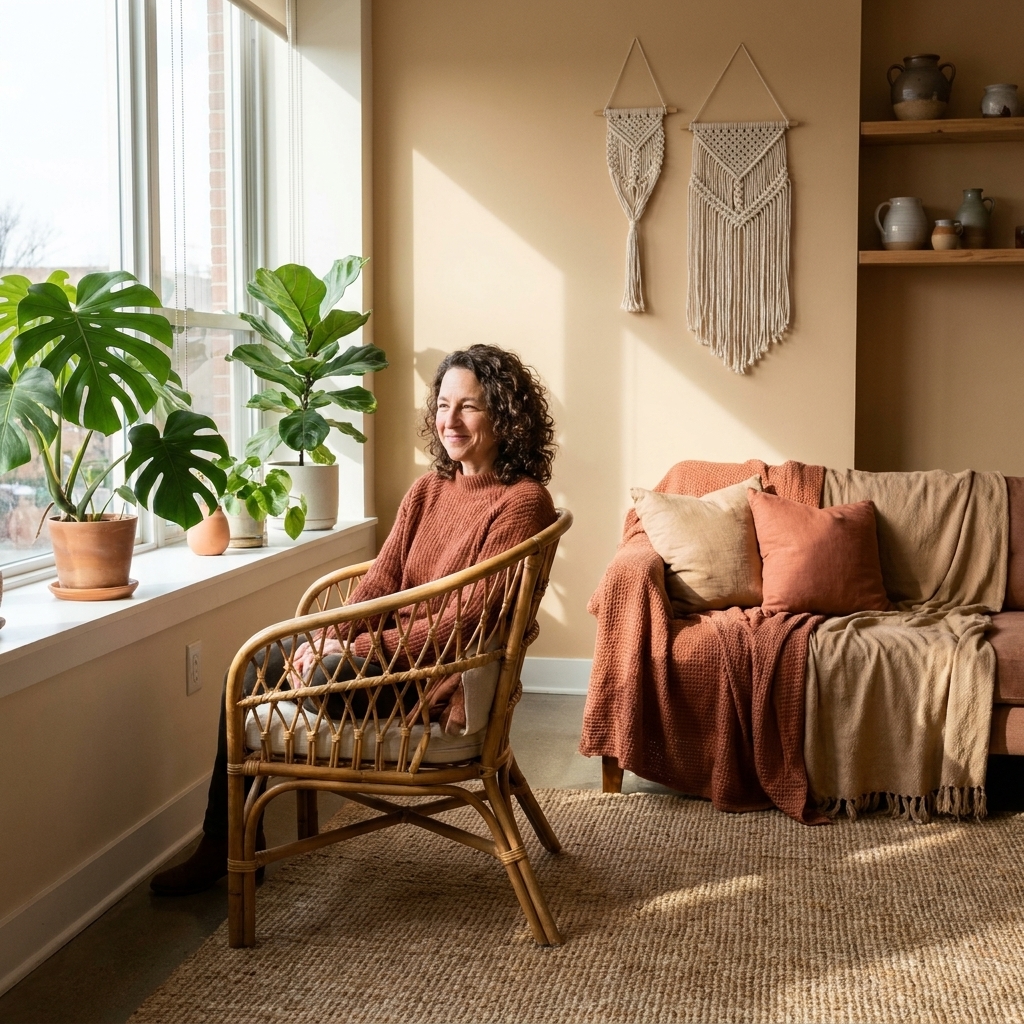

The fastest way I know to make a room feel collected and cozy (even if the furniture is basic rental beige) is a layered rug moment: a simple jute base with a vintage rug on top. It is that sweet spot between grounded and lived-in, like your space has stories even if you moved in two months ago.
I learned this trick the hard way after dragging home a too-small vintage rug that I loved with my whole heart and then realizing it looked like a lonely postage stamp in my living room. Jute saved it. If you want that boho foundation that looks effortless but still feels intentional, here are the exact formulas I use.
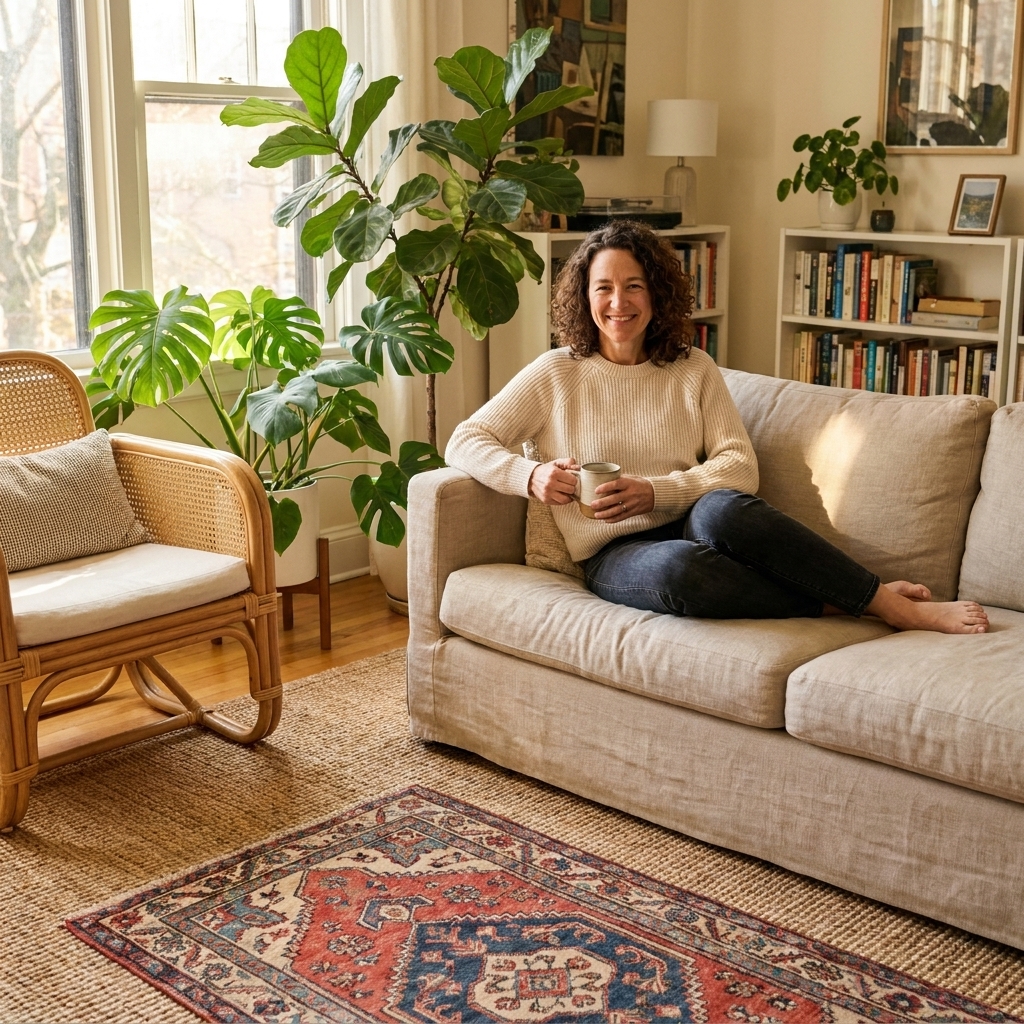
The basic formula
Think of it like an outfit. Jute is the neutral base layer. The top rug is the statement piece.
- Bottom rug (jute): big enough to anchor the whole seating zone.
- Top rug (vintage): centered where your eyes land most, usually under the coffee table and front legs of the sofa.
If you are already into mixing texture with natural materials, this fits right in with my favorite approach to building warmth through fibers and finishes. You can get more of that vibe in Textiles and Natural Elements.
Size rules that help
This is the part that fixes the postage stamp problem in most rooms.
Rule 1: Let the jute define the zone
Pick the jute size based on the furniture, not based on the top rug you own.
- Living room: jute should sit under at least the front legs of your sofa and chairs. If you can get all legs on, even better.
- Bedroom: jute should extend past the sides of the bed so you land on something soft when you get up.
- Dining: ideally, the rug extends far enough that chairs stay on it when pulled out. If you want a quick benchmark, about 24 inches beyond the table edge on each side is a common target. If that is not realistic for your space, I skip the layer and use one easy-clean rug.
Rule 2: Show a border
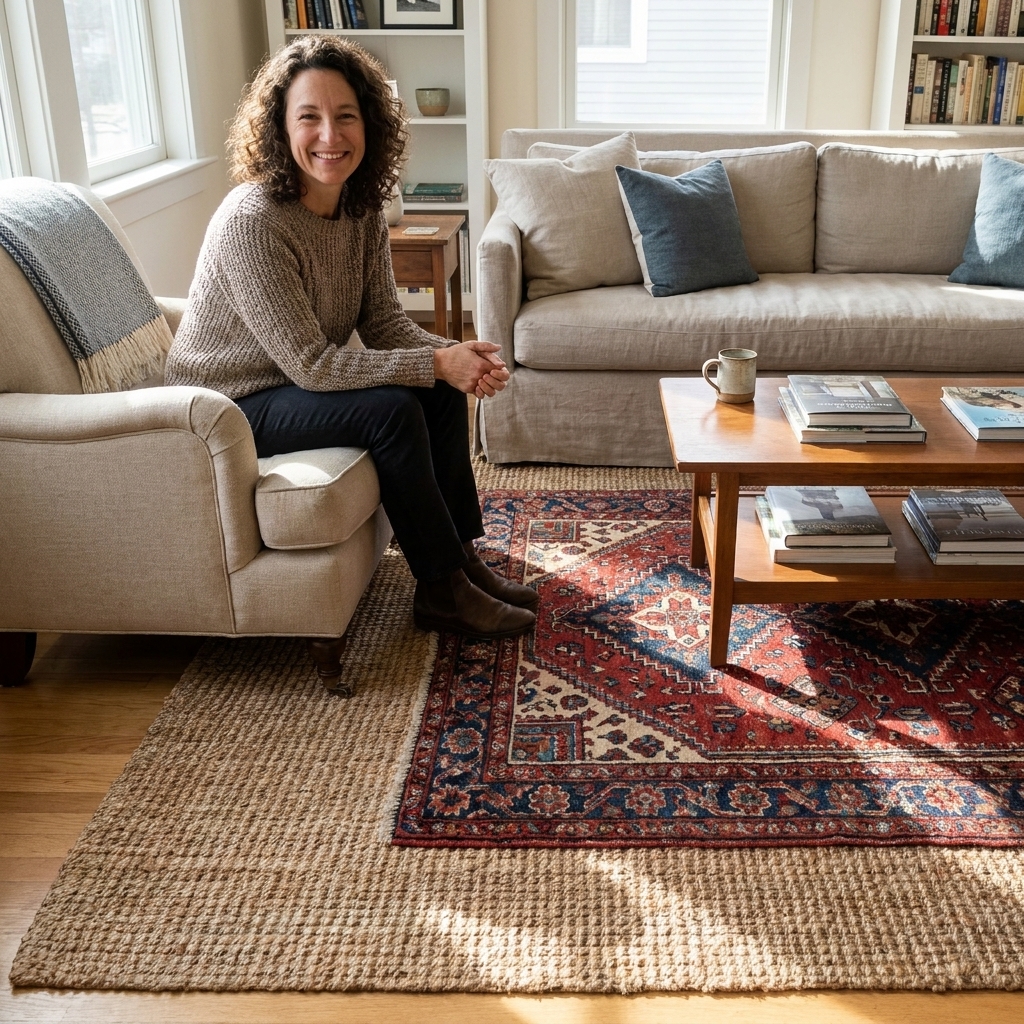
I like the top rug to reveal a clear frame of jute around it. A styling range that tends to look balanced is 6 to 18 inches of border on all sides, but in tiny rooms I keep it closer to the smaller end so it does not eat up your walking space.
Rule 3: One step down in scale
If you are shopping from scratch, my rule of thumb is to choose a top rug that is roughly two-thirds the width of the jute. It does not have to be perfect. You just want it to look intentional, not accidental.
Placement shortcuts
I have tried the “perfectly centered” look, and I still usually end up nudging the top rug a little. Here are the placements that look styled without trying too hard.
If you are choosing between centering under the coffee table and aligning to the sofa, I prioritize the sofa line. When the front legs of the sofa feel anchored, the whole room reads calmer, even if the coffee table is slightly off-center.
Living room
- Classic: center the top rug under the coffee table, with the front sofa legs on it.
- Cozy: pull the top rug slightly closer to the sofa so it hugs the seating. This makes the conversation area feel tighter and more inviting.
- Asymmetrical: offset the top rug toward a fireplace or main focal wall. This is great when the room is not a perfect rectangle.
Bedroom
- Centered runner vibe: place a vintage runner on top, aligned with the bed, leaving the jute visible on both sides.
- Side layer: if you only have a small vintage rug, layer it on the side you step out of bed most. It looks intentional when paired with a bedside lamp and a stool or basket.
Color and pattern mixing
Layering is basically permission to mix patterns, but it is easiest when you follow one simple rule: repeat something on purpose.
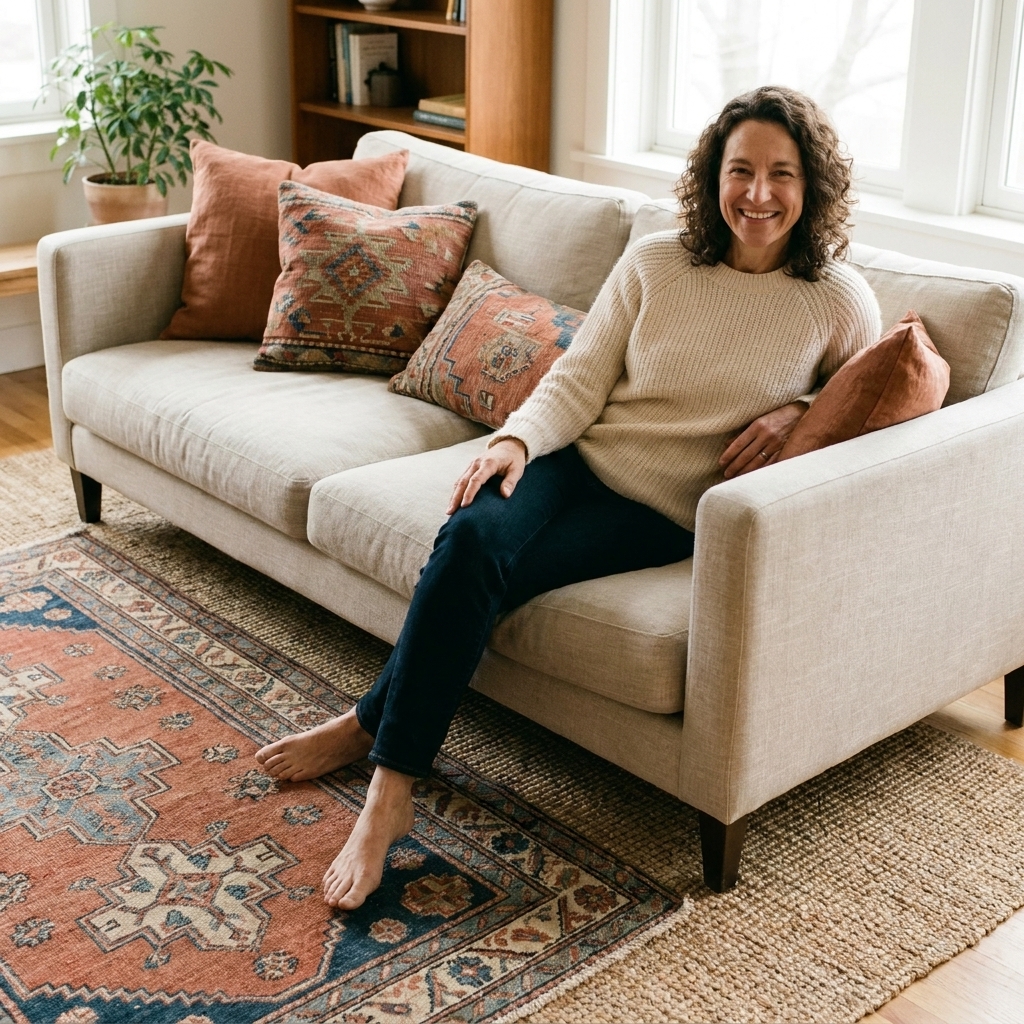
- Repeat a color: pull one shade from the top rug into a pillow, throw, or art.
- Repeat a motif: geometric rug with geometric cushions, floral rug with curved ceramics, and so on.
- Let jute be the quiet part: jute is your reset button. If the top rug is loud, keep surrounding textiles calmer for balance.
If you want more help combining prints without it turning into visual noise, I wrote a whole guide on it in How to Mix Bold Patterns Without Clashing.
Pads and stopping slip
Layering looks effortless right up until someone walks across the room and the top rug skates away. The fix is unglamorous but necessary.
- Under the jute: use a rug pad sized for the jute to keep the whole base from shifting and to soften it underfoot.
- Between the rugs: add a thin non-slip layer under the top rug so it stays put on the jute texture. I usually look for something low-profile like a felt-and-rubber style pad, a thin waffle grip, or a removable rug tape made for floors.
- Furniture helps: anchoring the top rug under the coffee table or front legs of a sofa makes a bigger difference than you think.
If you are renting and worried about residue, choose non-slip options intended for hard floors and test a small corner first.
Hard floors vs carpet
This is where “rules” get a little flexible.
- Hardwood or tile: prioritize grip. A good pad under the jute plus a thin grippy layer under the top rug keeps everything from drifting. If your jute is scratchy underneath, a pad helps protect the floor too.
- Wall-to-wall carpet: layering can work, but it can also bunch and feel lumpy, especially if your carpet pile is plush. In that case, I skip the thick pad and use a thinner option, then rely more on furniture weight to anchor the layer.
Fixes for curling and lumps
Vintage rugs can be moody. Here is what I do before I declare a rug “impossible.”
Curling corners
- Rotate the rug and let it relax for a day or two.
- Place a heavy book or a flat furniture leg on the corner overnight.
- If it is a persistent curl, a rug corner gripper often solves it, but some fibers just need a little time and pressure.
Uneven layers
- Trim the bulk: if your jute pad is very thick, swap to a thinner pad so the top rug does not feel like it is perched.
- Smooth the direction: jute has a grain and sometimes a top rug catches on it. A thin non-slip layer between helps.
- Accept a little texture: part of the charm is that it is not showroom-flat. You want cozy, not sterile.
Care and maintenance
Layered rugs are low drama once you know what to avoid.
- Jute basics: shedding at first is normal. Vacuum gently and skip aggressive beater bars if they pull at the fibers. Jute and water are not best friends, so I avoid wet shampooing and spot clean with a barely damp cloth when I can.
- Top rug basics: rotate it occasionally so wear and sun fade stay even. For spills, blot first and keep the water minimal, especially if the rug is vintage and the dyes are prone to bleeding.
- Sand and grit: this is what eats rugs over time. A quick vacuum pass in high-traffic seasons makes a bigger difference than deep-cleaning once a year.
Common mistakes
- Too much thickness: a thick pad plus a thick jute plus a thick top rug can create a tripping edge. When in doubt, go thinner.
- Door swing drama: if a door catches the top rug corner every day, it will never look tidy. Either scoot the layer back or choose a flatter top rug.
- Not enough anchoring: if nothing heavy touches the top rug, it will wander. Even one coffee table leg can change everything.
Three go-to combos
These are the combinations I come back to when I want it to look collected fast.
Combo 1: Neutral jute + faded red or rust rug
This is my favorite “instant warmth” move. Rust, brick, and wine tones make beige furniture look richer.
Combo 2: Chunky jute + blue vintage rug
Blue reads calm, even when the pattern is busy. It is especially good in sunny rooms where jute can look extra golden.
Combo 3: Oval jute + small patterned rug
An oval jute rug softens boxy layouts and makes a smaller top rug feel like a choice, not a compromise.
Thrifting tips for the top rug
If you are hunting for that perfect vintage layer, I shop with a tape measure and a little flexibility.
- Buy the pattern, solve the size later: if you love it, you can usually make it work by scaling the jute correctly.
- Check thickness: very thick pile on top of rough jute can feel uneven. Flatweaves and low pile tend to layer best.
- Inspect edges: minor fringe wear is fine, but look for major unraveling at the corners.
I also keep a running list of where I find the best deals in Budget Boho Thrifting.
My quick checklist
- Jute is sized to the furniture, not to the top rug.
- You can see a clear jute border around the top rug.
- The top rug is anchored by at least one heavy piece (coffee table, sofa leg, or both).
- Colors repeat somewhere else in the room.
- Nothing slides when you walk through.
Once you get your first layered set right, you will start seeing opportunities everywhere. It is one of those small styling moves that makes a room feel like you have lived there longer, in the best way.