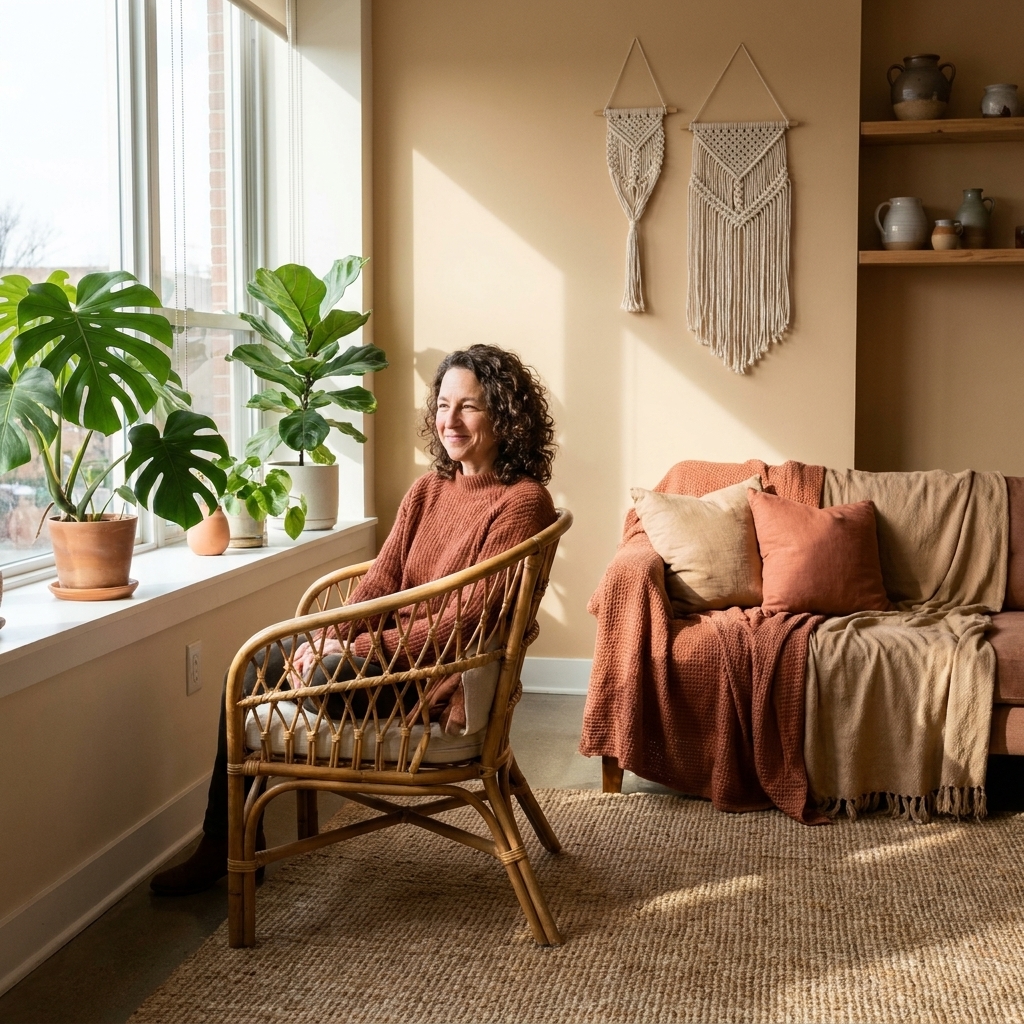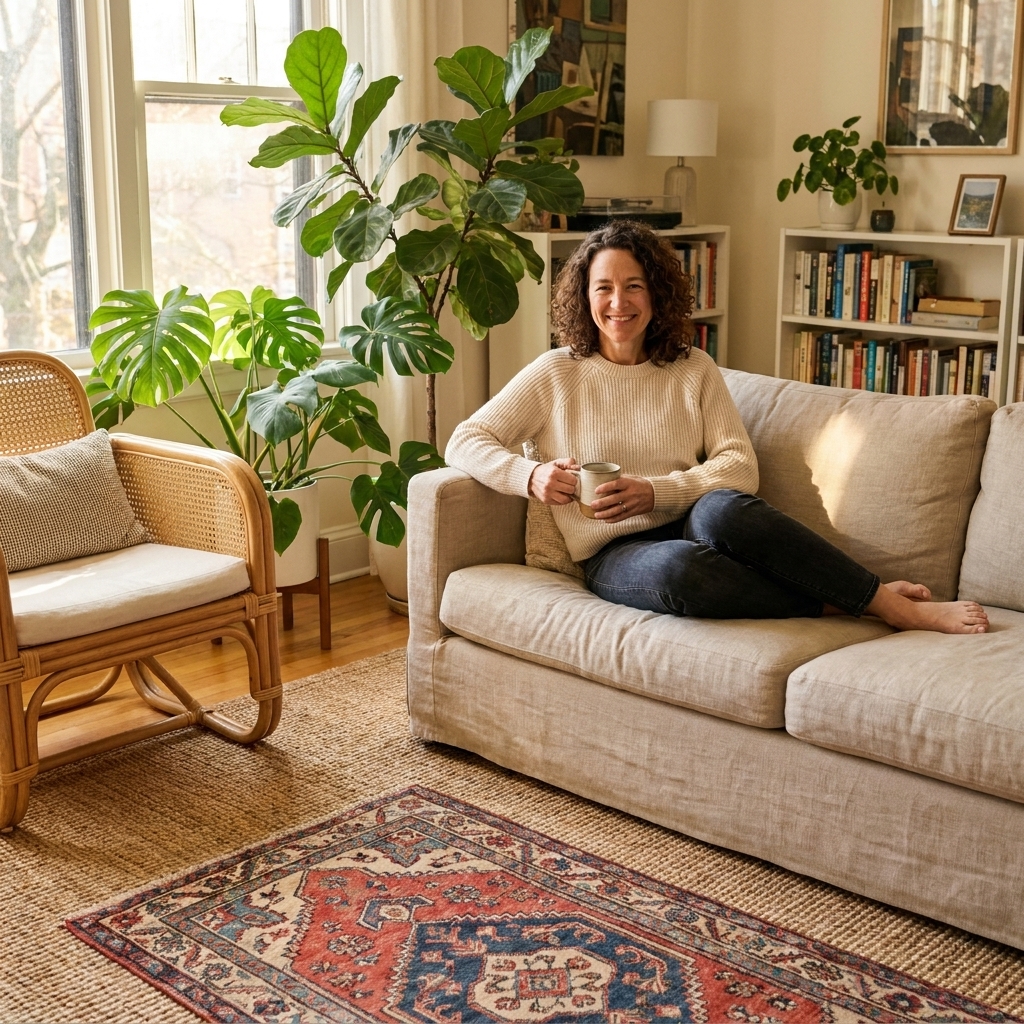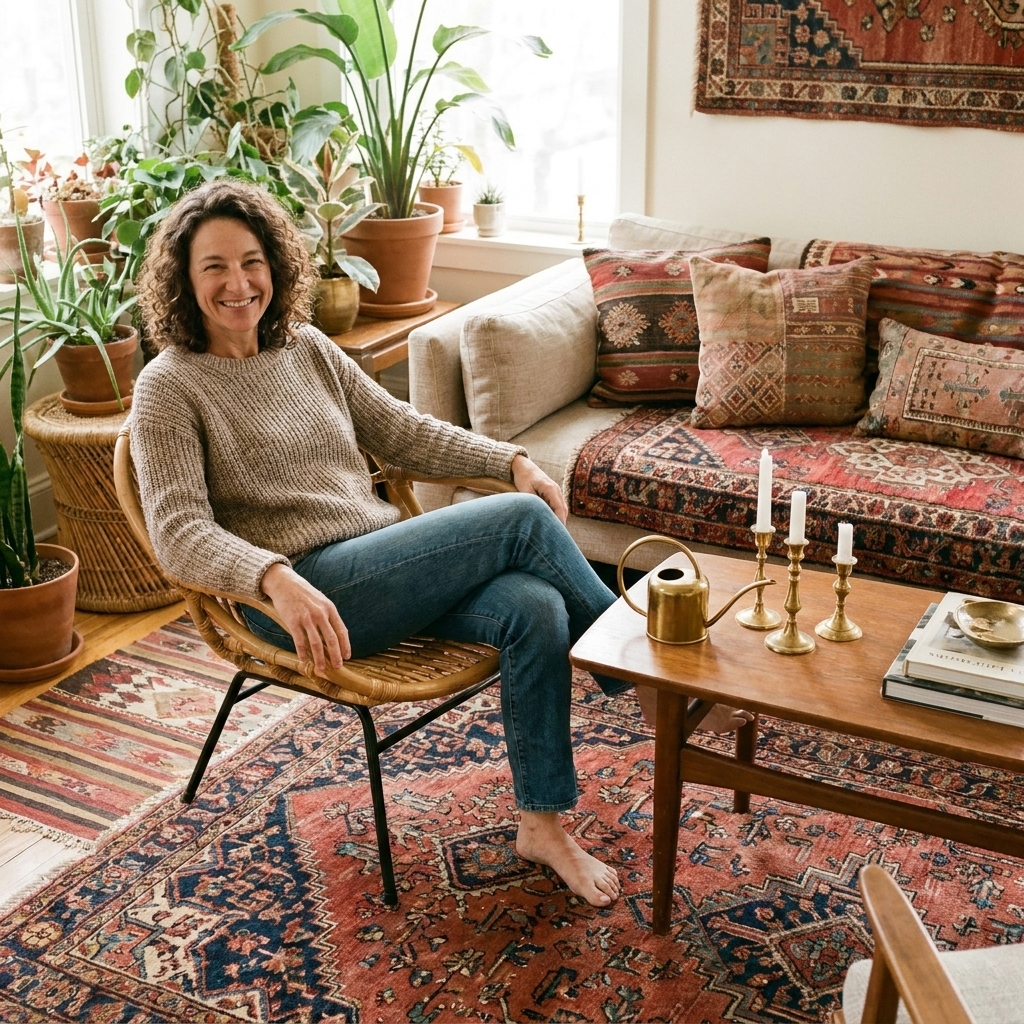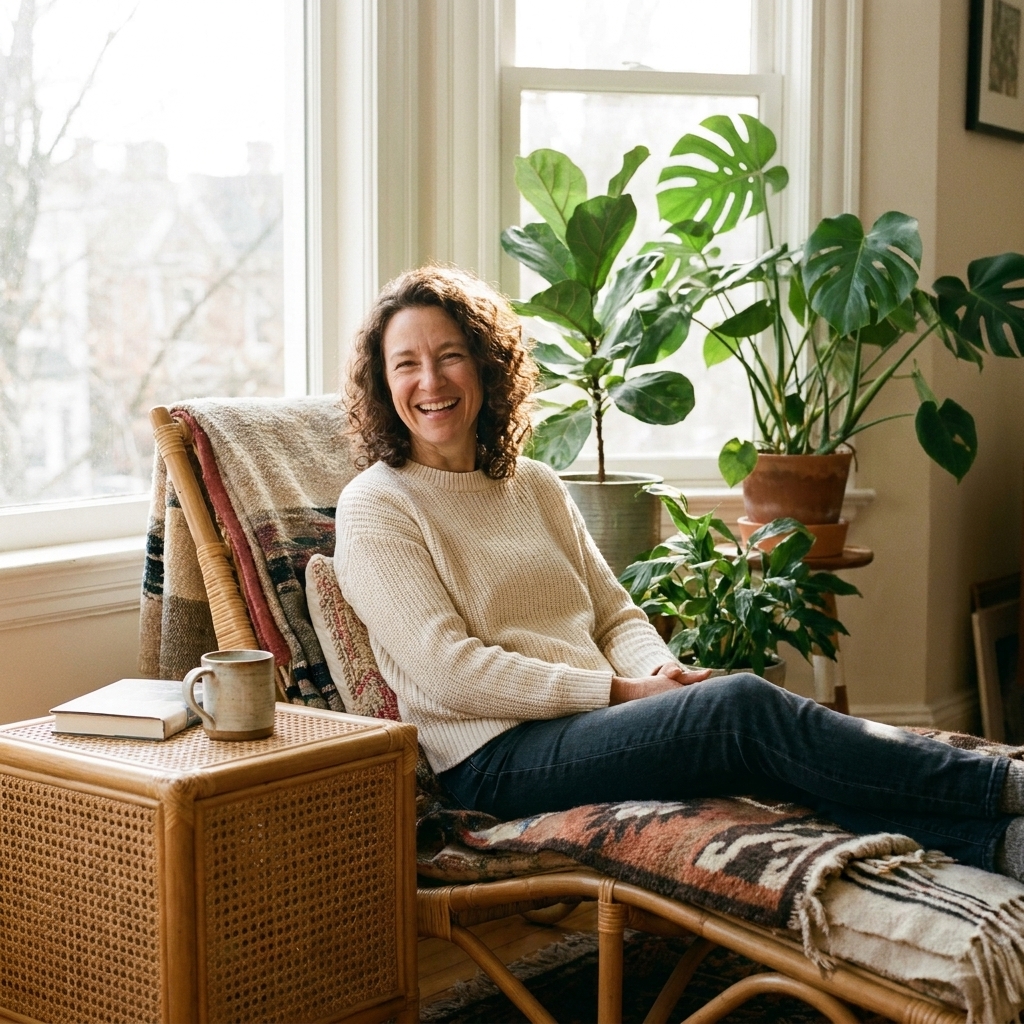

The fastest way to make an eclectic room feel collected is to layer patterns. The fastest way to make it feel chaotic is to layer patterns with no game plan.
I learned this the hard way in my first rental apartment when I proudly combined a thrifted kilim rug, a floral duvet, and a striped curtain panel I “temporarily” hung with clip rings. In my head it was global, artsy, and carefree. In real life it looked like three different rooms arguing.
The good news is that mixing bold prints is not some mysterious designer talent. It is a handful of repeatable choices: color, scale, and breathing room. Here is the exact step-by-step approach I use now to get that layered, soulful look without the visual clash.
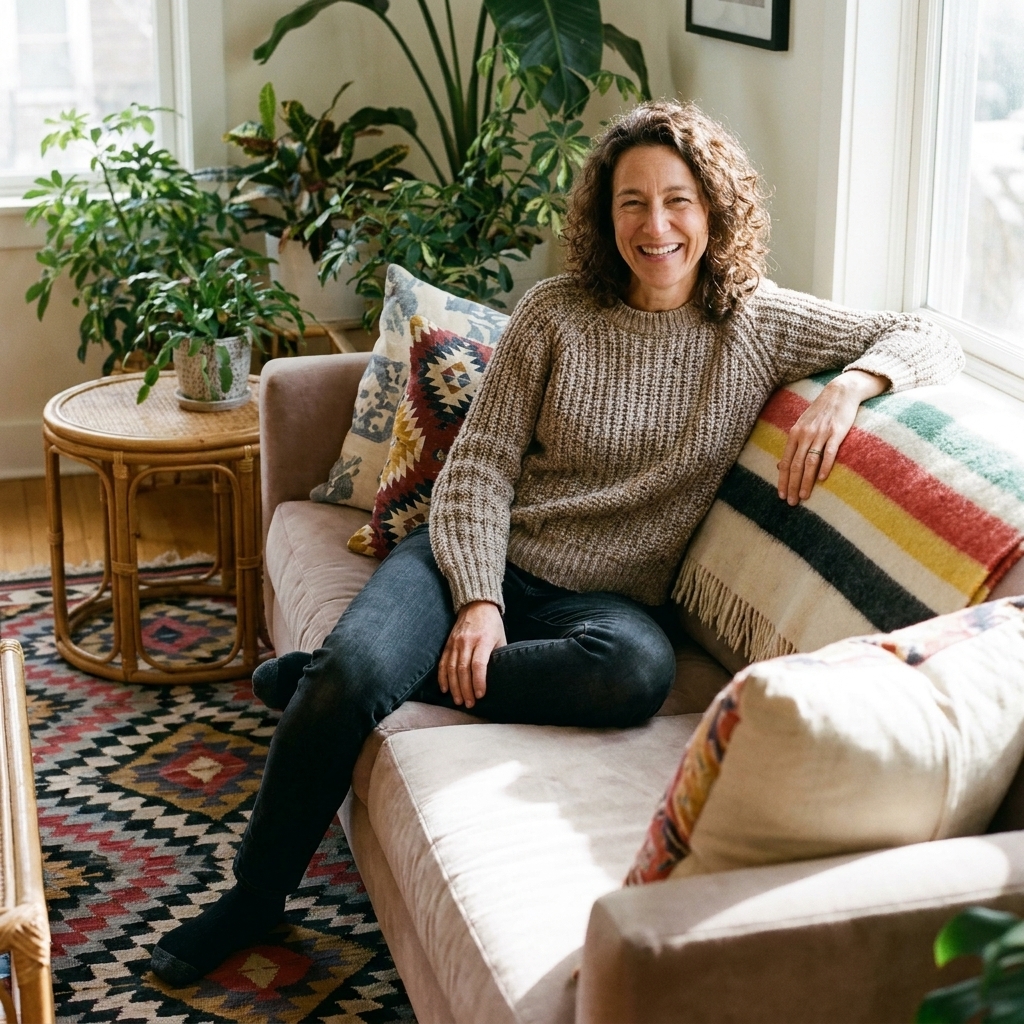
The 3 pattern pillars
1) Color: share something
Patterns usually stop fighting when they share at least one common color. It can be a main color (like rust) or a quiet supporting color (like warm cream).
- Easy rule: pick 2 to 4 colors and let them repeat around the room.
- My go-to palette for boho spaces: warm neutral + one earthy color (terracotta, olive, indigo) + one accent (mustard, blush, teal).
2) Scale: mix big, medium, small
Scale is the secret sauce. If every pattern is medium-sized, the room can start to feel busy because your eye has nowhere to land.
- Large-scale pattern: the “headline” (rug, curtains, or a big duvet print).
- Medium-scale pattern: the “supporting actor” (armchair upholstery, blanket, or a standout pillow).
- Small-scale pattern: the “texture” layer (tiny florals, dots, subtle geometrics).
3) Breathing room: add pauses
Bold pattern mixing works best when you intentionally add calm spaces. That calm can be solid color, but it can also be texture like linen, boucle, jute, rattan, or matte pottery.
If you want more ideas for those grounding materials, I keep a whole running list of favorites in Textiles & Natural Elements.
My no-clash method
Step 1: Choose an anchor
Pick the pattern that sets the tone for the whole room. In eclectic decor, this is usually one of these:
- A vintage or kilim-style rug
- A bold curtain print
- A duvet or quilt with major personality
- A statement chair or sofa fabric
Tip from my thrifting brain: let the best secondhand find win. If you scored a rug you love, build around that and stop trying to force a different star.

Step 2: Pull a mini palette
Look closely at your anchor piece and name what you see. Not the fancy names. The real ones: cream, rust, ink blue, olive, black.
Then use that palette like a filter when you add anything new. If the new pattern has at least one or two of those colors, you are already halfway to cohesive.
Step 3: Add contrast in scale
If your anchor is large and bold, your second pattern should be smaller or more regular (think stripe, grid, or a simpler repeat). If your anchor is busy with lots of colors, choose a second pattern with fewer colors or lower contrast.
- Busy rug + simple stripe throw
- Big floral duvet + tiny geometric pillow
- Graphic black and white print + warm earthy ikat
Step 4: Add a bridge pattern
This is the pattern that makes everything look intentional. The bridge pattern borrows something from each of the first two patterns, like:
- Color from the anchor + scale from the second
- Motif vibe (global geometric, folk floral) without matching exactly
- A shared outline color (like navy or chocolate) that repeats
One concrete example: if your rug has bold diamonds and your throw is a simple stripe, a small diamond print pillow in one of the rug colors can echo the geometry without copying it.
When people say “it looks curated,” they usually mean the bridge pattern did its job.
Step 5: Ground with texture and solids
Now add your exhale. This is where the room turns cozy instead of loud.
- Solid linen or cotton pillowcases
- A chunky knit throw
- Woven baskets, rattan, or cane
- Wood tones that repeat across the room
- Plants (yes, plants are a visual softener)
If you want to lean into that calming, lush layer, you will probably like The Indoor Jungle section.
Bonus: the 60-second test
When I cannot tell if something clashes, I do a quick phone check. Take a photo of the setup, then switch it to black-and-white. If one pattern turns into a dark blob while everything else looks pale and whispery, your contrast levels are mismatched. Fix it by adding one more mid-tone (a pillow, throw, or art) that bridges the gap.
Pattern pairings that work
If you are staring at two patterns and feeling unsure, try one of these classic eclectic combos:
- Stripe + floral: timeless, especially when the stripe is in a neutral.
- Geometric + organic: think ikat with leafy botanicals, or a tribal motif with a soft watercolor floral.
- Check + print: gingham or plaid reads structured and makes bolder prints feel “styled.”
- Block print + vintage rug: both feel artisan-made and collected.
- Animal print + almost anything: leopard often works like a neutral in eclectic rooms if you keep the scale moderate.
If you are mixing strong “global” motifs, I like to keep it from feeling themed by letting one cultural pattern be the star, then using simpler companions (stripes, small geometrics, solids, and lots of natural texture) to support it.
Mix patterns by room
Living room: rug, then pillows
Living rooms can get visually busy fast, so I like this order:
- Anchor: rug (patterned or textured neutral)
- Second: throw blanket (stripe or simple global motif)
- Third: two to four pillows (mix scales, keep a shared color)
- Breathing room: solid sofa, or at least solid slipcover tones
For more budget-friendly ways to build that layered look, I share my thrift-first approach in Budget Boho & Thrifting.
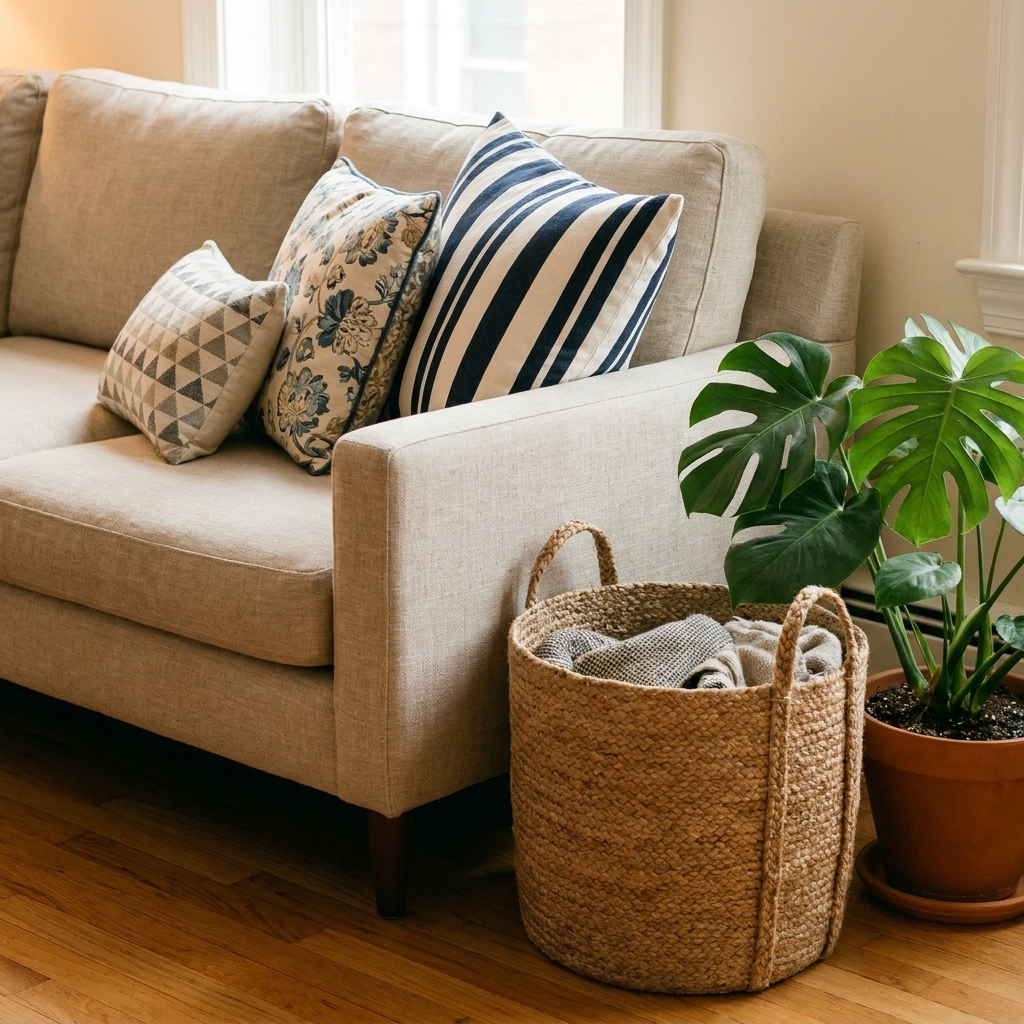
Bedroom: keep patterns on the bed
Bedrooms feel best when pattern is concentrated. My favorite formula:
- Patterned quilt or duvet
- Second pattern in pillows (different scale than the duvet)
- Third pattern in one throw or one lumbar pillow
- Solid sheets to calm it down
If your walls are loud (gallery wall, bold paint), reduce bed patterns by one step. Let the room have one main storyline.
Dining nook: let chairs shine
If you love patterned fabric but fear commitment, dining chairs are a sweet spot. You can:
- Do patterned seat cushions and keep the table simple
- Mix chair patterns, but unify them with one shared color and similar chair frames
- Add one more pattern through a runner, then stop there
Common mistakes and fixes
Mistake: same intensity everywhere
Fix: add a “quiet” pattern, like a thin stripe, subtle pin dot, or tone-on-tone print.
Mistake: too many focal points
Fix: choose one star. If the rug is loud, keep curtains calmer. If curtains are loud, let the rug be more grounded.
Mistake: patterns feel from different homes
Fix: unify with material and finish. Repeating natural textures (wood, rattan, linen, clay) makes mixed patterns feel like part of the same story.
Mistake: six patterns, zero solids
Fix: swap one or two patterned pieces for solids in your palette. Even one solid pillow can calm down a whole sofa situation.
Three-pattern formulas
Formula A: warm and earthy
- Anchor: vintage-style rug in rust and indigo
- Second: cream and tan stripe throw
- Bridge: small block print pillow in rust
Formula B: bright but balanced
- Anchor: bold floral curtain with a light background
- Second: black and white geometric pillow
- Bridge: tiny check or dot in one of the floral colors
Formula C: neutral with personality
- Anchor: jute rug (texture counts as your base)
- Second: oversized graphic pattern pillow in cocoa and cream
- Bridge: subtle mudcloth-style print in a smaller scale
Mini FAQ
How many patterns are too many?
There is no hard number, but in most rooms, 3 to 5 patterns looks layered without feeling restless. If you are going past five, increase solids and textures so the room still has pauses.
Do patterns have to match?
No. Matching is not the goal in eclectic decor. Relating is. Share a color, balance the scale, and repeat a material, and your patterns will look collected instead of coordinated.
What if I already bought patterns that clash?
Add a bridge. Usually one new pillow, throw, or curtain that borrows color from both sides can pull the whole look together. If that still feels off, swap the smallest, least-loved pattern for a solid.
A last pep talk
If you are nervous to try bold pattern mixing, start small: one patterned pillow plus one patterned throw, then live with it for a week. Your eye adjusts. Your confidence catches up.
And remember, eclectic rooms are allowed to evolve. Half the charm is that they look like they have been built over time, because they have.
If you ever want to say hi or ask a specific “do these clash?” question, you can reach me through Contact.