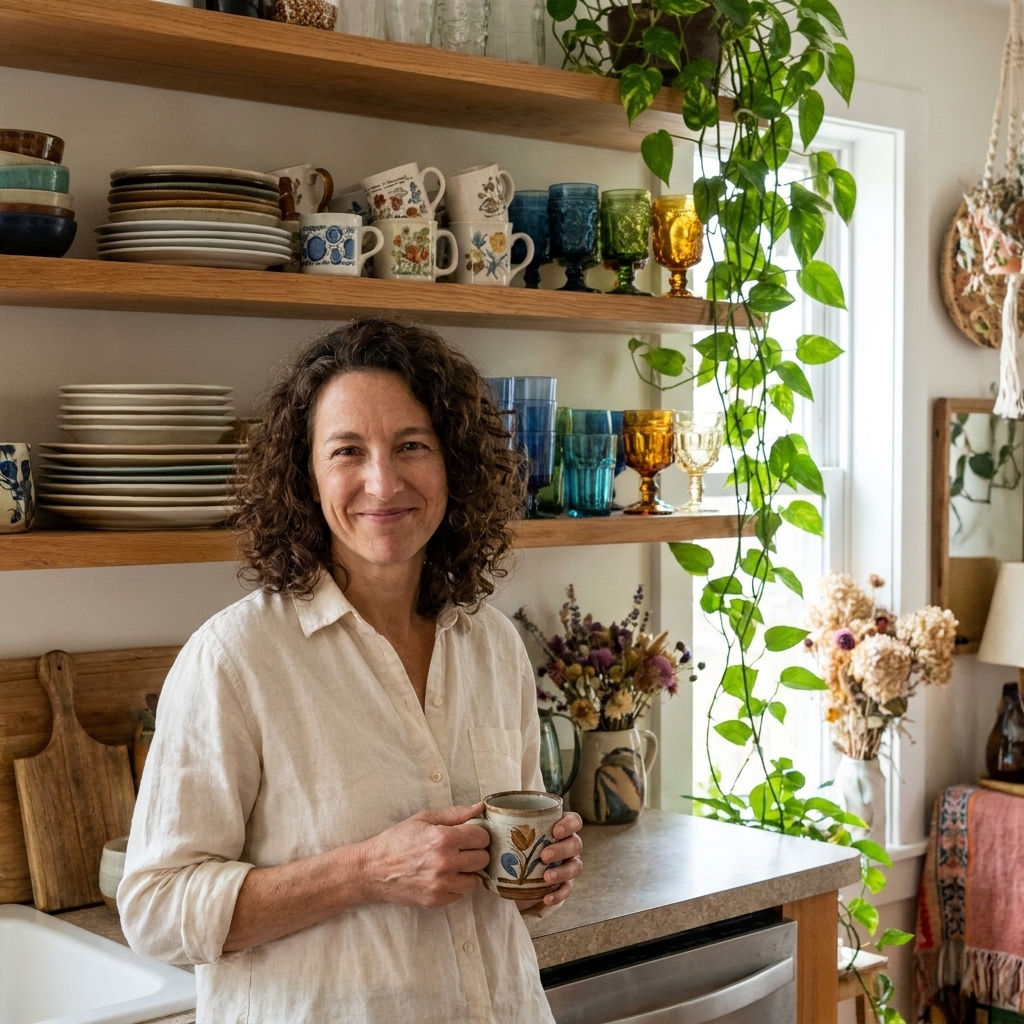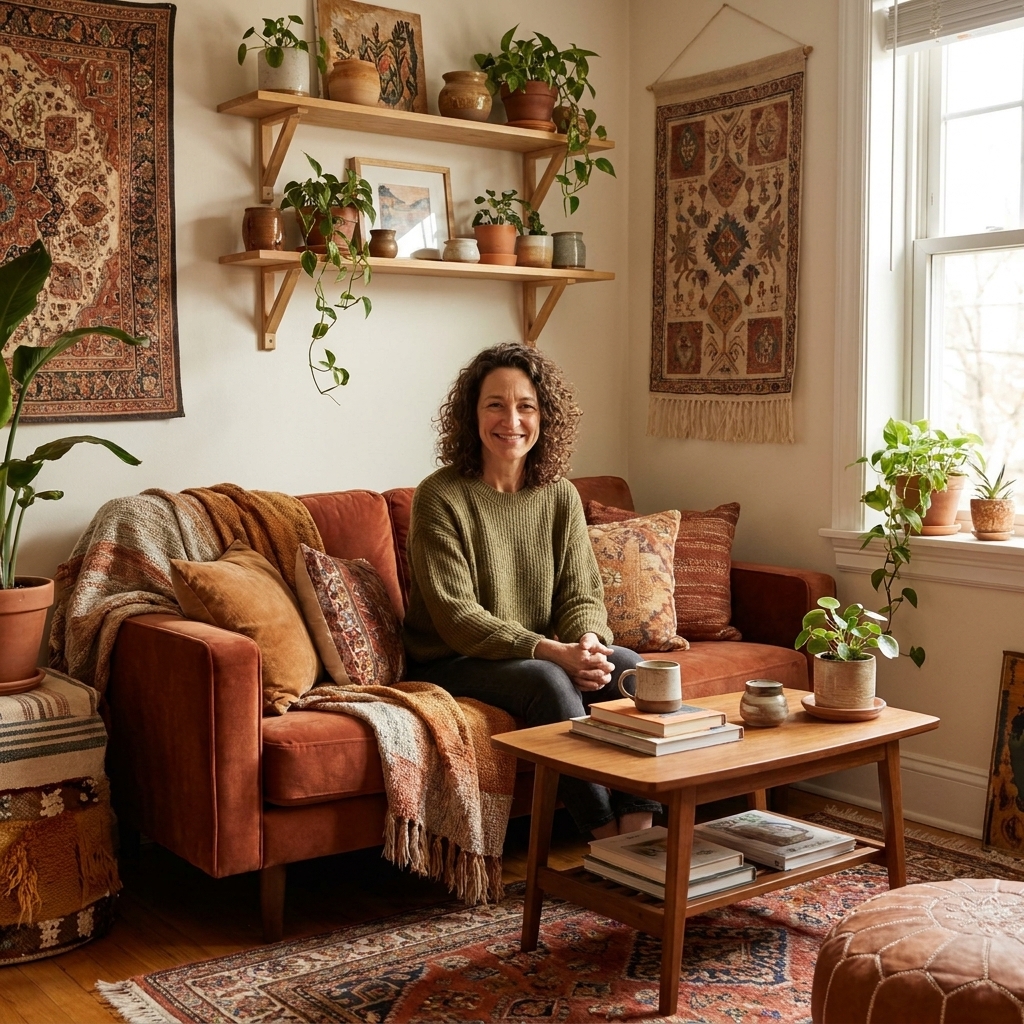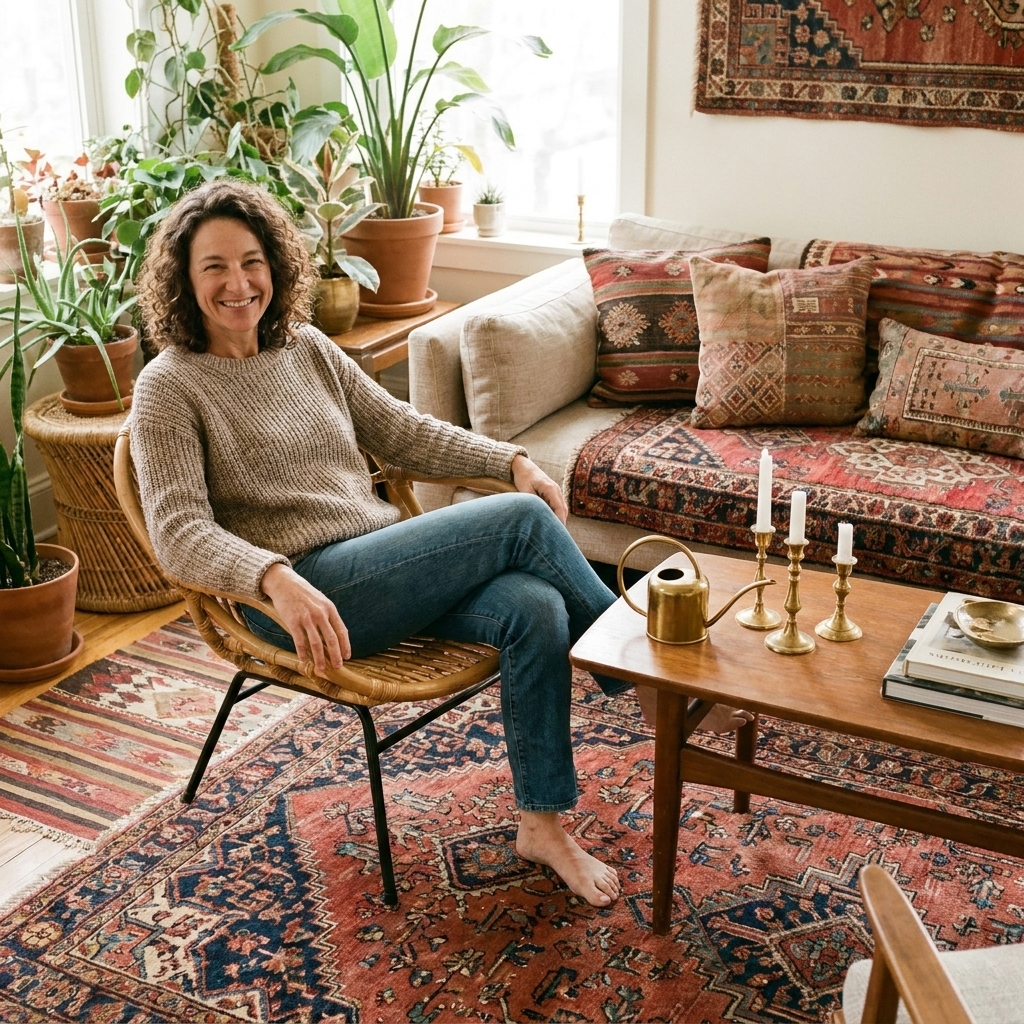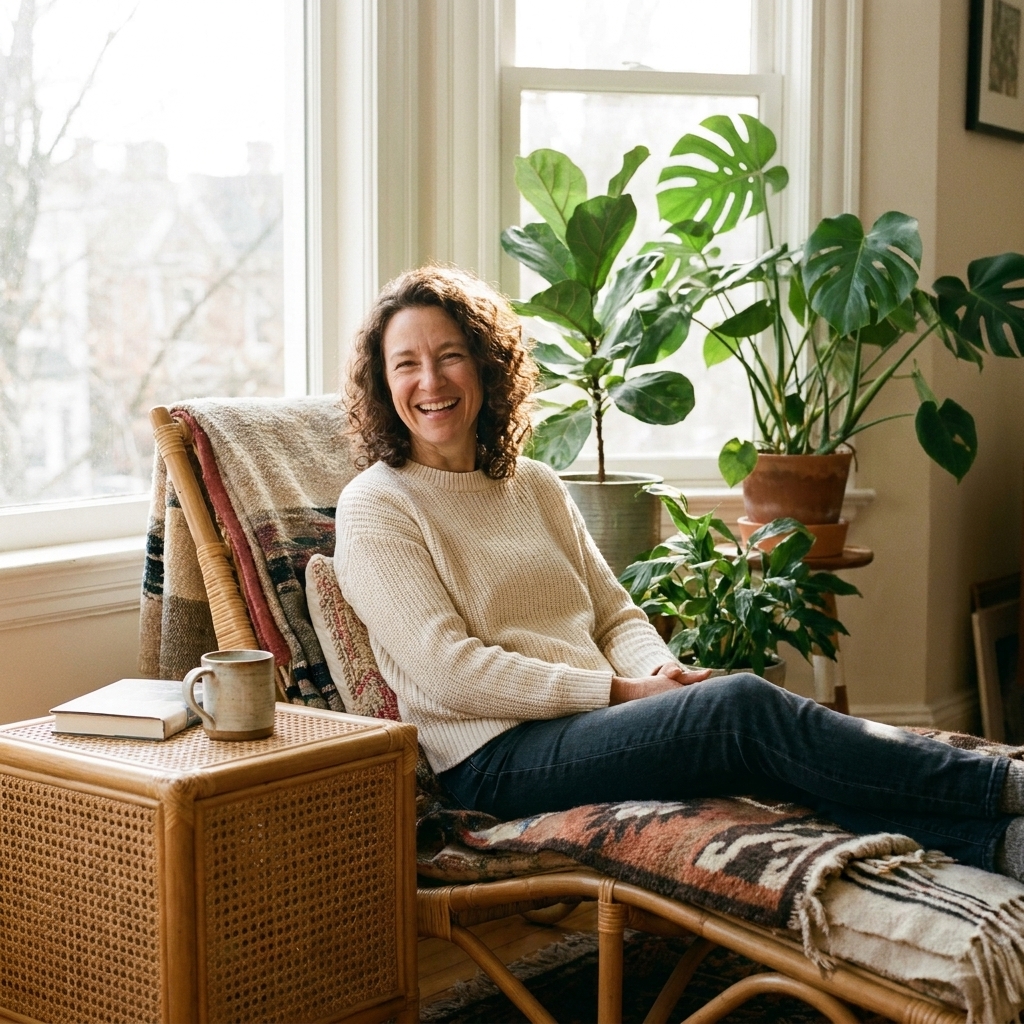

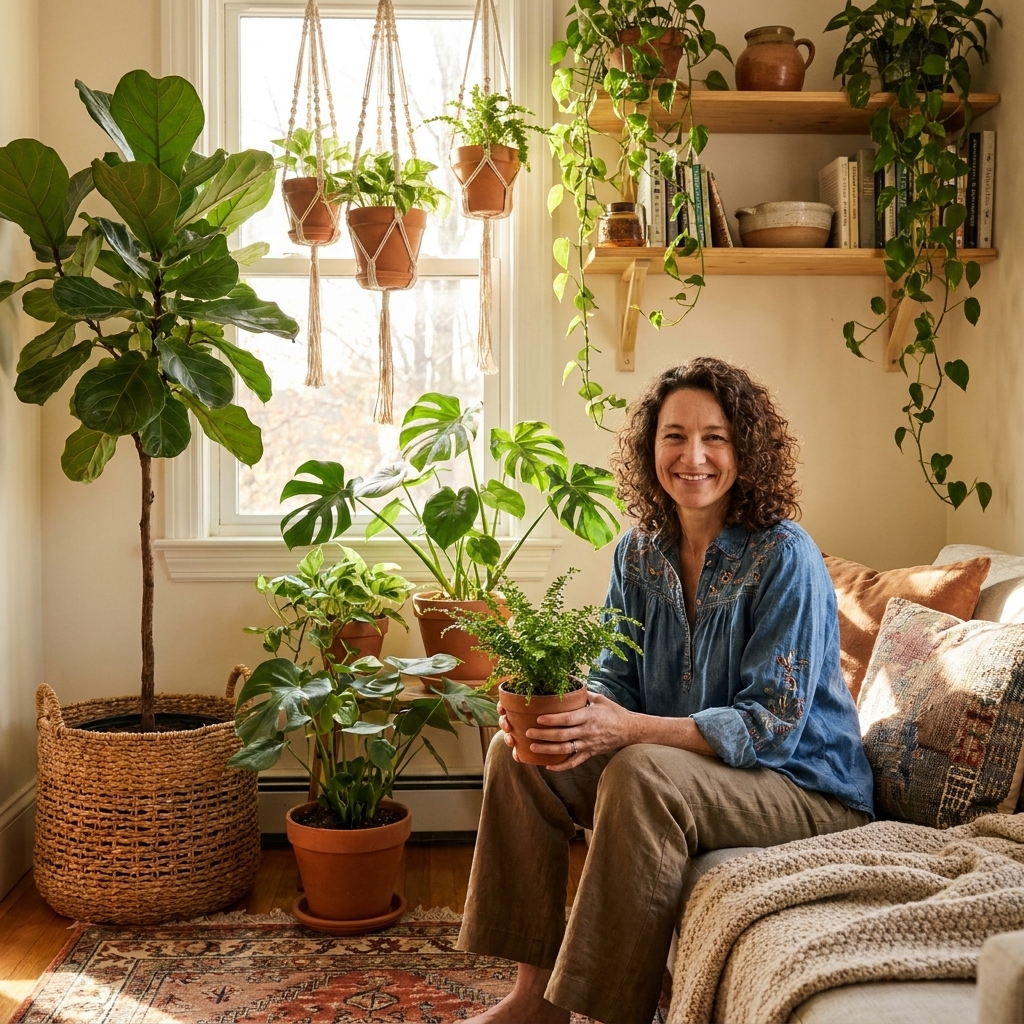
My favorite compliment is when someone walks into my place, looks around at the plants, and says, “It feels like a little greenhouse in here.” Not “You must be amazing at plant care” (I have definitely learned the hard way), but greenhouse. That’s styling. A true indoor jungle is less about owning dozens of plants and more about arranging the ones you have so they look intentional, layered, and alive.
Today I’m sharing the same approach I use when I’m rearranging my own rental living room: grouping by height, leaf shape, and pot style so shelves and floors feel lush without feeling messy.
Start with a plant story
Designer-looking plant displays have a clear vibe. Before you move a single pot, decide what you want the area to feel like:
- Desert boho: cactus, euphorbia, aloe, terracotta, sandy tones
- Tropical jungle: monstera, philodendron, calathea, glossy leaves, layered greens
- Vintage conservatory: ferns, palms, brass planters, aged ceramics, mixed heights
This is not about rules. It’s just a quick way to stop the “every plant I own gets a spot” scatter effect.
If you want more of the plant-forward boho vibe overall, you’ll probably love my Indoor Jungle guide.
Height, shape, and pots
If you only use one trick, use this: a beautiful plant grouping usually has contrast in three places.
1) Height: top, middle, drape
Think of your display like a tiny skyline. You want a tall anchor, a mid-height filler, and a trailing plant that softens the edges.
- Tall anchors: snake plant, rubber tree, fiddle leaf fig, dracaena, palm
- Mid fillers: pothos on a pole, peperomia, ZZ plant, calathea, compact philodendrons
- Trailing softeners: pothos, heartleaf philodendron, tradescantia, string of hearts
Even if you only have two plants, try “tall + drape” or “mid + drape.” Trailing plants do a lot of styling heavy lifting.
2) Leaf shape: bold plus texture
When everything has the same silhouette, the whole cluster goes flat. I like to pair one bold leaf with one fine or patterned leaf.
- Statement leaves: monstera, bird of paradise, rubber tree, alocasia
- Texture leaves: ferns, parlor palm, asparagus fern, pilea
- Pattern leaves: calathea, maranta, some begonias
A simple combo that almost never fails: big glossy leaves + something feathery.
3) Pot style: repeat, then add character
Here’s the secret sauce for eclectic homes: repeat something so your mix looks curated.
Pick one “base” pot family for the grouping, then add 1 to 2 personality pieces.
- Base families: terracotta, matte white, warm stoneware, black nursery pots inside baskets
- Personality pieces: a vintage brass planter, a hand-thrown mug-like pot, a painted folk-style cachepot
When my shelves start looking chaotic, I do a quick pot audit and remove the one container that doesn’t match anything else. Instant calm.
Style shelves the easy way
Shelves are where indoor jungles can look the most designer and the most cluttered. The difference is spacing and negative space.
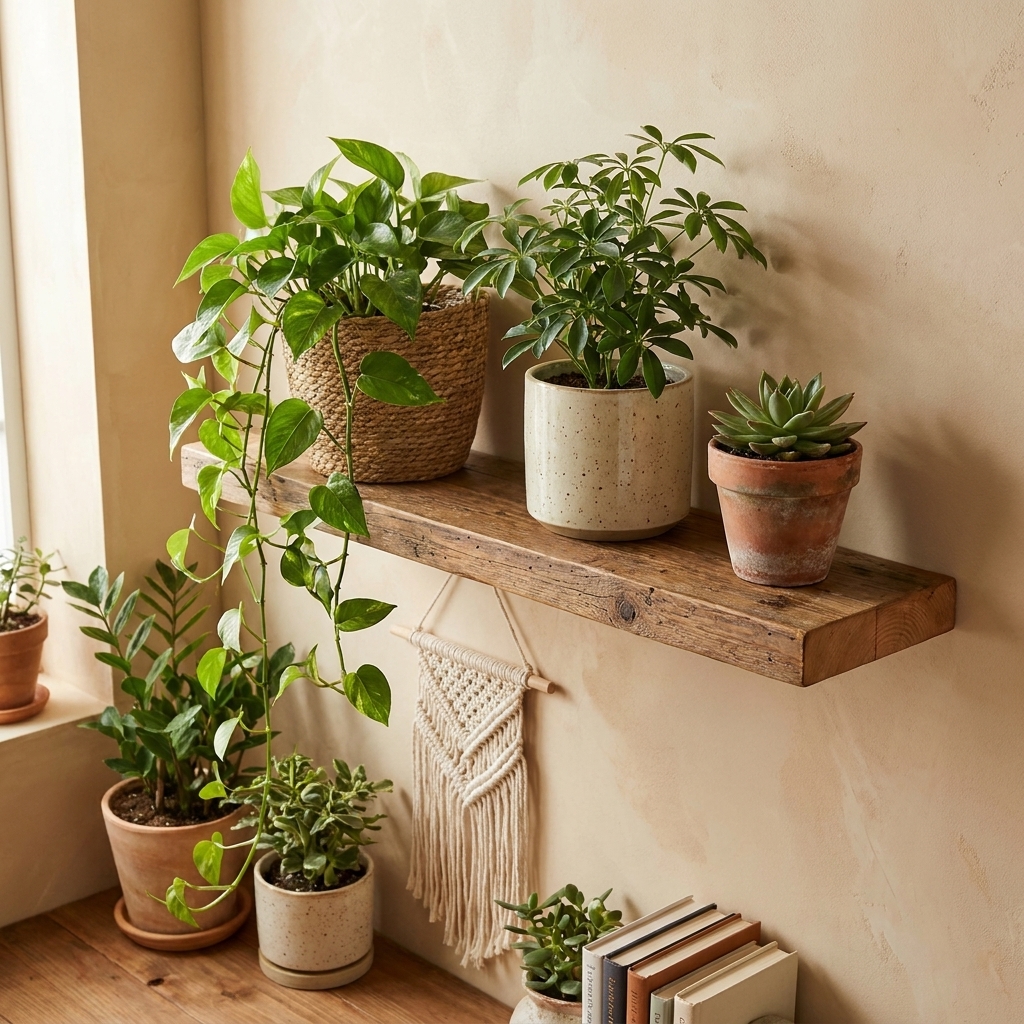
Use a triangle layout
Instead of lining plants up like little soldiers, make a triangle with your heights.
- Place the tallest plant slightly off-center
- Put a mid-height plant to one side
- Add a trailing plant on the opposite side so it drapes down
Leave at least a little breathing room. A shelf needs empty space the way a room needs a walkway.
Stagger front and back
If your shelf is deep enough, create a subtle back row and front row. Taller plants go in back, smaller plants up front. This keeps leaves from overlapping into one flat wall of green.
Mix plants with objects
Plants look even more intentional next to a couple of natural, tactile accents. Keep it simple:
- A small stack of books to lift a pot (instant height)
- A rattan box or lidded basket (adds texture and hides tiny messes)
- A small vintage framed print leaned against the wall (softens all the organic shapes)
If you love layered, natural materials, you’ll also enjoy my ideas on texture: Textiles and Natural Elements.
Build a floor plant cluster
Floor groupings are the fastest route to “lush.” You do not need a giant plant. You need a cluster.
The 3-plant formula
This is my go-to for corners, fireplace sides, or that awkward blank space by a sofa.
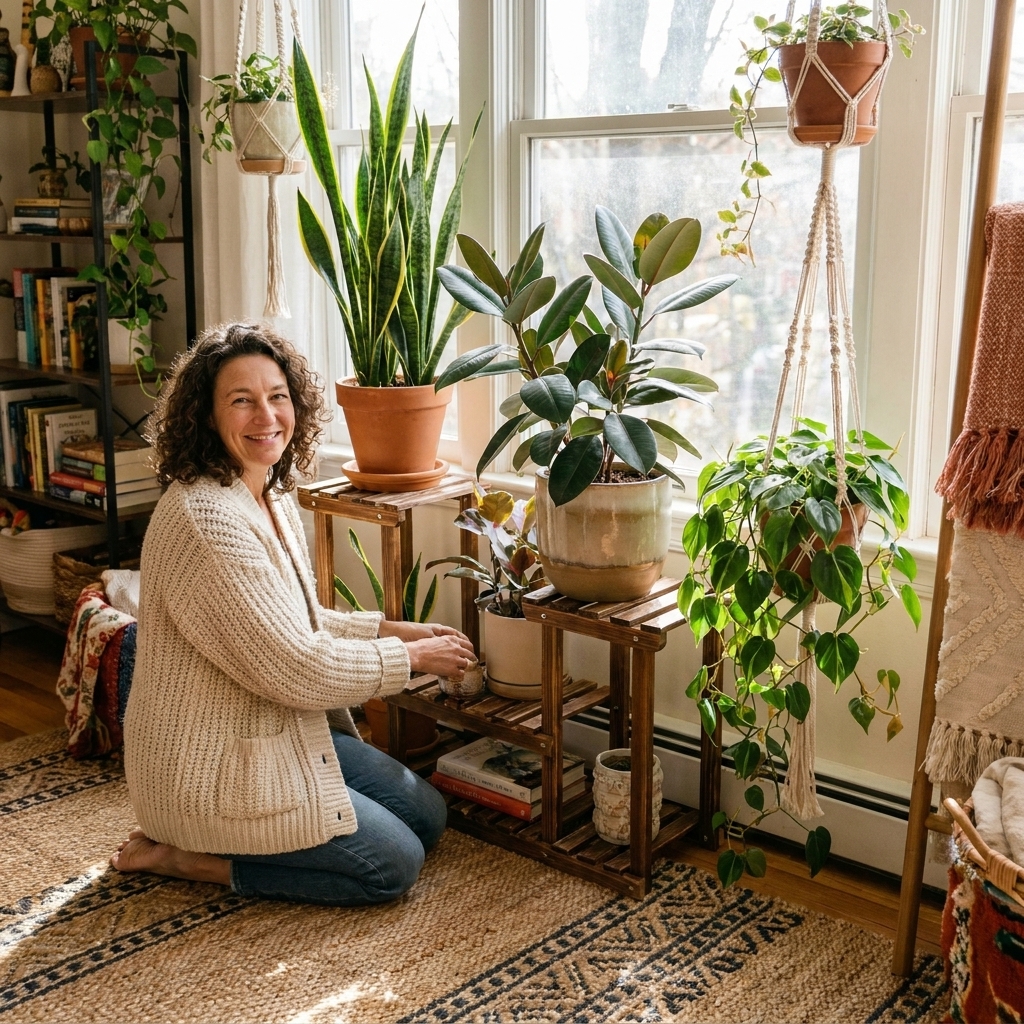
- Choose a tall anchor (about waist to shoulder height if possible).
- Add a medium, bushy plant to fill in the middle.
- Finish with a low plant or a trailing plant placed higher on a stand so it can spill.
Keep the pots within the same color temperature. Warm terracotta and warm basket tones play nicely together. Cool gray concrete and bright white read more modern.
Use risers safely
Designers use risers constantly. If you’re thrifting, look for:
- Wood stools (perfect for lifting a trailing plant)
- Low woven baskets (to bulk up small pots)
- Vintage plant stands (only if they can be fully stabilized)
- Solid wood crates (turn sideways for a quick pedestal)
If you have kids, pets, or a bouncy old floor like mine, do not tolerate wobbly. I’d rather skip the stand than risk a pot tipping. Museum putty under a cachepot can also help keep things in place on shelves and smooth surfaces.
That layered height is what makes the arrangement feel collected over time.
Light first, then styling
I’m a “make it pretty” person, but I’m also the person who has watched a dramatic calathea crisp up because I styled it too far from a window. So here’s the compromise: use the right plant for the light you have, then style from there.
A quick light check
This is a rule of thumb, not a science experiment, but it gets you close:
- Bright light: right next to an unobstructed window, or a spot that gets some direct sun.
- Medium light: a few feet back from a window, bright enough to feel cheerful but not sun-soaked.
- Low light: far from windows, in interior corners, or in rooms with small north-facing windows.
Then choose accordingly. Pothos, ZZ plants, and snake plants are famously forgiving in medium to lower light, but expect slower growth. Variegated pothos often lose contrast in low light and may look greener over time.
Rotate most foliage plants
When a display looks lopsided, it’s often not your styling. It’s phototropism. I rotate most foliage plants about a quarter turn every week or two so they don’t lean hard toward the window. If a plant is actively budding or flowering, I go gentler and rotate less often to avoid stressing it.
Keep it rental-proof
Because I rent, I treat water damage like the enemy. Styling is fun, but soggy floors are not.
Drainage matters
If you’re using baskets or decorative cachepots, I highly recommend keeping the plant in a plastic nursery pot inside the prettier outer pot. That way you can water at the sink, let it drain fully, then set it back in place. If the outer pot is watertight, add a saucer or a simple liner so you are not trapping moisture against wood shelves or window sills.
Make mismatched plants cohesive
If you thrift like I do, your plants and pots probably come with a lot of personality. Here’s how to keep the eclectic vibe while still feeling pulled together.
Repeat a color
You can mix glossy ceramic, terracotta, and baskets and still look cohesive if you repeat a shade across the group, like:
- Warm clay tones (terracotta, rust, tan)
- Soft creams and off-whites
- Earthy greens (sage pots, olive textiles nearby)
Use one wild card
I love a quirky planter, but I treat them like statement earrings. One is chic. Five is costume.
Add pattern nearby
If your plant corner feels visually loud, do not add more busy pots. Add pattern in the surroundings, like a vintage rug or a pillow on the nearby chair. If pattern mixing is your thing, I have a full guide here: How to Mix Bold Patterns Without Clashing.
Pets and plant placement
A quick, important note: a lot of popular easy-care houseplants (including pothos, philodendron, and ZZ plants) are toxic if chewed by pets. If you live with a curious cat or a puppy who samples everything, keep trailing plants out of nibble range, use higher shelves, or choose pet-safer options for the floor. When I am styling for a pet home, I prioritize safe placement first and aesthetics second.
Common styling mistakes
Everything is the same height
Fix: Put one plant on a stand, one on the floor, and one on a stool or crate. You just created a layered composition.
Tiny plants scattered everywhere
Fix: Group them in threes on a tray or shallow basket so they read as one moment.
Leaves look messy
Fix: Do a quick cleanup. Remove yellowing leaves, wipe dusty foliage with a damp cloth, and turn the best face of the plant toward the room.
Pots look random
Fix: Choose one unifying element for that zone: all terracotta, all baskets, or all neutrals with one accent pot.
A quick reset plan
If you want a quick weekend reset, here’s exactly how I’d do it in a rental living room.
One shelf
- Pick one trailing plant and place it at the edge.
- Add one medium plant near the center.
- Lift a smaller pot on one stack of books to create height variety.
- Leave about a fifth of the shelf empty so it breathes.
One floor corner
- Start with a tall anchor plant closest to the wall.
- Add a medium plant slightly forward and to the side.
- Place a trailing plant up on a stand so it cascades.
- Finish with a basket or woven tray under one pot for texture.
When in doubt, step back and squint a little. If you see a clean silhouette with three distinct heights, you nailed it.
Plant styling FAQ
How many plants should I group together?
For most shelves and corners, 3 to 5 plants is the sweet spot. Three looks intentional. Five looks lush. More than that can be amazing, but it needs stronger repetition in pot style and color to avoid chaos.
Should all my pots match?
No. A boho home looks best with some variety. Just repeat one common thread like terracotta tones, creamy ceramics, or baskets so the mix feels curated.
What’s the easiest plant to make a space look jungly fast?
A healthy trailing pothos is the quickest visual payoff. Let it drape from a shelf, climb a moss pole, or spill from a hanging planter. It instantly adds movement and softness.
Can I style plants in a low-light room?
Yes, but choose plants that tolerate it, like ZZ plants and snake plants, and avoid putting sun-lovers deep in the room. Styling only works long-term if the plants can actually live there.
If you end up rearranging your plants after reading this, you’re in good company. I treat plant styling like fluffing pillows. It’s a tiny reset that makes the whole room feel cared for.
And if you want to keep building that layered, collected look beyond the greenery, start here: Styling Inspiration.