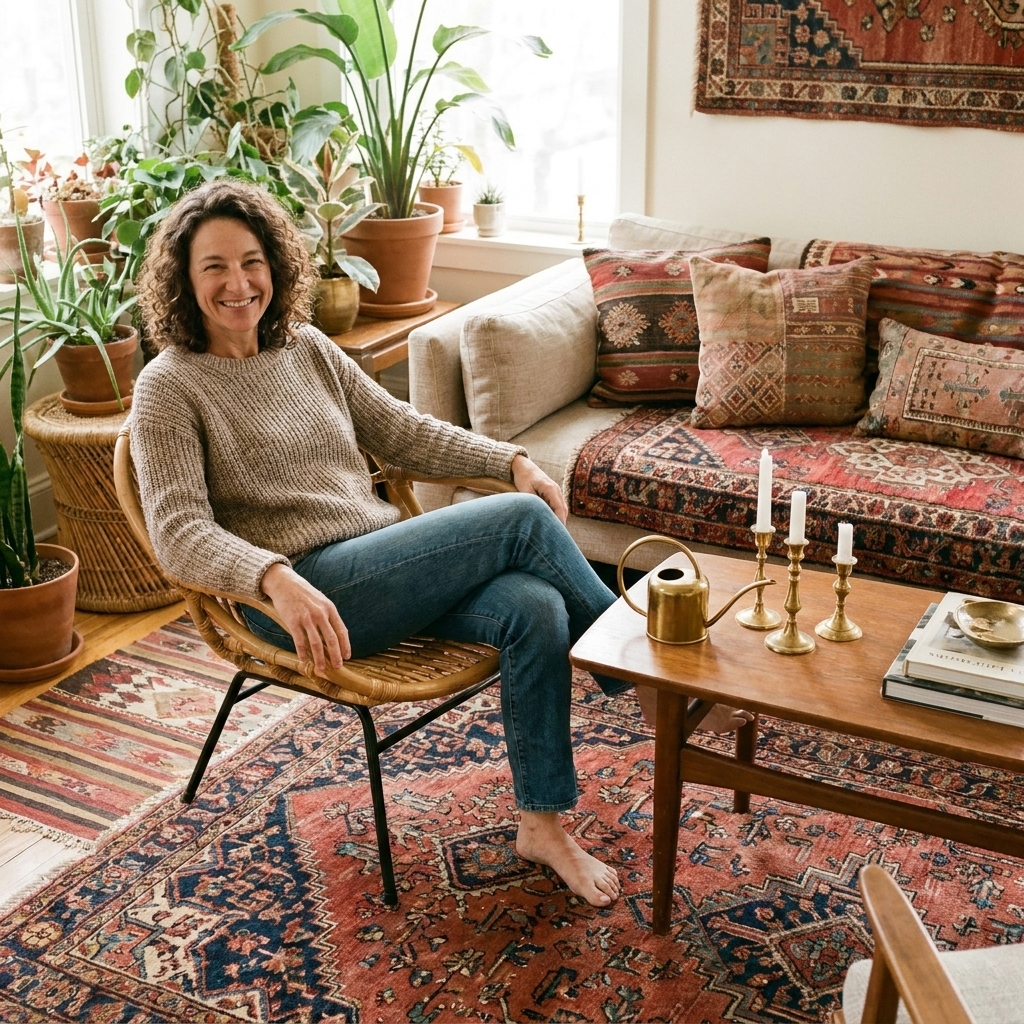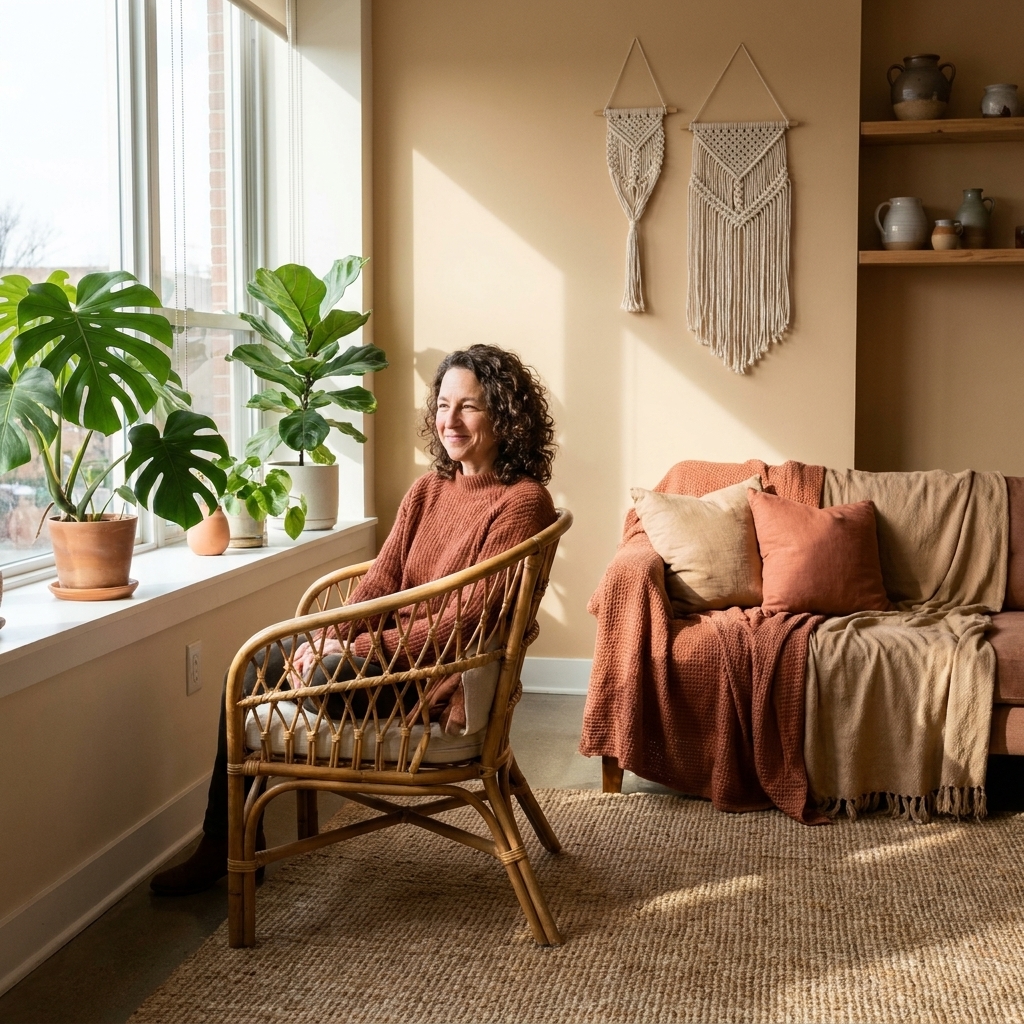

My favorite thing about a boho bed is that it never feels “done” in a catalog way. It feels lived-in, collected, and slightly imperfect, like you brought home a textile from a road trip and built a whole mood around it. If you have ever stared at a pile of pillows and a chunky knit throw and thought, Why does this look cute on Instagram and chaotic on my mattress?, you are in the right place.
Below is my go-to, formulaic layering method. It is the same approach I use in rentals when I want a bedroom to feel warm, global-inspired, and pulled together without buying a whole new set of everything.
The boho bed formula
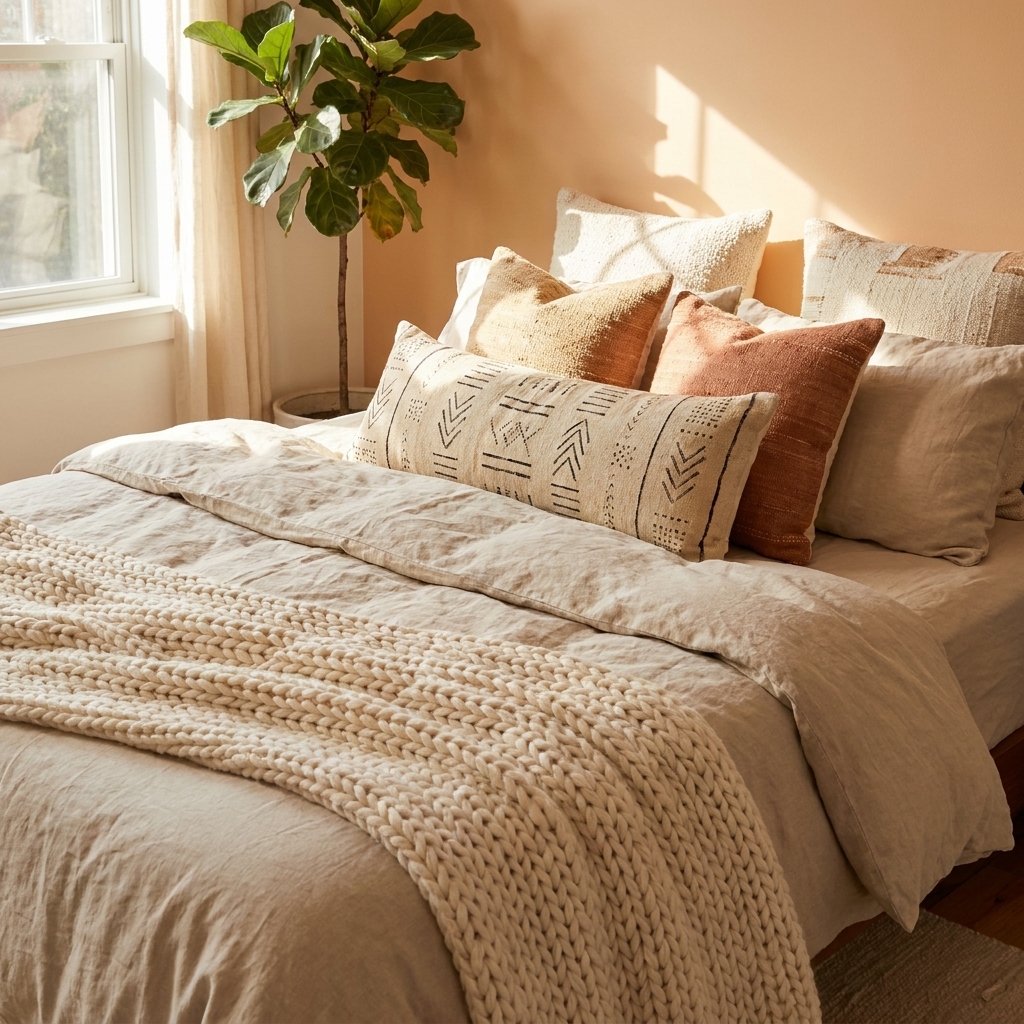
If you want the short version, here is the recipe I follow:
- Base layer: linen (or cotton) sheets + a simple quilt or coverlet
- Volume layer: a duvet (even if it is thin) with a relaxed cover
- Texture layer: one chunky throw and one lighter throw
- Pillow layer: 2 sleeping pillows + 2 shams + 2 to 4 decorative pillows + 1 lumbar
- Finish: one small grounding detail like a basket, a plant, or a vintage textile nearby
This sounds like a lot, but the trick is that each layer has a job. When every item is doing a different job (smooth, nubby, patterned, solid), the whole bed looks intentional instead of bulky.
Step 1: Start with linen
Linen is basically the boho cheat code because it adds that relaxed texture even when the color is simple. It can feel a little crisp right out of the package, but it softens beautifully with washing and use, which is kind of the point.
My sheet rules
- Choose a grounded neutral for sheets: warm white, oatmeal, clay-beige, or a soft olive. This becomes your calm backdrop.
- Keep the fitted sheet plain and put your personality into layers people actually see (throws and pillows).
- Create a “linen band” at the top by folding the top sheet over the duvet 6 to 10 inches.
If you do not use a top sheet, you can still get that layered look. Just fold the duvet cover down a few inches to show the inside of the cover, or add a flat sheet strictly for styling and tuck it in lightly.
If your room leans colorful, keep the sheets quiet. If your room is mostly neutral, sheets are a great place to introduce gentle color like dusty rose or muted saffron.
Color help: if you are deciding between a warm earthy bed or a jewel-toned moment, my breakdown on earth tones vs jewel tones for eclectic homes can help you commit to a direction.
Step 2: Add a quilt
Even in the most relaxed boho bedroom, I like one layer that gives the bed a clean outline. That is usually a quilt, coverlet, or thin blanket that sits under the duvet or replaces it in warm months.
Easy quilt setup
- Lay the quilt flat and smooth it once with your hands.
- From the head of the bed, fold the top edge down about 12 to 18 inches so your sheets show.
- If you are using a duvet, let the quilt act as a middle layer so the bed looks fuller without adding a ton of puff.
Thrift tip: vintage quilts and kantha-style blankets are incredible for this layer because they bring instant story and subtle pattern.
Step 3: Add mudcloth
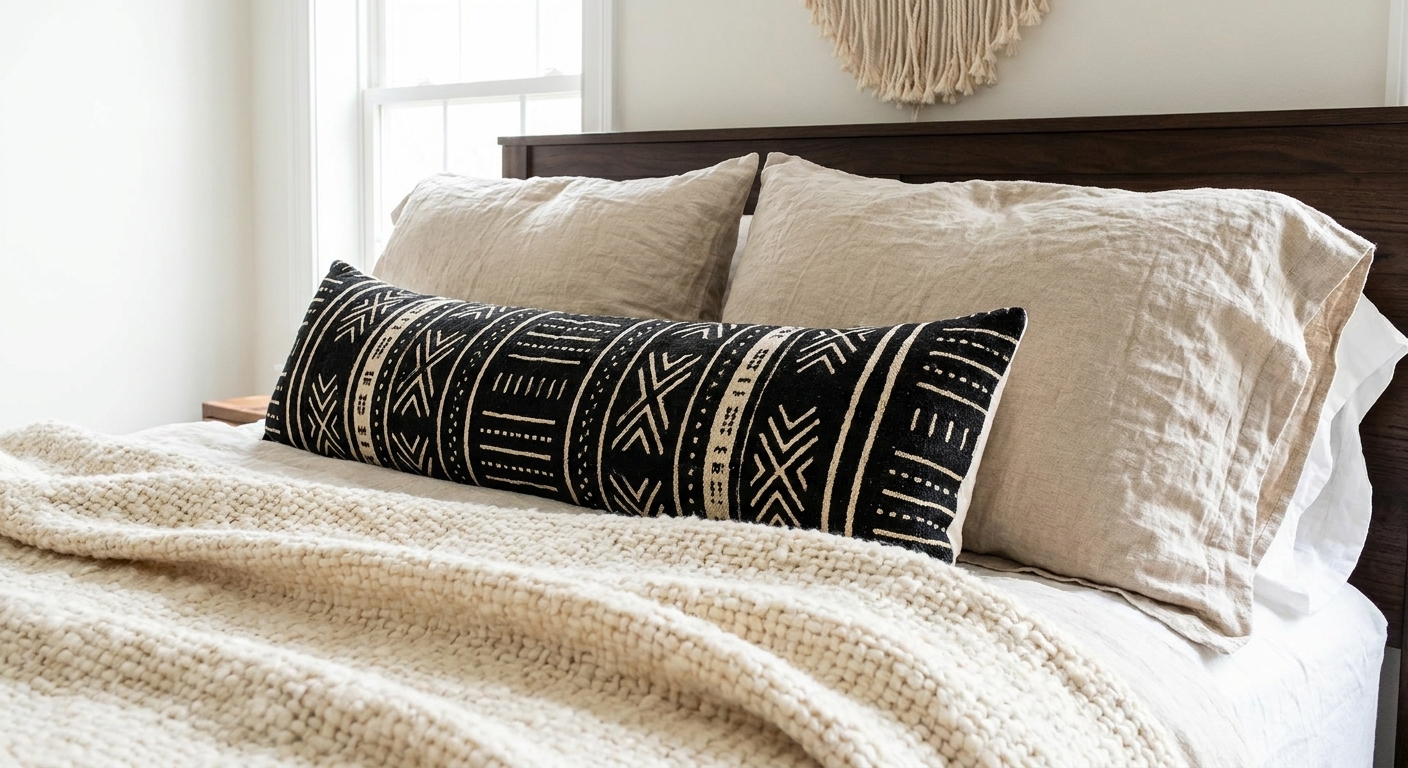
Mudcloth is one of my favorite global-inspired textiles because it reads graphic, but still earthy. It plays really nicely with linen and knits because it is matte and tactile, not shiny.
A placement that usually works
- Pick one mudcloth piece as the lead: either 2 square pillows or 1 lumbar pillow.
- Keep the rest quieter: solid shams, a nubby neutral pillow, and one accent pillow in a color you love.
- Repeat the mudcloth color once elsewhere on the bed, like a throw with similar tones or a small stitched detail in another pillow.
If you love pattern mixing but you get nervous, you will like my approach in how to mix bold patterns without clashing. The same rules apply on a bed, just softer.
Step 4: Layer two throws
This is the part that makes a boho bed feel irresistible. I like using two throws because one alone can look like an afterthought, but two looks collected.
Throw 1: chunky knit
- Place it at the foot of the bed, slightly off-center.
- Fold it into thirds lengthwise, then drape it so one end hangs farther down than the other.
- Let it be imperfect. A little twist is good.
Throw 2: lighter layer
- This can be a tasseled cotton throw, a faded vintage blanket, or a woven piece with subtle stripes.
- Lay it under the chunky knit so it peeks out by 3 to 6 inches, like a little border.
- If your pillows are patterned, keep this throw more solid. If your pillows are solid, let the throw bring pattern.
When I am thrifting, I look for throws with interesting edges: tassels, hand-stitching, fringe, or a slightly irregular weave. Those details do a lot of visual work for you.
Step 5: Build the pillow stack
Here is my go-to pillow arrangement. It scales up or down depending on how extra you want to be, and it still feels balanced.
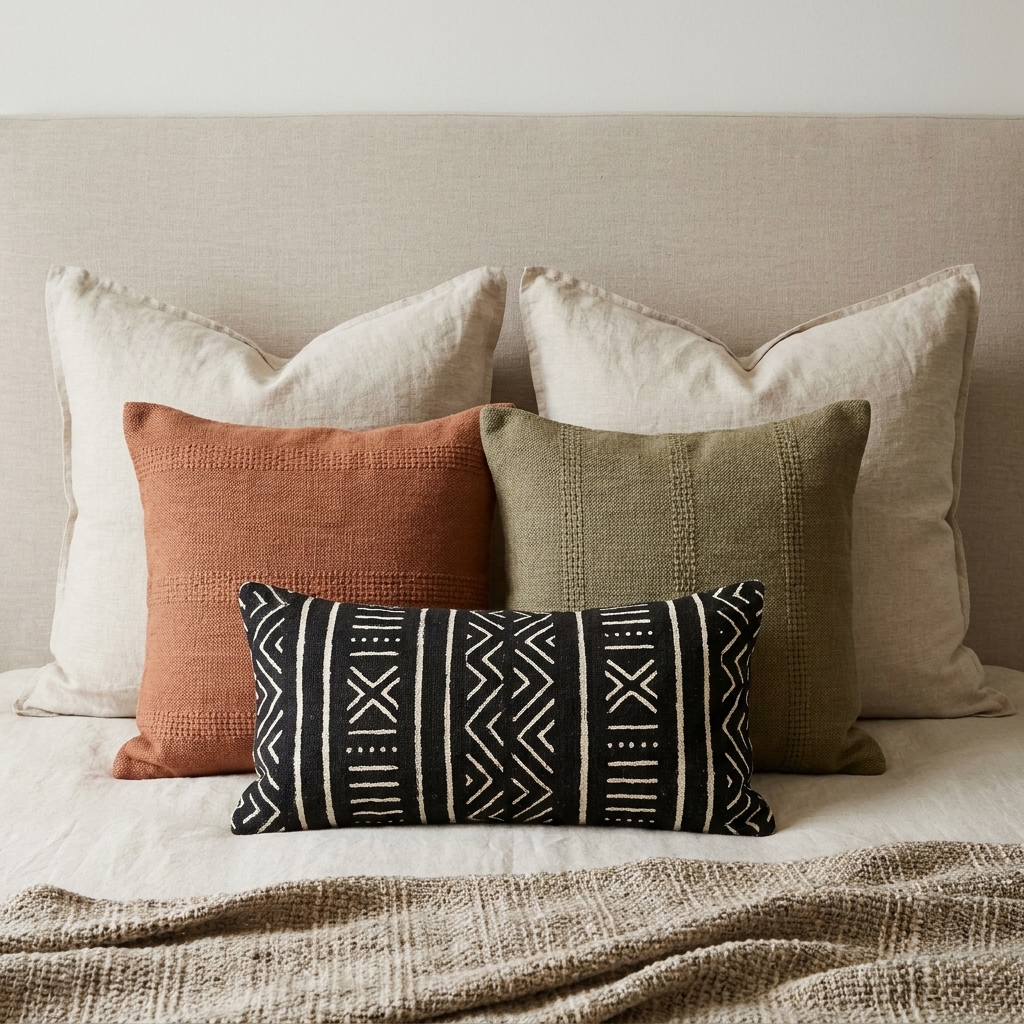
The 7-pillow formula
- Back row: 2 sleeping pillows (standing upright)
- Second row: 2 shams (linen, cotton, or a subtle texture)
- Third row: 2 decorative squares (one patterned, one textured solid)
- Front: 1 lumbar (this is where I love mudcloth)
If you want it fuller
- Add two in-between pillows that are smaller than your main decorative squares. For example, use 18-inch squares if your main squares are 20 to 22 inches, or add two smaller rectangles.
If you want it simple
- 2 sleeping pillows + 2 shams + 1 lumbar. Done, still boho.
Quick sizing cheat sheet
- Sleeping pillows: standard, queen, or king all work. Use what you own.
- Euro shams: big squares (often 26 x 26) are great if you want height, especially on a king bed.
- Main decorative squares: 20 to 22 inches reads plush without swallowing the bed.
- Lumbar: long rectangles look tidy and help the stack feel finished.
Adjust for bed size
- Twin or full: try the 5-pillow setup, or scale down your decorative pillows so the bed still feels breathable.
- Queen: the 7-pillow formula is the sweet spot.
- King: add Euros behind your shams or go up a size in squares so the pillows do not look lost.
My “does this clash?” test
- One bold pattern max (mudcloth counts as bold if it is high contrast).
- One nubby texture (boucle, woven, chunky linen).
- One warm accent color (rust, ochre, olive, indigo) repeated twice across the bed.
Step 6: Keep it collected
The goal is collected over time, not a matching set with a dramatic name. A globally-inspired bed is about materials and stories, not literal motifs everywhere.
Small ways to add soul
- Use one artisan-looking textile (mudcloth, kantha, suzani-inspired embroidery) and keep everything else simple.
- Add a woven basket near the bed for extra throws.
- Lean on natural materials: rattan, wicker, bamboo, raw wood. If you are choosing between them, I wrote a quick guide to rattan, wicker, or bamboo.
- Style one meaningful object on your nightstand, like a small bowl from travels or a flea market find. I have more ideas in how to tastefully display travel souvenirs and global artifacts.
Three boho bed recipes
1) Earthy and calm
- Sheets: warm white linen
- Quilt: oatmeal cotton
- Mudcloth: black and cream lumbar
- Accent color: terracotta (one pillow + one throw detail)
- Throws: chunky cream knit + faded rust striped blanket
2) Moody and jewel-toned
- Sheets: soft olive or warm taupe
- Quilt: deep neutral like cocoa or charcoal
- Mudcloth: indigo-toned or dark pattern pillow pair
- Accent color: emerald or saffron in one velvet pillow
- Throws: chunky knit in cream + lighter throw with subtle geometric weave
3) Sunny and maximal
- Sheets: crisp white linen
- Quilt: simple, lightly stitched pattern
- Mudcloth: one lumbar only
- Accent colors: two bright notes, like clay + indigo
- Throws: one tassel throw + one chunky knit, both in neutrals so the pillows can sing
Care and real life
A boho bed is meant to be used, not protected like a museum display. A little practicality helps you keep the vibe without babying everything.
- Mudcloth and vintage textiles: spot clean when you can, and go gentle when you cannot. If a piece feels precious, use it as a lumbar cover in front and keep your washable layers behind it.
- Chunky knits: they can stretch if you yank them around. I fold and drape instead of pulling them tight, and I keep them off the floor if pets think fringe is a toy.
- Kids and pets: put your easiest-to-wash layers closest to where bodies land, and save the thrifted hero textile for the top layer you can remove quickly.
Common problems
My bed looks flat
- Add one mid-layer (quilt under duvet), or switch to a fluffier duvet insert.
- Use larger shams (Euro shams are great if you already own them) to build height.
It looks messy, not relaxed
- Limit yourself to one high-contrast pattern.
- Keep the throws to two, and give each one a clear lane at the foot of the bed.
- Simplify color: choose one accent color and repeat it twice.
My pillows keep sliding
- Putting the heavier pillows toward the back often helps, especially if your front pillows are slick.
- A lumbar in front can also help hold the stack in place, depending on your inserts and fabrics.
It feels too matchy
- Swap one pillow cover for a thrifted textile or a nubby neutral.
- Mix one slightly different tone (warm white + cream + oatmeal) to break up uniformity.
My quick routine
Once you have your stack figured out, this usually takes about 2 minutes.
- Pull sheets tight and fold the top edge neatly once.
- Fluff the duvet, then do one casual fold at the top so a band of linen shows.
- Lay the lighter throw first, then drape the chunky knit on top, off-center.
- Stack pillows back to front: sleepers, shams, squares, lumbar.
- Do one final tweak: tug one corner of the throw down, or angle the lumbar slightly. Stop there.
If you are building your textile collection slowly, you will probably enjoy browsing Textiles & Natural Elements for more layering ideas that work in real homes.