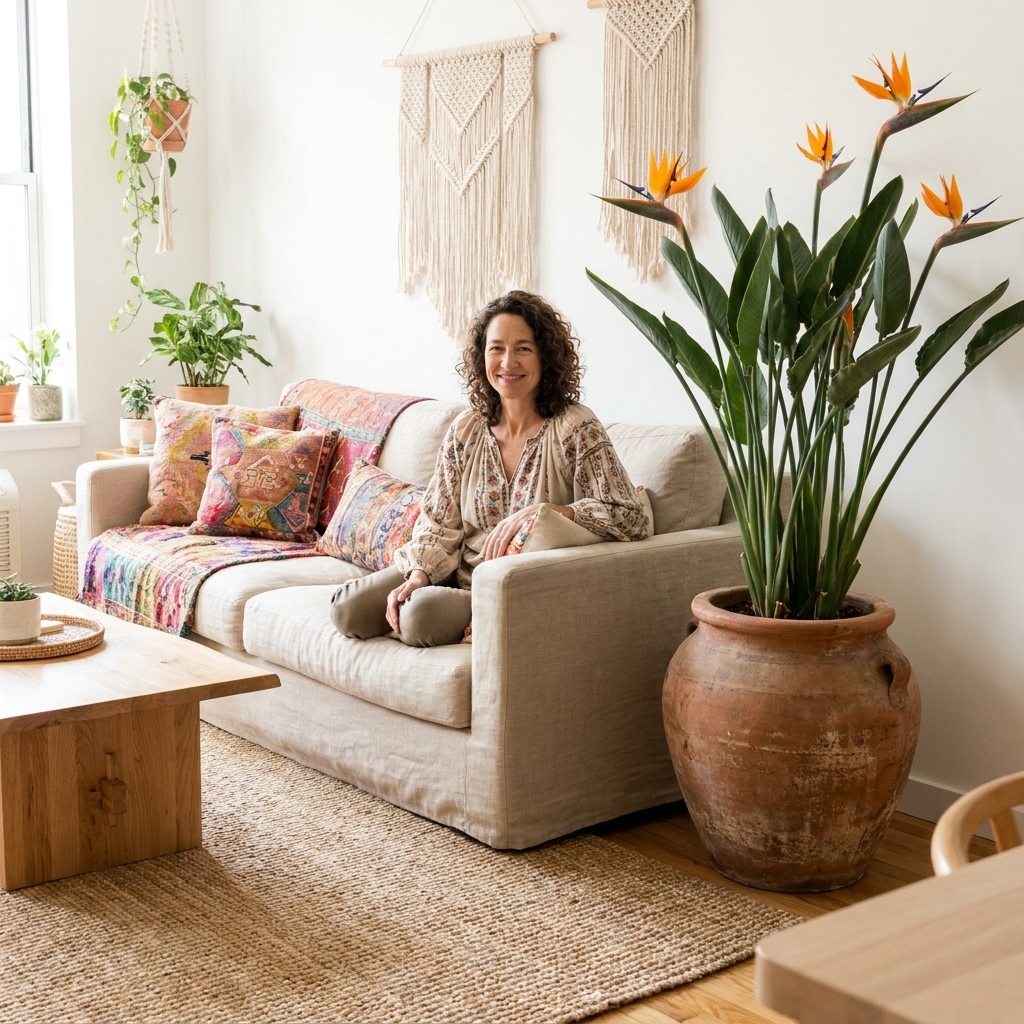

I love a home that feels alive. Give me rattan, a thrifted textile, and a handful of leafy plants and I’m happy. But if you share your space with a cat who believes every dangling leaf is a toy, or a dog who samples greenery like it’s salad, plant shopping hits different.
The good news: you can absolutely create that lush, bohemian indoor jungle look with plants that are commonly considered non-toxic to cats and dogs. Below is my go-to lineup for a pet-friendlier plant palette, plus the styling tricks I lean on when I want the vibe without the vet worry.
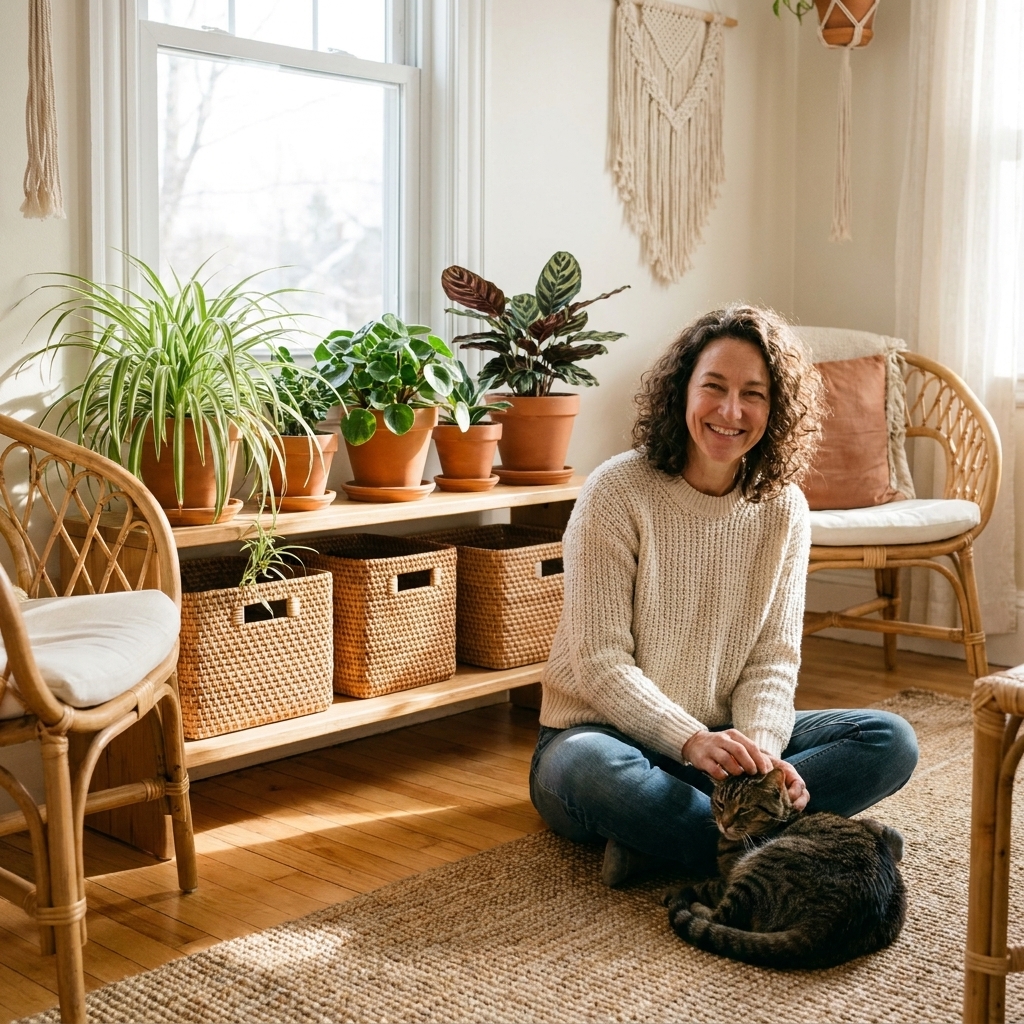
Quick note on pet-safe
When a plant is labeled non-toxic, it generally means it isn’t expected to cause serious poisoning. That said, any plant can cause stomach upset if your pet eats enough of it, and individual pets are wonderfully unpredictable.
- If your pet is a chronic chewer, prioritize tougher, upright plants (palms, cast iron plant) and keep delicate fronds out of reach.
- If you use fertilizers or leaf shine, store products securely and follow label directions. I skip leaf shine entirely.
- When in doubt, confirm toxicity with the ASPCA Animal Poison Control plant list.
If you ever suspect ingestion and your pet is acting off, call your vet. For urgent questions in the US, the ASPCA Animal Poison Control Center can help guide next steps (note: there is typically a consultation fee).
My favorite non-toxic plants
These are the plants I reach for when I want movement, texture, and that layered, collected look, while keeping things safer for curious paws.
1) Areca palm (Dypsis lutescens)
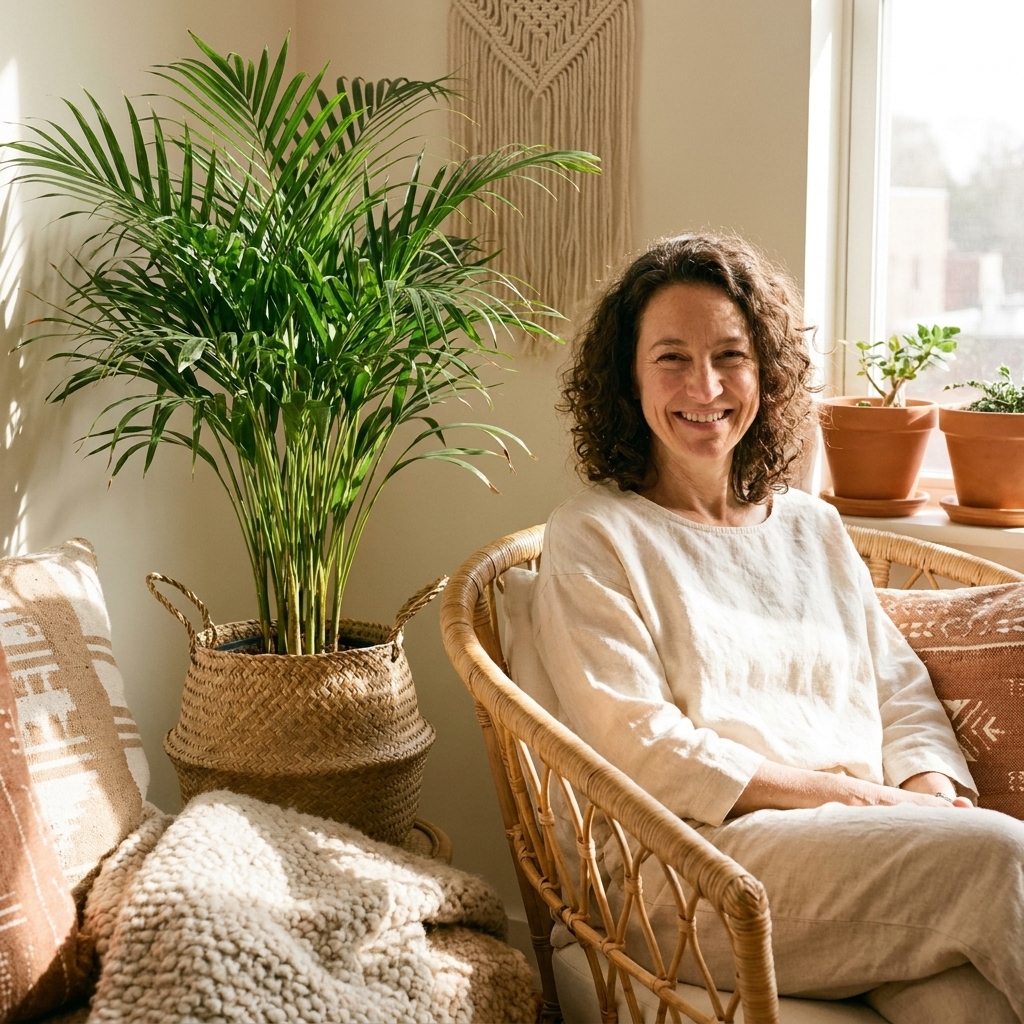
If you want instant vacation-at-home energy, this is it. The fronds are soft and feathery, so it reads tropical without feeling heavy.
- Boho styling idea: Set one in a woven basket or a warm terracotta pot to bring in earthy texture.
- Light: Bright, indirect light is ideal.
- Pet note: Commonly listed as non-toxic, but cats may still bat at the fronds.
2) Parlor palm (Chamaedorea elegans)
This one is my small space jungle secret. It stays relatively compact and looks beautiful grouped with thrifted pottery and stacks of books.
- Boho styling idea: Cluster two or three plants at different heights for that layered, maximal look.
- Light: Medium to bright filtered light, and it’s forgiving.
3) Ponytail palm (Beaucarnea recurvata)
Technically a succulent-ish plant with a playful fountain of leaves. The silhouette is sculptural, which is so helpful when you want the room to feel styled even on a budget.
- Boho styling idea: Pair it with vintage brass, carved wood, or a patterned textile nearby to contrast the clean lines.
- Light: Bright light. Some direct sun is fine.
- Water: Let it dry out well between waterings.
4) Spider plant (Chlorophytum comosum)
Spider plants give you that classic boho trailing look without the toxicity drama. They also make baby plants like it’s their hobby.
- Boho styling idea: Put one up high so the arching leaves can spill over the edge of a shelf.
- Light: Bright, indirect light, but adaptable.
- Pet note: Often listed as non-toxic, but it can still cause mild stomach upset if your pet over-chews. Many cats also seem extra drawn to it, so placement matters.
5) Boston fern (Nephrolepis exaltata)
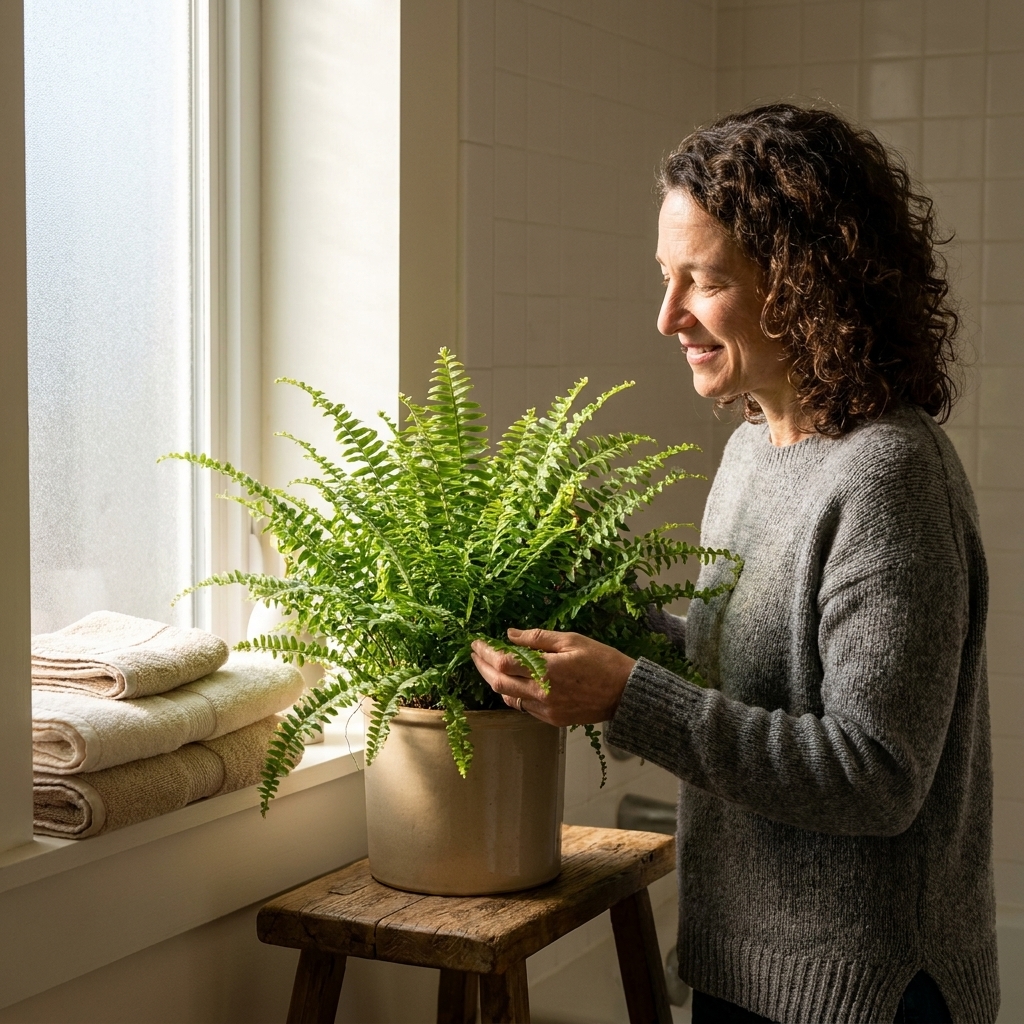
If your dream is a fern-y reading nook, Boston fern is lush and pet-friendly. It’s also a humidity lover, so it thrives in bathrooms or near a humidifier.
- Boho styling idea: Hang it near a window with soft linen curtains for that romantic, leafy glow.
- Light: Bright, indirect light.
- Care tip: Keep soil lightly moist, not soggy.
6) Bird’s nest fern (Asplenium nidus)
Different vibe than Boston fern. The leaves are broader and wavier, which looks amazing next to chunky woven textures and vintage ceramics.
- Boho styling idea: Let it be the feature plant on a side table with a small tray of found objects.
- Light: Medium to bright indirect light.
7) Cast iron plant (Aspidistra elatior)
This is my top pick for pet homes where you want greenery that can take a little chaos. It’s tough, upright, and not delicate.
- Boho styling idea: Use it as a grounding plant in a heavier pot (think matte clay, aged ceramic, or a thrifted crock).
- Light: Low to medium light tolerant.
8) Prayer-plant relatives (Maranta + many “Calathea”/Goeppertia)
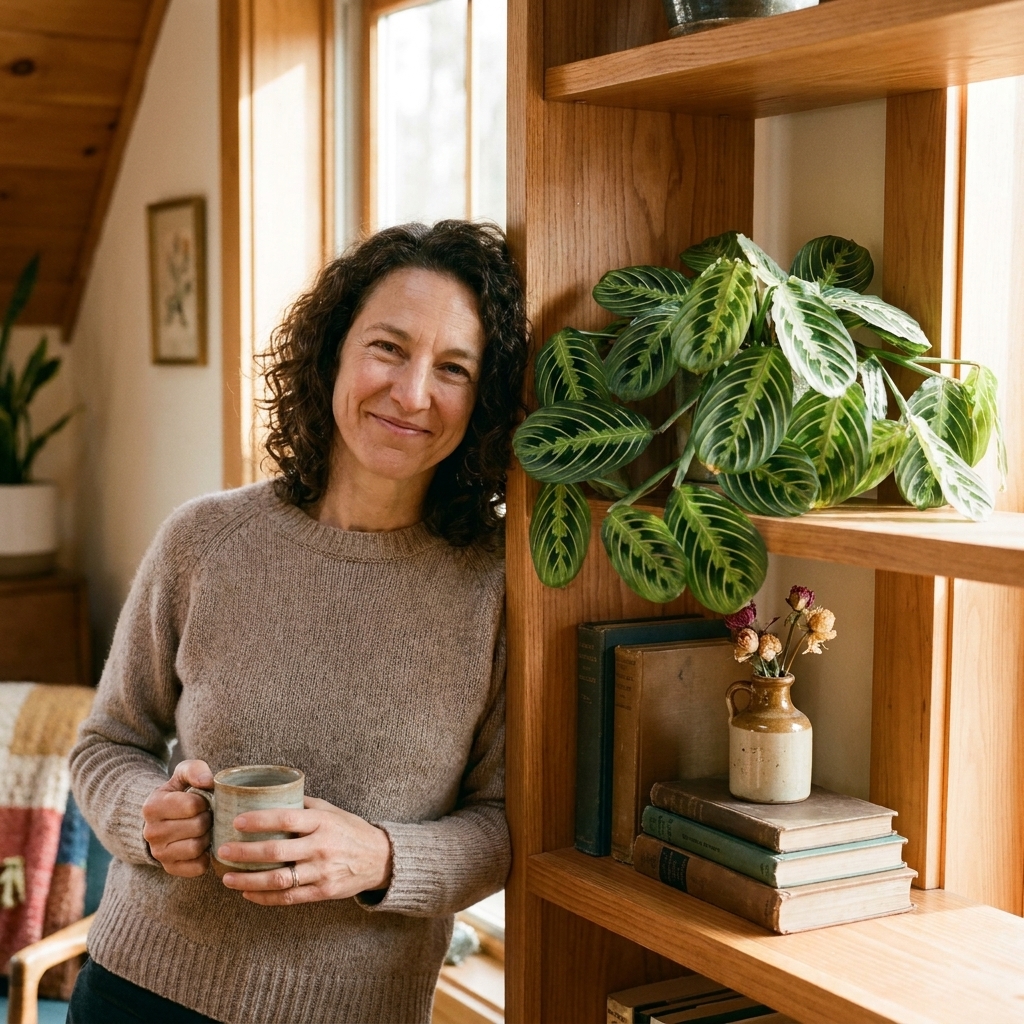
These bring pattern, perfect for boho homes. Think painterly stripes, feathered markings, and leaves that move through the day. (Many plants sold as calathea were reclassified to Goeppertia, and you’ll still see both names on tags.)
- Boho styling idea: Pair with global-inspired textiles for a layered print-on-print moment that still feels cozy.
- Light: Medium to bright indirect light.
- Care tip: They appreciate consistent moisture and higher humidity.
9) Peperomia (Peperomia spp.)
Peperomias are small but mighty. They come in so many textures and leaf shapes that you can build an entire little tabletop jungle with them.
- Boho styling idea: Mix 3 different peperomias in mismatched thrifted pots for a collected look.
- Light: Bright, indirect light.
- Water: Let the top inch or two dry out before watering.
10) African violet (Saintpaulia ionantha)
When I want blooms without turning my home into a bouquet that needs babysitting, I reach for African violets. The soft leaves and little pops of color are surprisingly good in boho spaces, especially alongside warm woods and handmade ceramics.
- Boho styling idea: Group two in mismatched thrifted teacups or small ceramic pots on a shelf, then balance them with a stack of books and a woven tray.
- Light: Bright, indirect light (an east window is perfect).
- Care tip: Water the soil, not the leaves, and let the top bit dry slightly between waterings.
- Pet note: Commonly listed as non-toxic, but I still treat it like any houseplant: discourage chewing and monitor for tummy upset.
Style tips for pet homes
I’m not trying to create a plant museum. I want the room to feel relaxed and lived-in, with smart choices that make it easier to coexist with pets.
Go heavy on texture
When you can’t use some of the classic boho statement plants that are toxic to pets, you can still get richness through materials. I love mixing woven baskets, glazed ceramics, and terracotta. If you want ideas for earthy pairings, you’ll probably enjoy Mixing Terracotta, Glazed Ceramic, and Woven Planters.
Use height to your advantage
- Tall floor plants: Palms and cast iron plants create vertical drama without needing a plant stand that becomes a cat launchpad.
- Wall shelves: Great for peperomias and smaller prayer-plant relatives if your pets are persistent.
- Hanging options: If your pets ignore hanging plants, a fern in a corner can be dreamy. If your cat views dangling greenery as a sport, skip it.
Need help with a natural, layered arrangement? I wrote my approach in Arrange Houseplants Like a Designer.
Build clusters, not singles
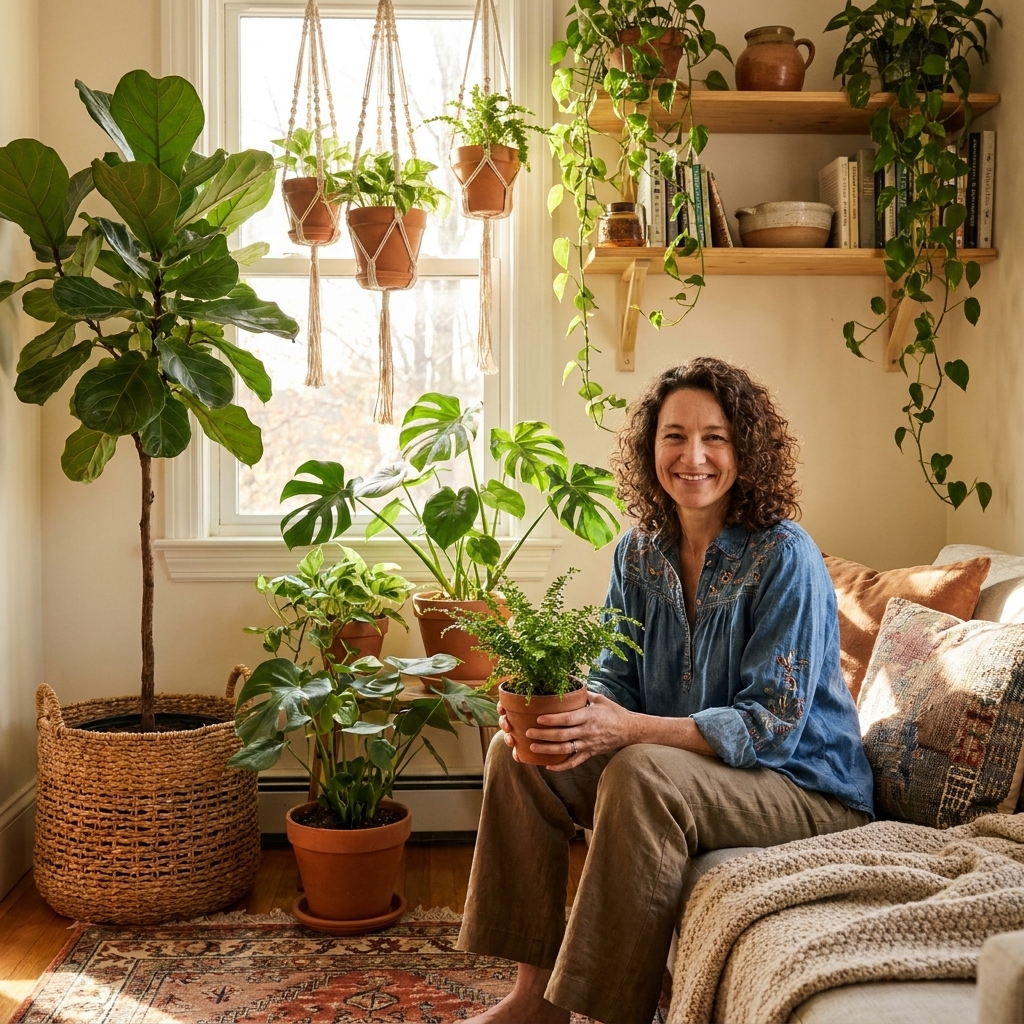
Grouping plants creates that jungle feel with fewer overall pots to monitor. I like a cluster of 3 to 5 plants in one zone: one tall, one medium, one fuller plant, plus one patterned leaf plant for interest.
Choose sturdy containers
Lightweight plastic pots are easy to knock over. I prefer heavier ceramic or terracotta for floor plants, and I’ll often set nursery pots inside a heavier cachepot.
Other pet hazards to watch
Even with non-toxic plants, the extras can be the real troublemakers in a pet home.
- Soil and amendments: Perlite looks like little snack puffs to some pets, and certain fertilizers can be dangerous if eaten. I keep bags sealed and don’t leave scoops out.
- Mulch choices: If you ever use mulch indoors, skip cocoa mulch. It can be harmful to dogs if ingested.
- Pesticides and sprays: I avoid routine spraying. If you treat a plant, follow the label closely and keep pets away until everything is fully dry and the plant is back in place.
- Essential oils and diffusers: Many essential oils can be risky around pets, especially cats. I don’t run diffusers near plants or pet hangout zones.
- Gnats: Fungus gnat traps and treatments should be placed where pets can’t lick or chew them.
Shopping and ID tips
Plant labels can be messy, and “palm” or “fern” isn’t always specific enough. Before you buy, I’d do two quick checks:
- Confirm the exact plant name (at least genus, ideally the full botanical name) and cross-check it against the ASPCA list.
- Be careful with look-alikes: common names overlap, and that’s where people get burned. For example, “sago palm” is not a true palm, and it’s extremely toxic to pets.
Common swaps
Some of the most popular boho houseplants aren’t pet-friendly. If you’re aiming for the same look, these swaps keep the vibe.
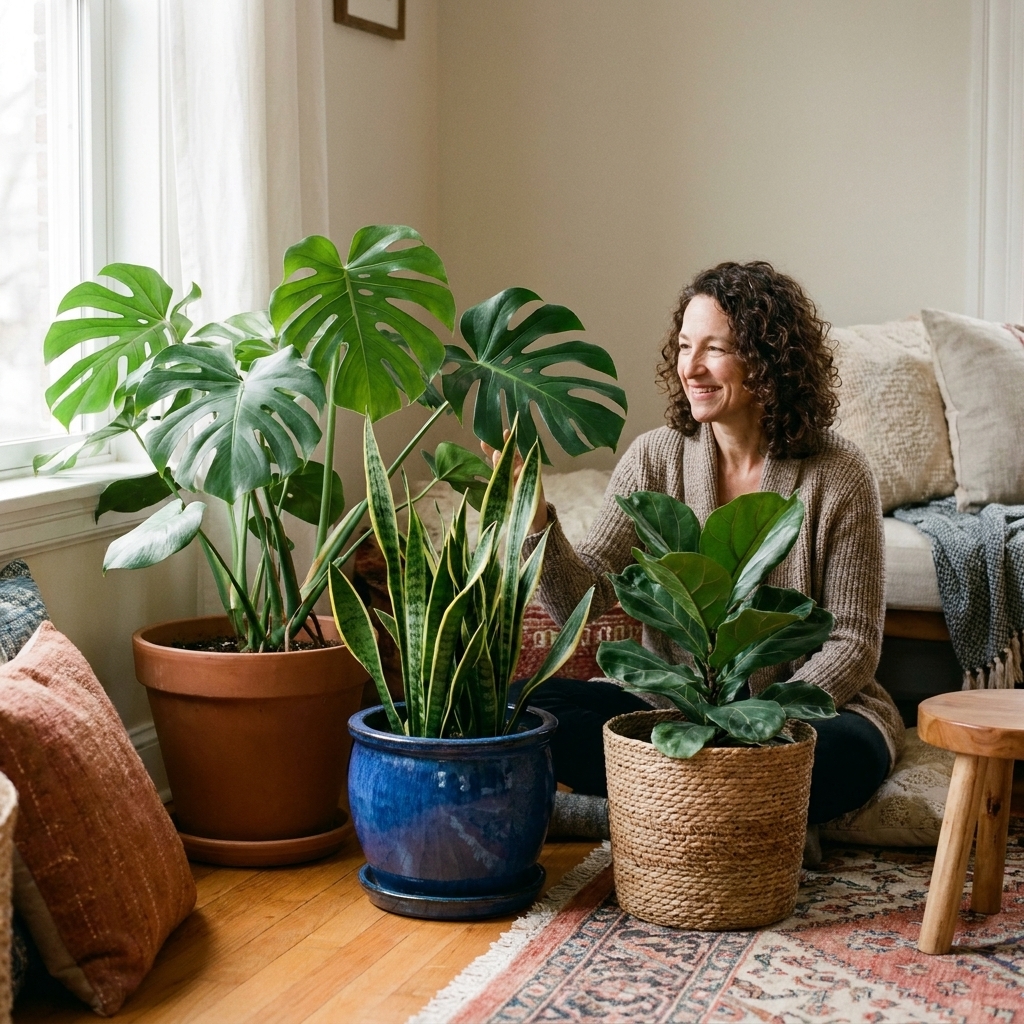
- Instead of monstera: Try an areca palm for big, tropical presence. For more on classic statement plants (including monstera), see Monstera vs Fiddle Leaf vs Bird of Paradise.
- Instead of pothos or philodendron vines: Use a spider plant or a fuller Boston fern for that cascading effect.
- Instead of a peace lily: Go for a parlor palm or a bold-leaf bird’s nest fern.
Placement by room
My rule is simple: make the temptation zones less tempting.
Living room
- Keep a tall palm or cast iron plant behind a chair or in a corner where pets don’t run laps.
- Use a plant cluster on one side of the room so you’re not playing defense everywhere.
Bedroom
- If your cat is a midnight nibbler, avoid plants on nightstands.
- Try a single sturdy plant across the room in a heavier pot, or skip plants in the bedroom entirely and lean into textiles for softness.
Kitchen and dining
- Small peperomias on a high shelf are my favorite here.
- Be mindful of herbs. Many are fine, but pets can still get an upset stomach if they snack.
Bathroom
- This is fern heaven if you have decent light.
- Bathrooms can be an easy pet-free zone depending on your household routines.
FAQ
What is the easiest pet-friendly houseplant for beginners?
Spider plant and parlor palm are usually the lowest-fuss starting points. If you tend to forget watering, ponytail palm is also forgiving.
Are non-toxic plants totally safe?
Non-toxic doesn’t mean edible. It just means the plant isn’t expected to cause serious poisoning. Some pets still get drooling, vomiting, or diarrhea from chewing leaves.
How do I stop my cat from eating my plants?
Start with placement: higher shelves, heavier floor pots, and fewer dangling leaves at nose level. Then redirect with acceptable chew options approved by your vet, and make sure your cat has enough enrichment. Sometimes plant chewing is just boredom with excellent marketing.
Can I still have a boho look without trailing vines?
Absolutely. Go for layered heights and leaf shapes instead: a palm for height, a fern for softness, and a patterned prayer-plant relative for drama. Texture in planters and textiles does a lot of the heavy lifting.
My fastest lush combo
If you want the quickest pet-friendlier jungle upgrade, do this: choose one tall palm, add a fern for fullness, then tuck in one patterned leaf plant like a prayer plant. Put all three together, vary the pot textures, and let the cluster be a moment.
And if you want to lean into that cozy, layered Eclectic Nook feel, pair your plants with natural materials. Woven storage is especially helpful for corralling pet toys and keeping the room calm. I shared a bunch of ideas in 7 Creative Ways to Use Woven Seagrass Baskets for Stylish Boho Storage.