
I have a little thrift-store ritual before friends come over: I pull out my block print tablecloths, rummage for anything wooden and slightly imperfect, then start layering like I am building a cozy outfit for the table. It is the easiest way to make a Tuesday-night dinner feel intentional, especially in a rental where the “dining room” is basically a corner with a table.
Block print linens and natural wood serveware are a go-to pairing of mine because they do the heavy lifting for you. The print brings story and movement. The wood brings warmth and calm. Add seagrass and woven texture, and suddenly the whole setup looks collected over time, not bought in one click.
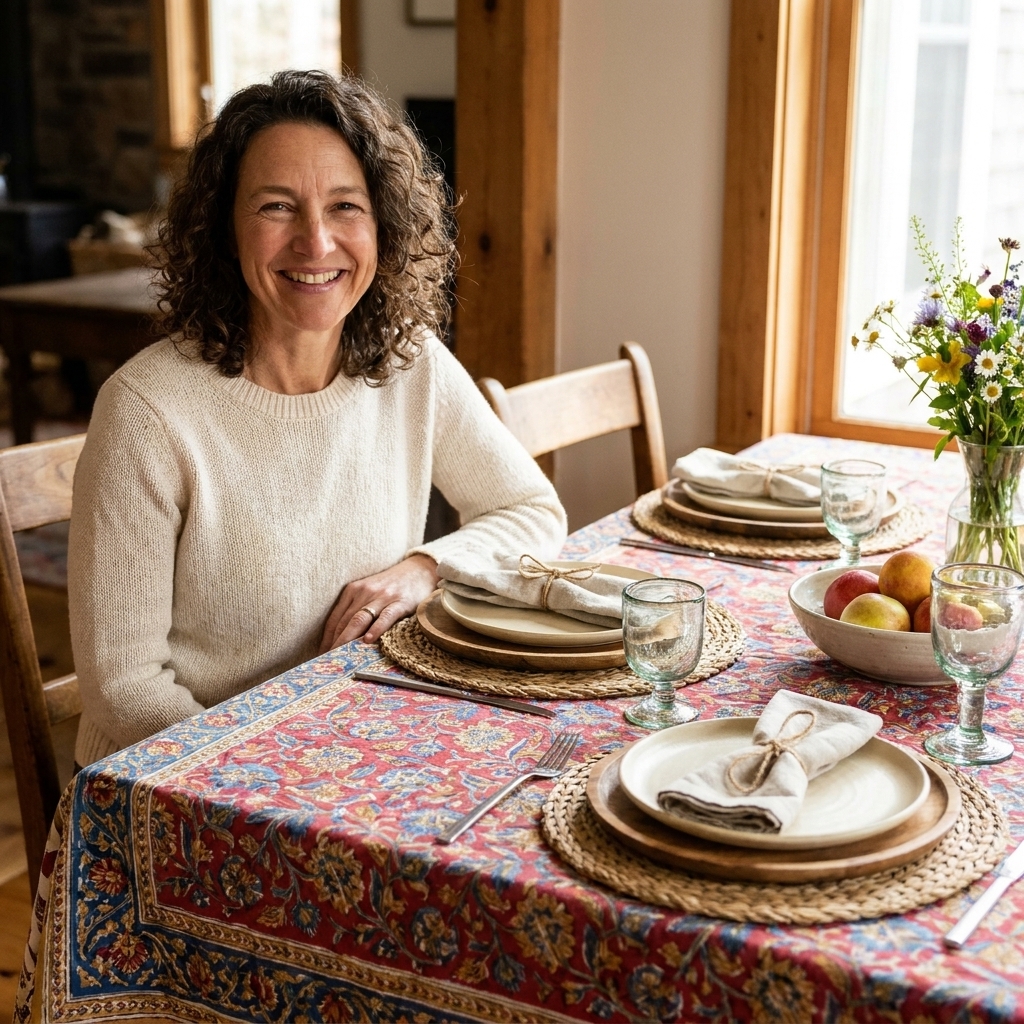
Why block print and wood work
When an eclectic table looks “right,” it is usually because the materials are doing the blending for you. Block print cotton has a handmade softness and tiny variations in ink that keep it from feeling too perfect. Raw wood brings organic grain, knots, and that slightly matte finish that makes even inexpensive plates look elevated.
- Pattern + grain equals instant depth, even with neutral dishes.
- Soft + solid keeps the table from feeling fussy. Linens relax the look. Wood anchors it.
- Global + grounded gives you that traveled, collected vibe without turning dinner into a theme party.
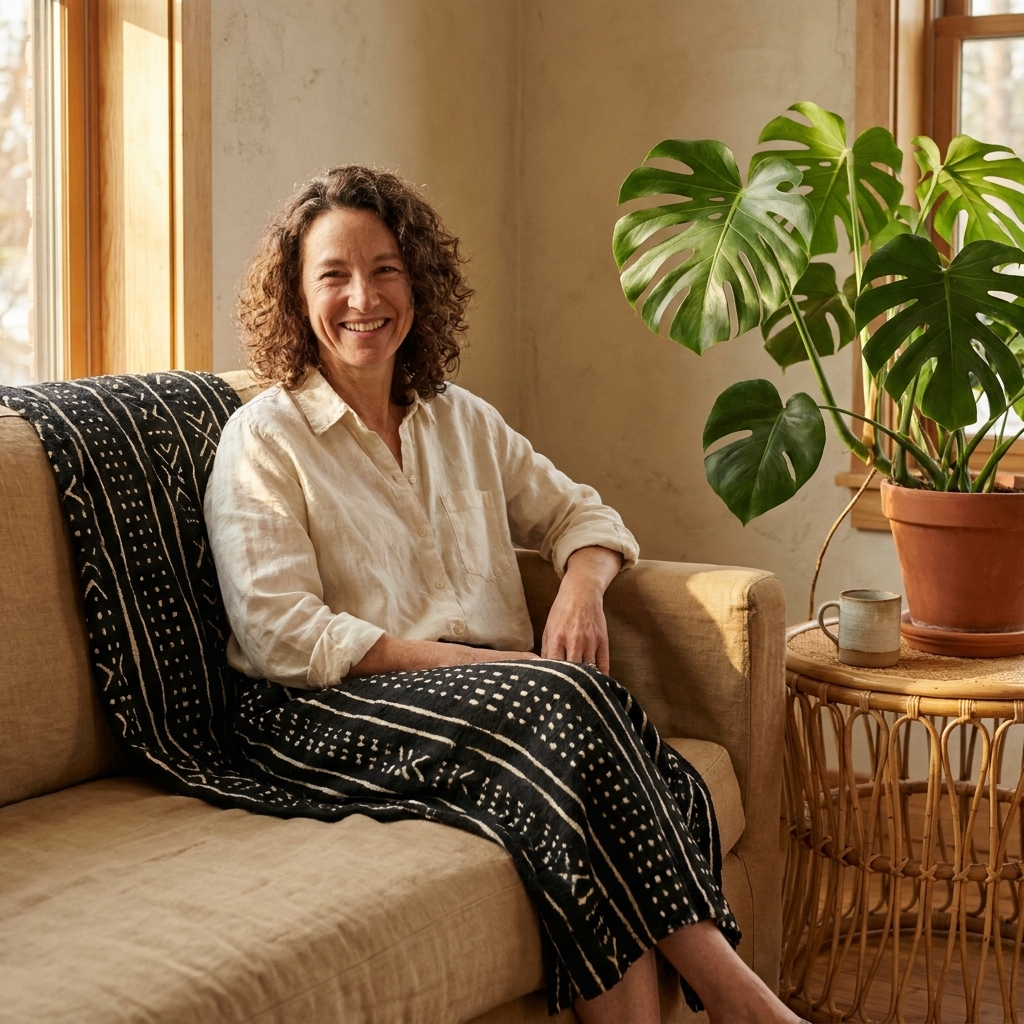
If you love global textiles, you might also like my deeper dive into sourcing and styling: Authentic Mudcloth: Sourcing and Styling Global Textiles.
Start with the base layer
Pick one “hero” textile. I like block print tablecloths when I want full, cozy coverage and a little drama. I reach for runners when the wood tabletop is beautiful or when I am working with a smaller table and want breathing room.
Quick choosing guide
- Large-scale block print: best for simple place settings and minimal centerpieces.
- Small, busy motifs: best when your dishes are plain and your serveware is sculptural.
- High contrast (black, indigo, rust): looks amazing with pale wood and seagrass.
- Soft earthy palettes: perfect with darker acacia or walnut tones.
Maya’s wrinkle rule
I do not iron everything. I smooth the cloth with my hands, steam only the worst creases, and let the rest read as “lived in.” If you want a quick refresh, hang the cloth in the bathroom while you shower. It helps relax light wrinkles, but it will not erase deep fold lines like a real steam session.
Scale tips that save you
- Small tables: try a narrower runner so you still see some wood, and keep the centerpiece compact so you have room for plates.
- Long tables: a full cloth looks lush, or use two runners end to end if you want that layered, collected feel.
- Centerpiece length: I aim for about a third of the table length, not the whole runway.
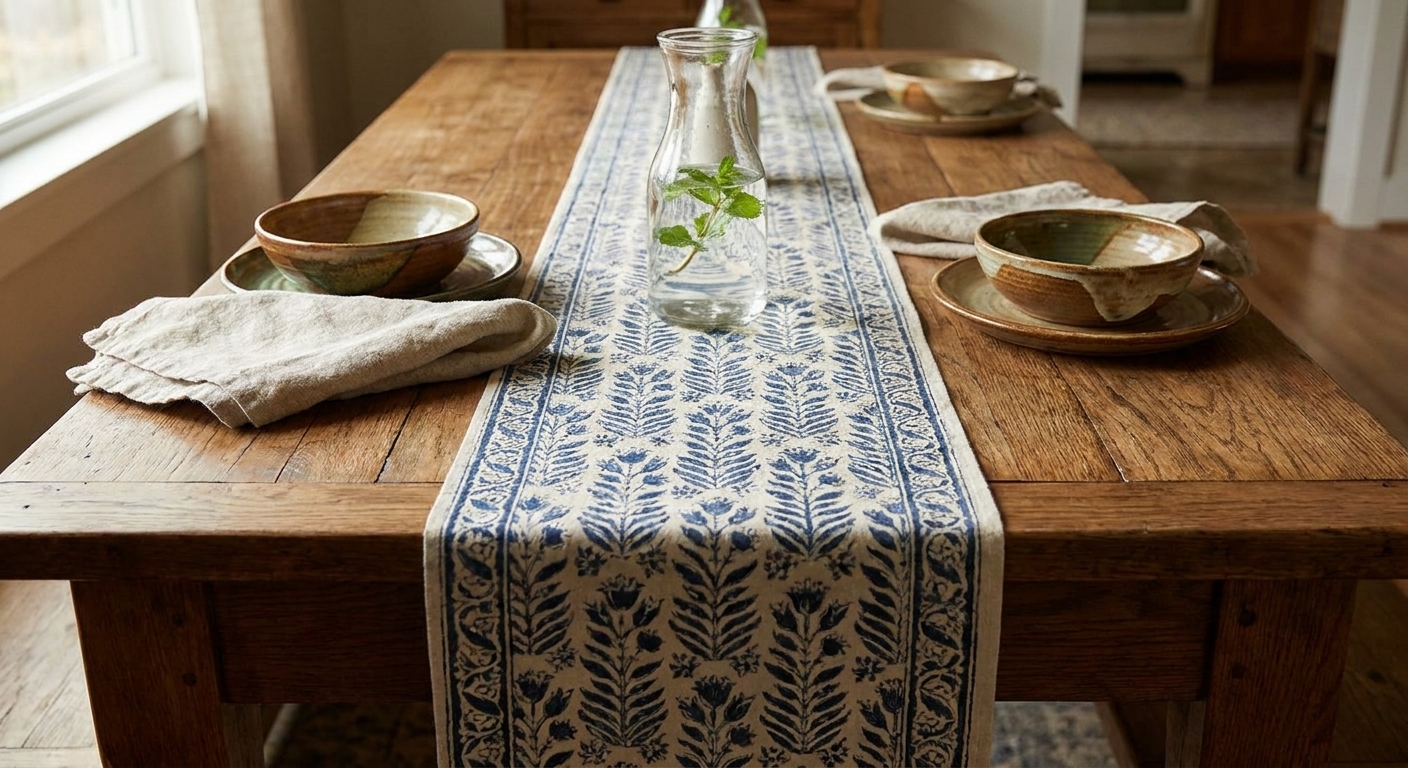
Layer the place setting
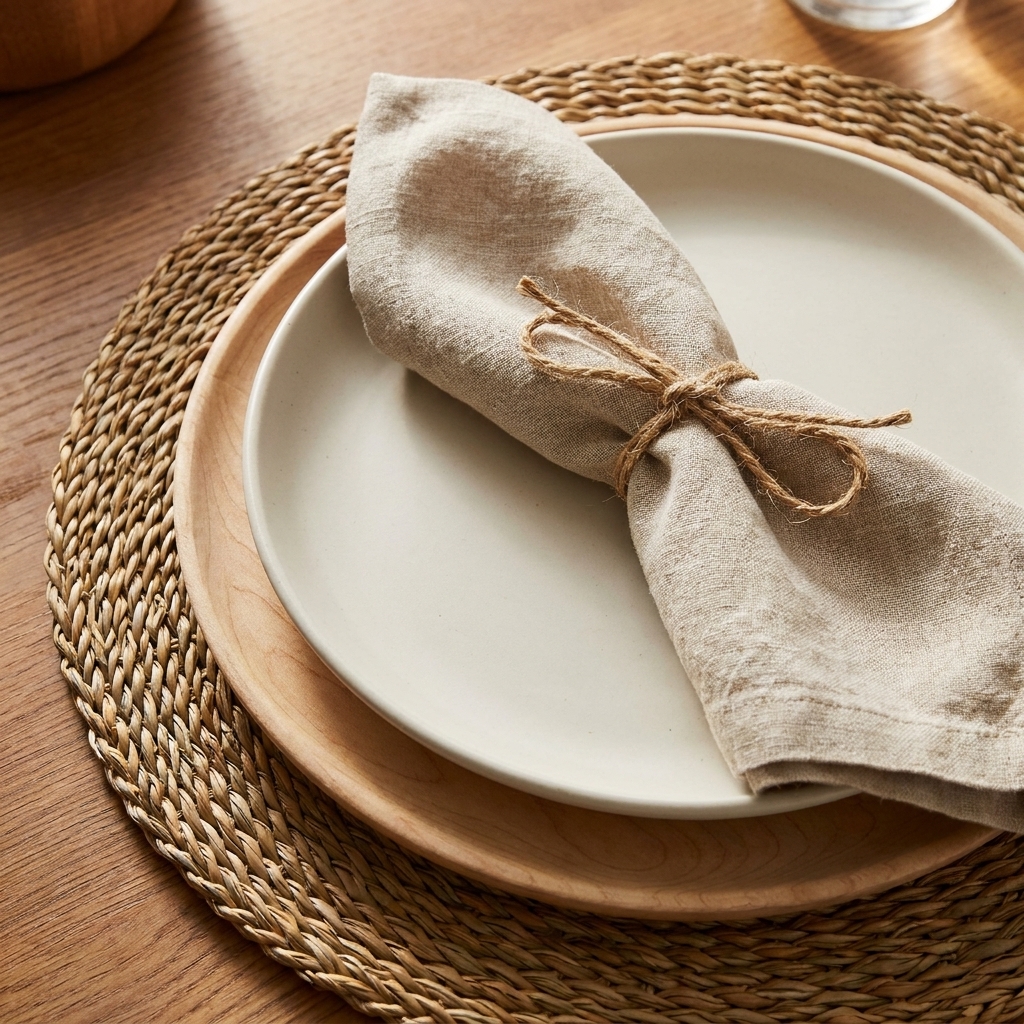
Here is the layering order I use when I want the table to look rich but still easy.
My go-to layering order
- Seagrass placemat (or woven water hyacinth) for that beachy, boho texture.
- Wood charger for warmth and a defined “frame.”
- Plate (neutral stoneware is the fastest win).
- Bowl if the meal needs it. This adds height and shadows.
- Napkin (linen, cotton, or even a gauzy scarf-style napkin for a more relaxed look).
If your placemats are looking a little sad or you want styling ideas that go beyond the dining table, you might like: 7 Creative Ways to Use Woven Seagrass Baskets for Stylish Boho Storage. Same material, same vibe, lots of texture tricks.
Keep it cohesive
- Repeat one tone: choose either warm honey wood everywhere, or mix woods but repeat a warm note through napkins or candles.
- Keep silhouettes consistent: if your plates are scalloped, keep chargers simple. If your wood boards are very organic, choose cleaner plates.
- Let one thing be loud: either the linen pattern or the dishes, not both.
Serveware that feels intentional
Natural wood serveware is the shortcut to a pulled-together tablescape because it acts like a neutral, but with personality. You can go rustic, sleek, or somewhere in between.
My favorites for an eclectic table
- Wood boards: use as cheese boards, bread boards, or even as a “platform” for a cluster of small bowls.
- Wood salad bowl: a big one instantly becomes the centerpiece of the meal.
- Small wood pinch bowls: perfect for flaky salt, olives, lemon wedges, or dips.
- Wooden utensils: especially beautiful on top of a printed cloth because the grain stands out.
What to watch for with thrifted wood
If you thrift wood pieces like I do, check for cracks, sticky finishes, and strong smells that can be hard to remove. I also avoid using thrifted pieces with unknown finishes for direct food contact. If I cannot confidently clean it or I do not know what has been on it, I designate it as decor only and use it for fruit with peels, napkins, or candle styling instead.
Quick clean and safety routine
- Wash with hot, soapy water and a non-abrasive sponge.
- Rinse and dry immediately.
- If it is decor-only, I still clean it, I just stop worrying about it being “food safe.”
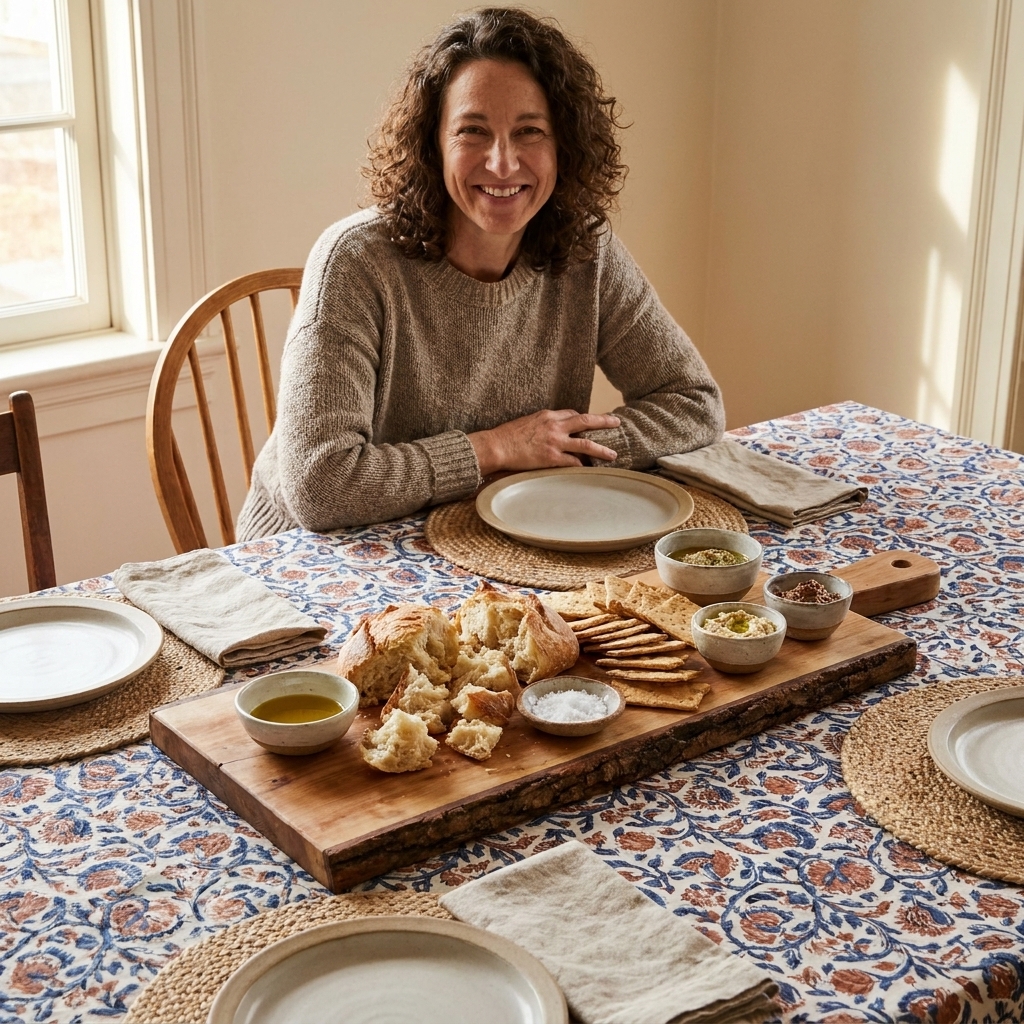
Woven accents that tie it in
Woven texture is what makes block print and wood feel like a full story instead of two nice things sitting next to each other.
Easy woven additions
- Seagrass placemats for a defined, layered base.
- Rattan napkin rings to add structure without feeling formal.
- Woven bread basket lined with a scrap of coordinating fabric.
- Small cane or rattan tray to corral condiments.
If you are still figuring out which woven material reads best in your space, I broke down the differences here: Rattan, Wicker, or Bamboo?
Centerpieces that do not compete
With block print, I like a centerpiece that feels airy. The table already has movement, so the goal is to add height and glow without competing.
Three centerpiece formulas I rely on
- The low-and-lush: a shallow bowl with citrus, pomegranates, or pears plus a few leafy stems tucked around the edge.
- The candle cluster: three to five taper candles in mixed holders, all in a tight group off-center.
- The single statement: one sculptural vase with branches or a handful of dried botanicals.
How many candles is too many?
- Small table: 2 to 3 tapers, or 1 vase plus 1 candle.
- Medium table: 3 to 5 tapers clustered.
- Long table: repeat a simple mini-moment down the center (for example, a candle, a small bud vase, a candle) instead of one giant arrangement.
If dried botanicals are your thing, you might like: Styling Pampas Grass and Dried Botanicals.
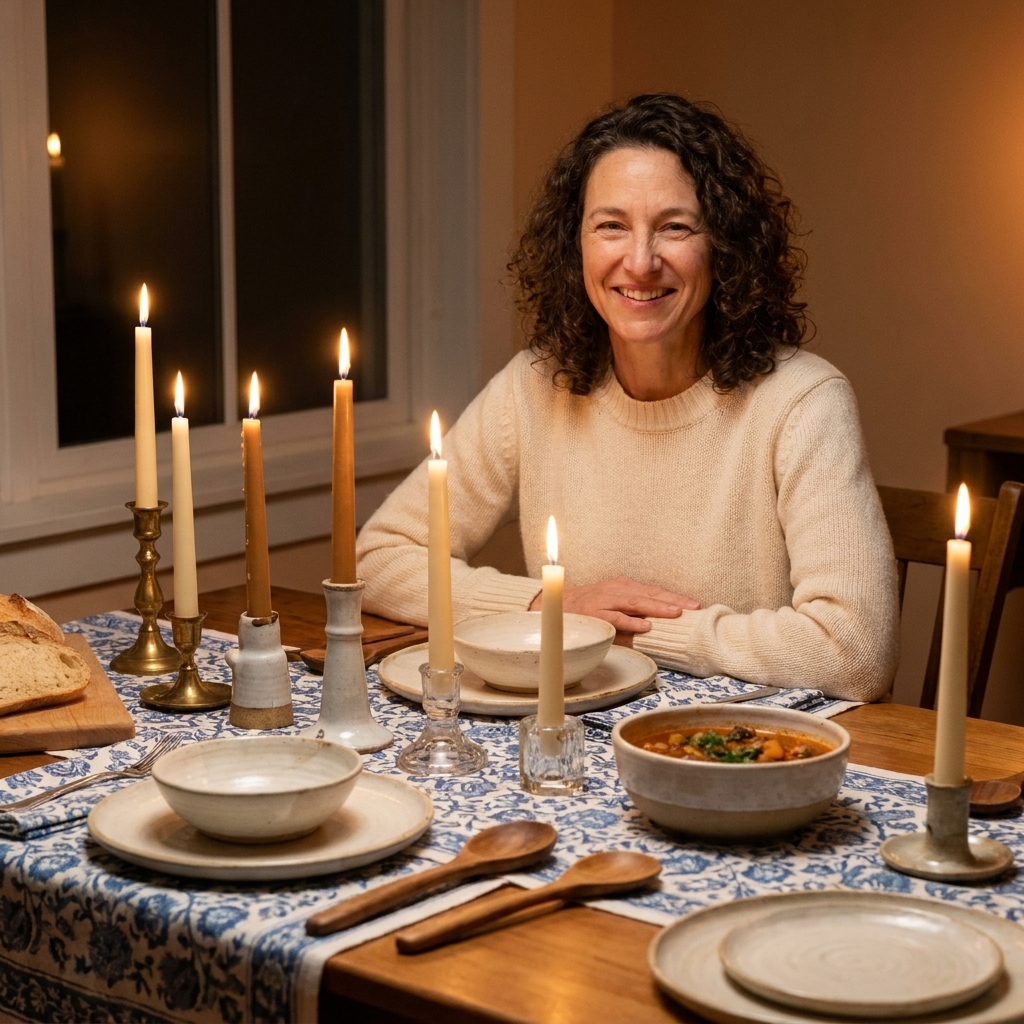
Two tables you can copy
1) Earthy everyday dinner
- Soft, warm-toned block print runner
- Seagrass placemats
- Light wood chargers
- Off-white stoneware plates
- Olive or flax linen napkins
- One wood bowl of salad as the centerpiece
2) Jewel-toned, a bit dressed up
- Indigo or deep red block print tablecloth
- Dark wood board for bread and shared appetizers
- Neutral plates, but add tinted glassware if you have it
- Brass or matte black candleholders to sharpen the look
- A handful of pomegranates or deep-colored fruit in a low bowl
If choosing between earthy and jewel tones is always a struggle, same, and I wrote about it: Earth Tones vs Jewel Tones for Eclectic Homes.
Care tips for linens and wood
Block print linens
- Check the care tag first, especially if the piece uses natural dyes.
- Cold wash, gentle cycle is usually a safe starting point for printed cotton.
- Mild detergent and avoid brightening agents if you can.
- Line dry when possible. Heat can often dull color over time.
- Spot treat fast: a little dish soap and cool water beats aggressive scrubbing later.
Wood serveware
- Hand wash and dry right away. Long soaks are wood’s villain.
- Condition occasionally with food-grade mineral oil or a board conditioner (often mineral oil and beeswax) to keep it from looking thirsty.
- Skip the dishwasher unless the piece is explicitly labeled dishwasher-safe.
Common mixing fixes
“My table looks busy, not layered.”
Pull back on one category. If your cloth is bold, choose plain napkins. If your plates have a pattern, switch to a solid runner.
“The wood looks orange next to my linens.”
Add a bridge color. A camel napkin, a warm candle, or even a bowl of oranges can make the tones feel intentional instead of accidental.
“Everything is flat.”
Add two heights: one low (fruit, bread board) and one taller (tapers, a small vase). Height is what photographs well and feels special in person.
“I love block print, but I am nervous about pattern mixing.”
Use block print as your only true pattern and bring in “quiet pattern” through texture instead. Think slubby linen, basket weave, and wood grain. If you want to go further, my pattern-mixing training wheels are here: How to Mix Bold Patterns Without Clashing.
A thrift-first shopping list
If you want the collected, eclectic vibe, secondhand is your best friend. I find the best wood pieces when I stop looking for “serveware” and start looking for “anything flat and beautiful.”
- Wood boards, trays, and platters (even odd shapes)
- Mixed candleholders (wood, brass, ceramic)
- Neutral stoneware plates you can build on slowly
- Linen napkins, or even linen shirts that can be cut into napkins if you sew
- Woven baskets that can double as bread baskets
If you want my broader approach to thrifting for a boho home, start here: Budget Boho Thrifting and 10 Thrift Store Staples for Authentic Boho Style.
Final touch: make it yours
The point of an eclectic tablescape is not perfection. It is personality. If your block print cloth has a coffee stain you cannot totally defeat, build the table around it and call it patina. If your wood board is a little scratched, good. It means it has stories.
Light a couple candles, put the good salt in a tiny bowl, and let the table be layered, warm, and human. That is the whole magic.