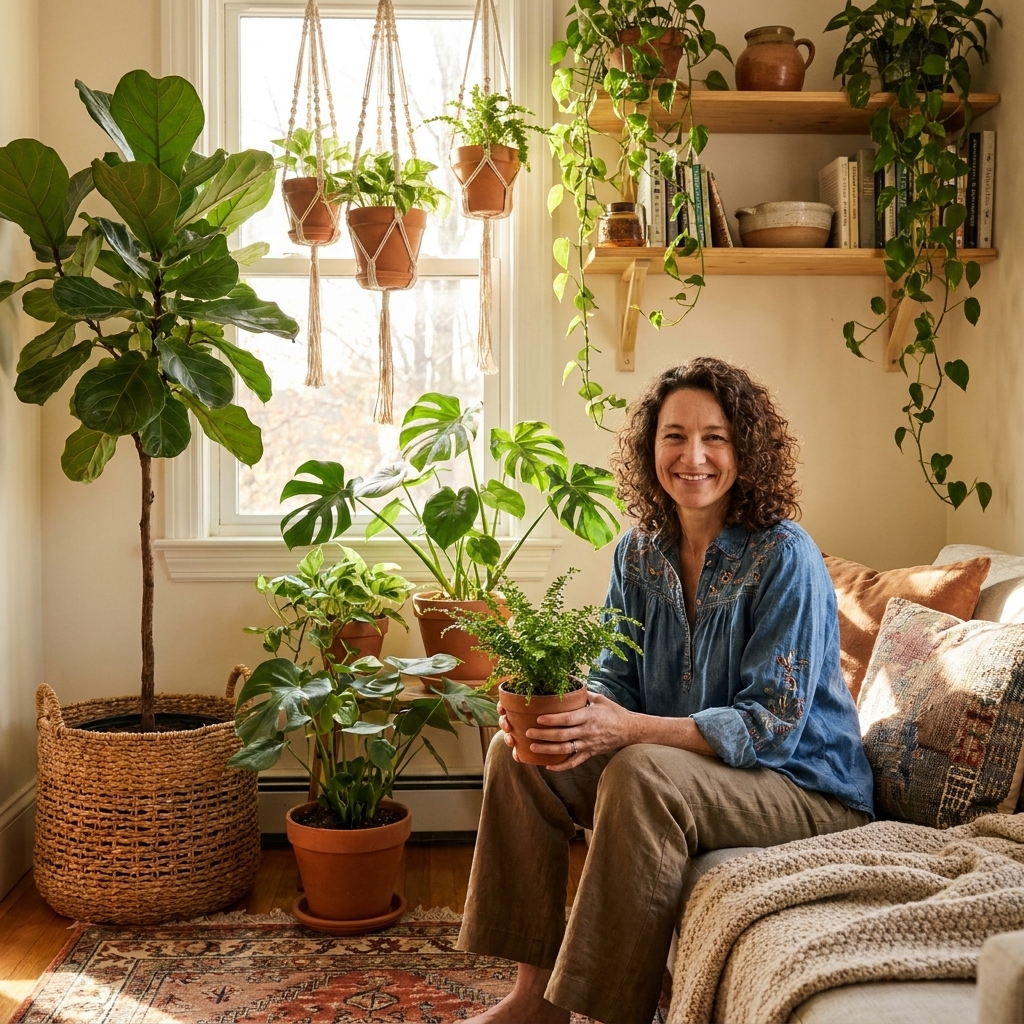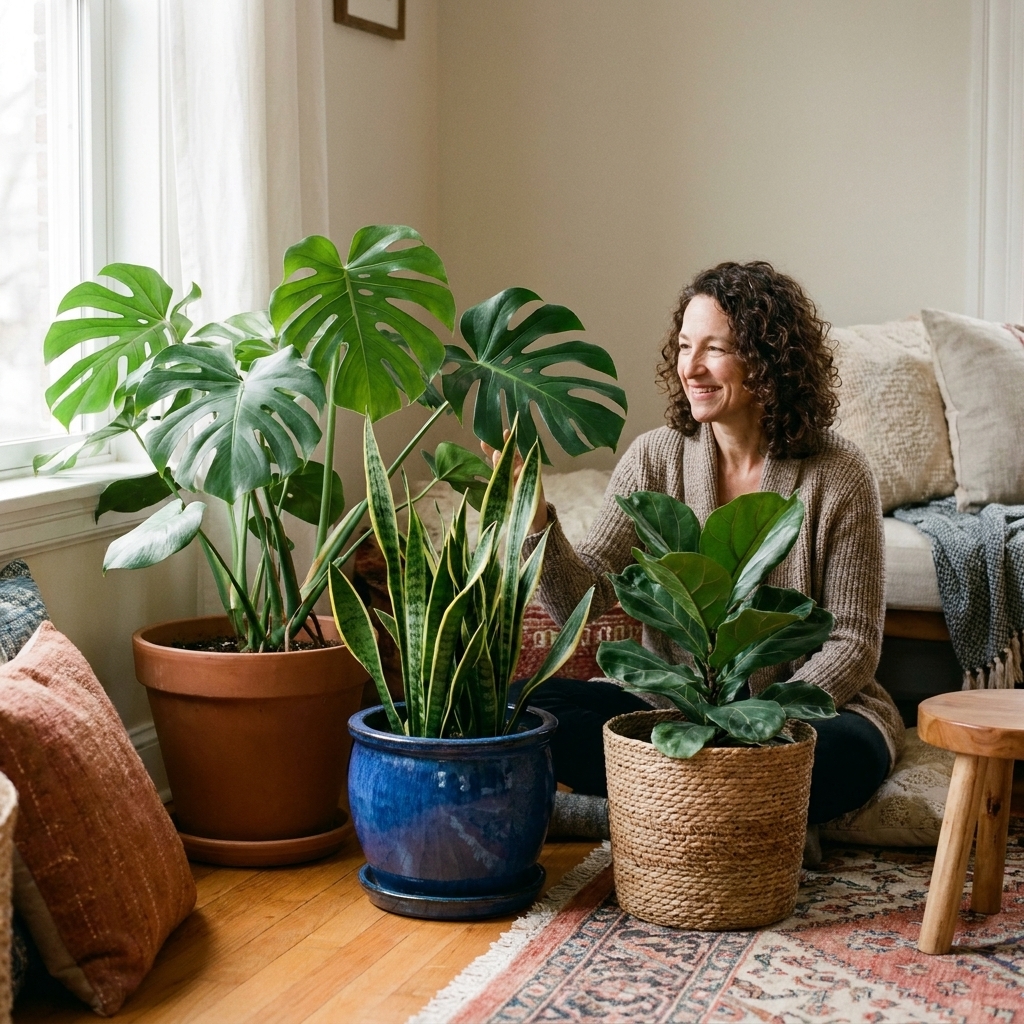

I will never forget the first time I dragged a truly oversized plant into a rental living room. It was taller than my thrifted floor lamp, the pot barely fit in my back seat, and for a solid week I kept walking by it like, “Oh. So this is what a focal point feels like.” If you want that same instant wow factor, you are probably circling the same three icons: Monstera, Fiddle Leaf Fig, and Bird of Paradise.
The trick is that they are not interchangeable. They read differently in a room, they ask for different light, and they take up floor space in very different ways. Let’s make the choice feel obvious.
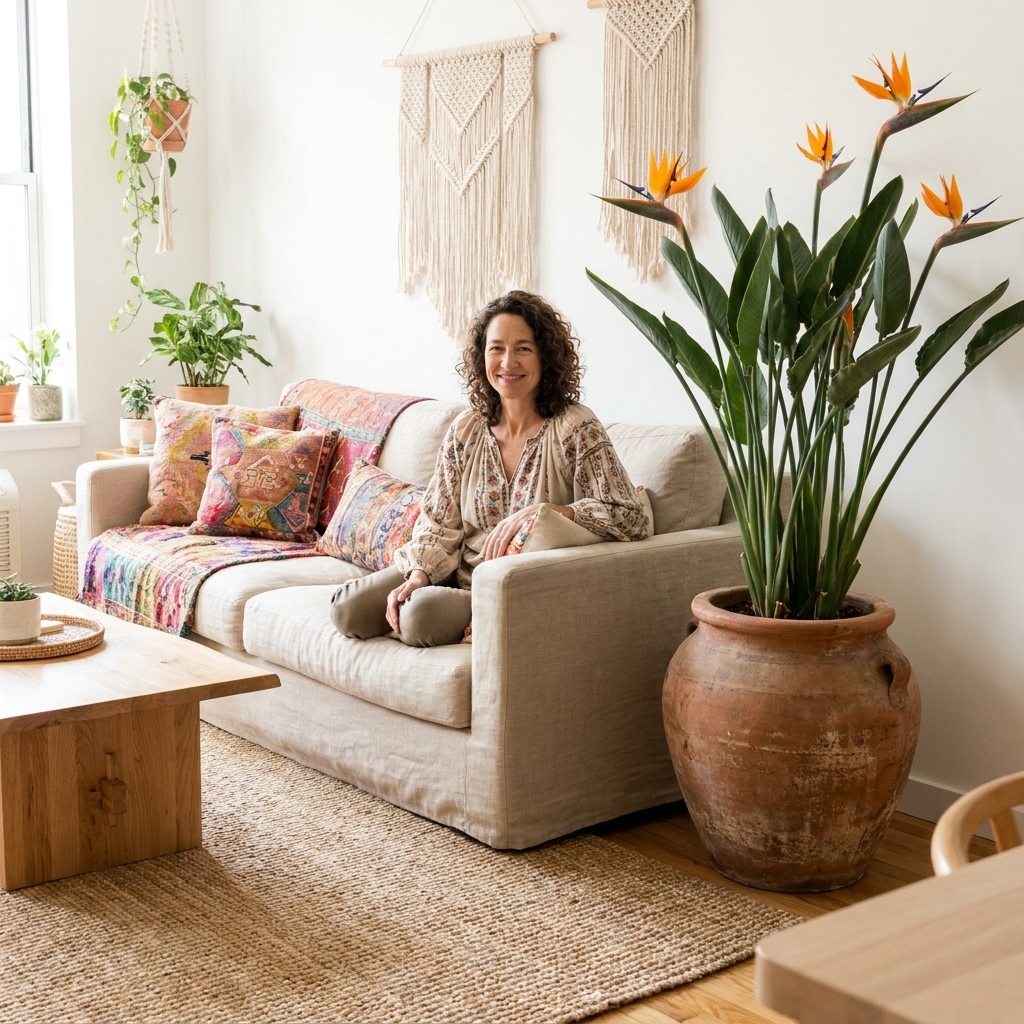
Quick pick: which one should you get?
- Pick a Monstera if you want a sculptural, boho-friendly statement that can handle medium light (it will still do best in brighter spots) and gives you that layered jungle vibe fast.
- Pick a Fiddle Leaf Fig if you have very bright, steady light and you want a clean, tree-like silhouette that looks tailored and dramatic.
- Pick a Bird of Paradise if you have strong light and enough floor space for wide leaves, and you want a tropical, resort-at-home vibe with serious height.
If you are still torn, the rest of this guide breaks it down by light, footprint, and styling so you do not end up designing around plant regret.
Before you buy: 3 things that matter
1) Light quality, not just direction
When someone tells me “It’s a bright room,” I ask one more question: Can you comfortably read a book there without turning on a lamp for most of the day? That is my everyday test for bright indirect light.
- Bright indirect light: near a window but not getting blasted for hours by harsh sun.
- Medium light: a few feet back from a window, or a brighter room that is shaded by trees or buildings.
- Low light: you can keep plants alive, but statement trees usually sulk here.
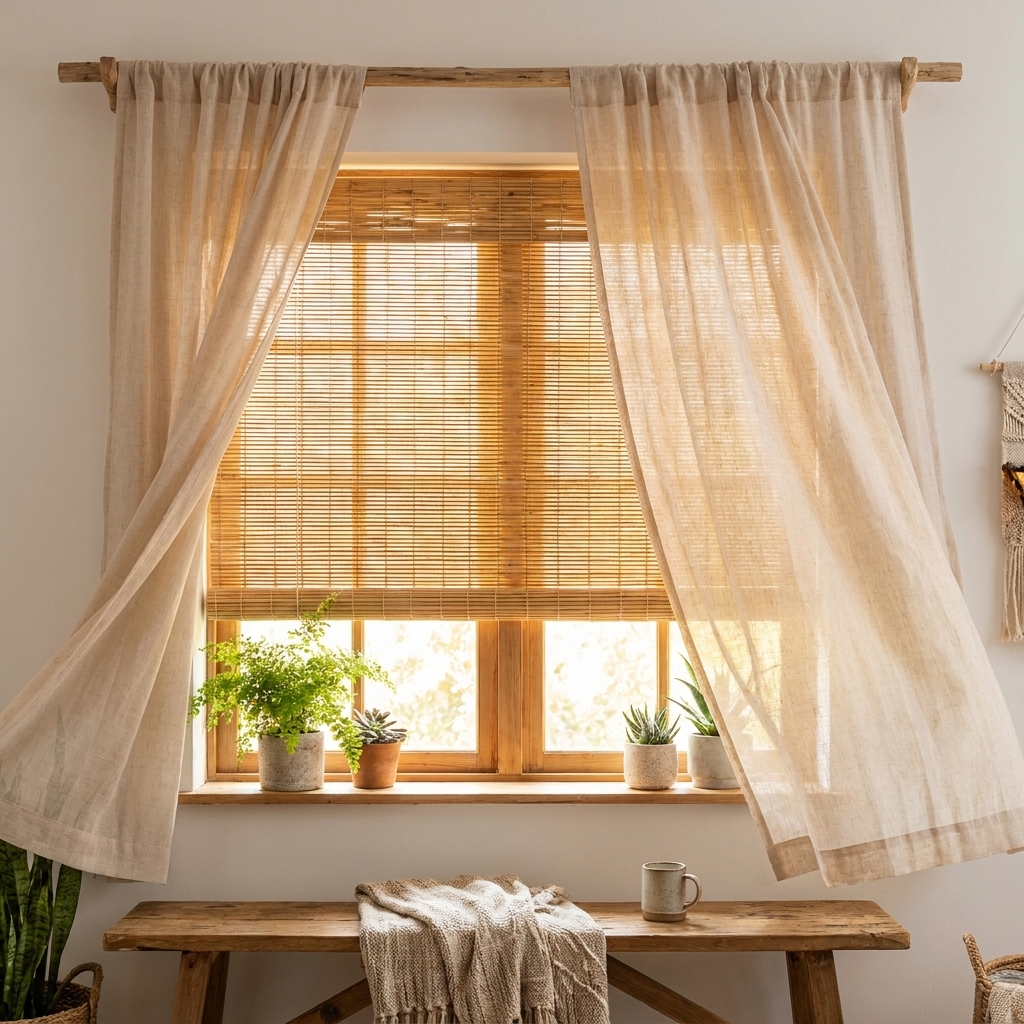
One more practical note: bright can mean different things depending on your window. East windows are often gentler. South and west windows can be intense, especially in summer. If you have strong sun, a sheer curtain or a little distance from the glass can help you hit that sweet spot. If you love layered textiles, this is also where light-filtering window treatments shine, and Boho Window Treatments: Sheer Linen Curtains + Bamboo Blinds has great ideas.
2) Floor space and leaf spread
Height is not the only issue. Some plants are polite and vertical. Others throw elbows. Measure the area like you are placing a chair: width matters.
3) Drainage and pot size
A lot of “black thumb” stories are really container problems. For all three of these, you will have a better time if you:
- Use a pot with a drainage hole, or keep the plant in a nursery pot and set it inside a decorative cachepot.
- Avoid jumping to a pot that is way bigger than the root ball. Oversized pots stay wet longer, and wet soil plus low light is where root rot starts.
- Empty any standing water from saucers and cachepots after watering.
Your tolerance for drama
I say this with love. Some plants are easygoing roommates. Some are divas who notice if you moved them six inches. Choosing based on your personality is not cheating, it is smart.
If you want help making plants look intentional once they are home, you will love Arrange Houseplants Like a Designer.
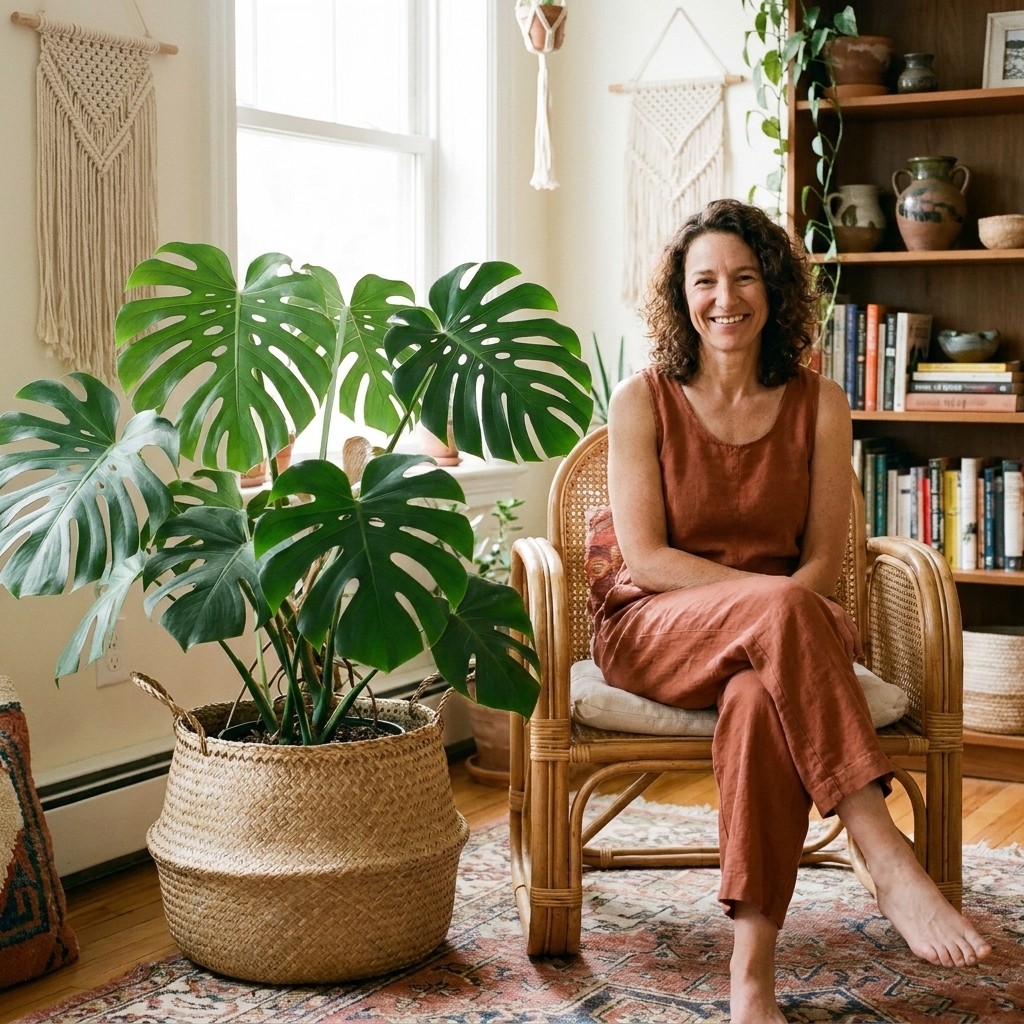
Monstera deliciosa: the boho classic
Best for
- Medium to bright indirect light homes that still want a big statement.
- Eclectic rooms with layered textiles, vintage wood, rattan, and art walls.
- People who like lush more than perfectly symmetrical.
Light needs
Monsteras are the most forgiving of the three. They prefer bright indirect light, but many will still grow in medium light. In lower light, growth slows and leaves tend to be smaller with fewer splits.
Footprint and growth habit
Monstera can be wide if it is allowed to sprawl. If you want a narrower, more vertical look, plan on a moss pole or sturdy support and rotate the pot every week or two so it does not lean hard toward the window.
Pot and watering basics
- Water: let the top couple inches of soil dry before watering again.
- Drainage: do not let it sit in water inside a basket or cachepot.
- Signals: droopy leaves often mean thirsty; yellowing can mean overwatering or not enough light.
How it reads in boho and eclectic decor
Monstera is my favorite bridge plant. It looks right at home next to rattan and woven pieces, and it softens rooms with lots of pattern because the leaf shape is bold but not fussy.
Watch-outs
- Pets and kids: Monsteras are considered toxic if ingested, so placement matters.
- Air roots: normal, but they can look wild. You can gently guide them back into the pot or onto a support.
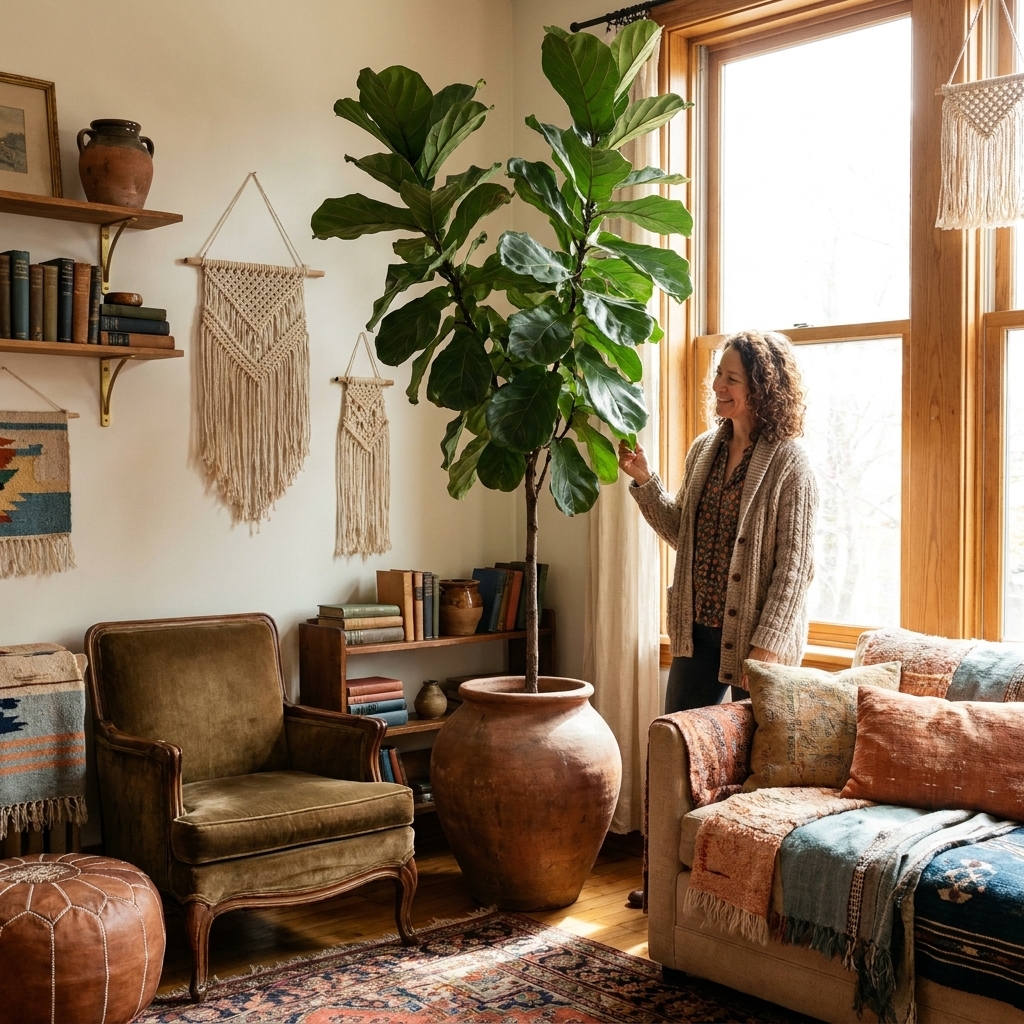
Fiddle Leaf Fig: the tailored statement
Best for
- Very bright, consistent light and a stable spot where you will not move it around.
- Rooms that need height without a lot of width.
- Styling contrast: if your decor is layered and colorful, a Fiddle Leaf adds a clean, architectural line.
Light needs
This is the plant that makes people swear they have a black thumb. Most of the time, it is simply not getting enough light. A Fiddle Leaf is happiest in very bright light indoors. The closer it is to a bright window, the better it tends to behave, but hot direct midday sun through glass can scorch leaves. If your window gets strong sun, pull it back a bit or use a sheer curtain to soften the light.
Footprint and growth habit
Fiddle Leaf Figs are relatively upright, which is why they are so popular for corners. They can be trained into a single trunk tree form or allowed to branch. They look best when they have room to breathe around the crown, so do not cram them between a bookcase and a curtain.
Pot and watering basics
- Water: let the top few inches dry, then water thoroughly. They do not love constant damp soil.
- Drainage: non-negotiable. A nursery pot inside a prettier outer pot is a safe setup.
- Stability: avoid drafts and frequent moving.
- Maintenance: wipe leaves occasionally so they can actually absorb light.
How it reads in boho and eclectic decor
I love a Fiddle Leaf in an eclectic space because it feels like a visual exhale. If you have a busy gallery wall or layered rugs, that strong vertical silhouette gives the room structure. If you are already mixing a lot of patterns, this pairs beautifully with the approach in How to Mix Bold Patterns Without Clashing because the plant becomes a calm solid among prints.
Watch-outs
- Leaf drop can happen after a move, repot, or light change. Give it time before you panic.
- Cold windows in winter can stress it, even if the light is perfect.
- Pets: also considered toxic if ingested.
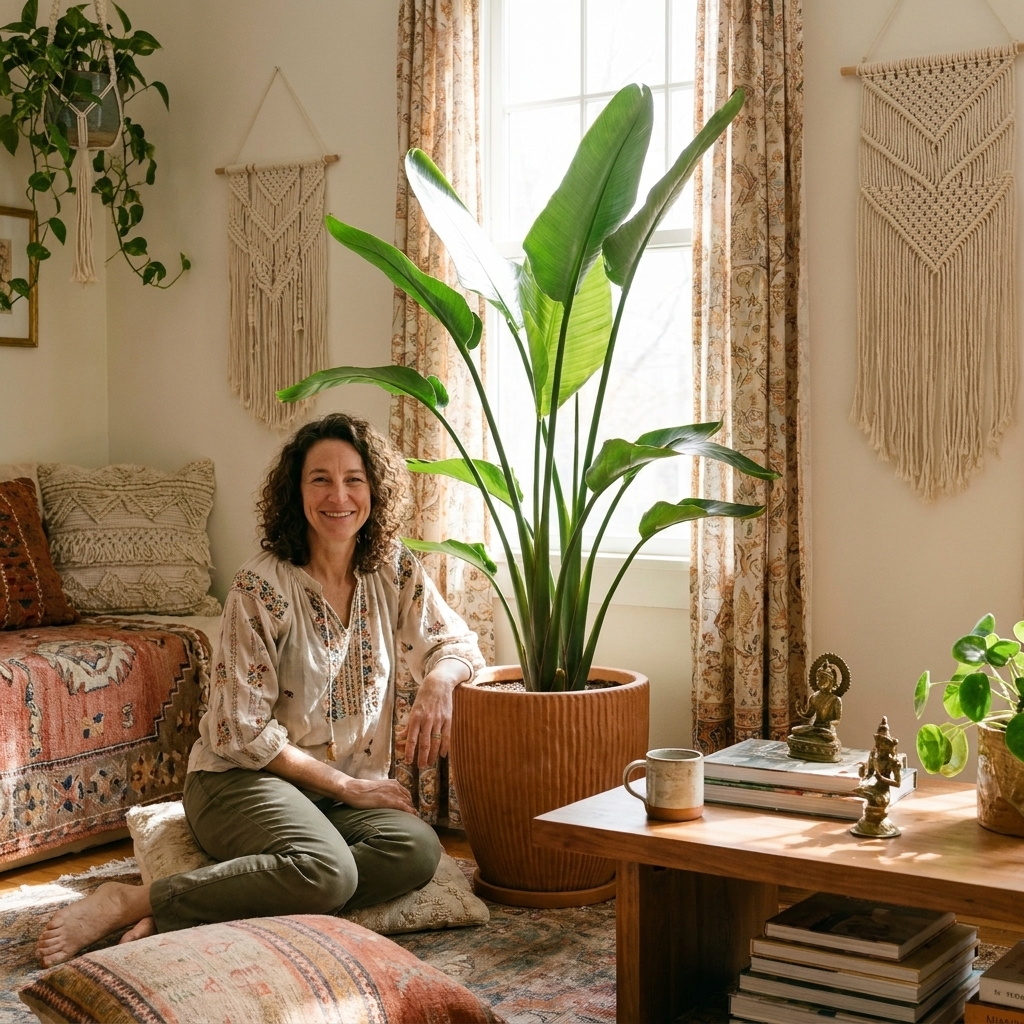
Bird of Paradise: the tropical giant
Best for
- High light homes where you want a bold, tropical feel.
- Big rooms or open-plan spaces where the leaves will not smack everyone walking by.
- Styling moments: blank wall plus big plant plus warm textures equals instant design.
Light needs
Bird of Paradise (sold as Strelitzia) wants bright to very bright light to thrive indoors. Quick clarity: the common tall houseplant version is often Strelitzia nicolai (white bird of paradise), not the smaller flowering S. reginae. If it is not getting enough light, you often see slower growth, smaller leaves, and a general surviving-not-living look.
Footprint and growth habit
This is the widest of the three in most living rooms. The leaves are long and paddle-like, and they fan outward. If you have a narrow walkway or a tight corner, it can quickly feel like the plant is in the way, even if the pot fits.
Pot and watering basics
- Water: likes even moisture, but not soggy roots. Let the top layer dry slightly, then water.
- Drainage: essential, because wet soil plus low light is the fastest way to a sad bird.
- Brown edges: can come from dry air, inconsistent watering, or mineral buildup. If you see it, check your watering rhythm first, then consider humidity.
- Leaf splits: those tears along the leaf are common and normal. In nature, it helps the plant handle wind. Indoors, it is not a sign you failed.
How it reads in boho and eclectic decor
Bird of Paradise is a statement all by itself. I like it in rooms with natural textures and warm neutrals, where it can feel like a living sculpture. If you are leaning into earth tones, it pairs beautifully with the cozy palette ideas in Earth Tones vs Jewel Tones for Eclectic Homes.
Watch-outs
- Space planning: give it a radius so the leaves do not get battered.
- Light: it is less forgiving than Monstera when light is mediocre.
- Pets: use caution, especially with curious nibblers.
Comparison cheat sheet
| Plant | Light (indoors) | Floor space | Care vibe | Best style payoff |
|---|---|---|---|---|
| Monstera | Medium to bright indirect | Medium to wide (can sprawl) | Fairly forgiving | Layered, lush, boho texture |
| Fiddle Leaf Fig | Very bright and steady | More vertical, less wide | Sensitive to change | Clean height, tailored drama |
| Bird of Paradise | Bright to very bright | Wide leaf span | Moderate, likes light and steadiness | Tropical, resort statement |
How to choose for your room
If your room gets medium light
Go Monstera. It is the most realistic way to get that big-plant impact without setting yourself up for disappointment. Place it as close to the window as you can without harsh sun, and use a light-colored pot to keep the look airy.
If you have a bright window but limited floor space
Go Fiddle Leaf Fig. It gives height without the leaf spread of Bird of Paradise. I love it behind a sofa corner or next to a media console where you want vertical balance.
If you have bright light and a wide open corner
Go Bird of Paradise. Give it room and let the leaves be the main character. This is the plant that makes a room feel like it has a destination.
If you move furniture often
Go Monstera. Fiddle Leaf Figs are the least thrilled about being shuffled around, and Bird of Paradise prefers consistency too. If you are always rearranging, choose the one that forgives you.
If you rent or have tight doorways
Quick renter reality check: measure your plant’s forever corner and the path to get it there. A Monstera can be trained up a pole to stay slimmer, but a Bird of Paradise leaf span can make hallways feel like an obstacle course. If you want height with fewer sideways surprises, the Fiddle Leaf usually travels and tucks into corners more easily.
Styling tips for a statement plant
Choose the pot like you would choose shoes
The pot is part of the outfit. For boho and eclectic homes, I love:
- Terracotta for warmth and an earthy, collected feel.
- Basket planters for texture (just keep the plant in a nursery pot inside so you can water safely).
- Matte ceramic when the room already has a lot of pattern and you want calm.
Give it a supporting cast
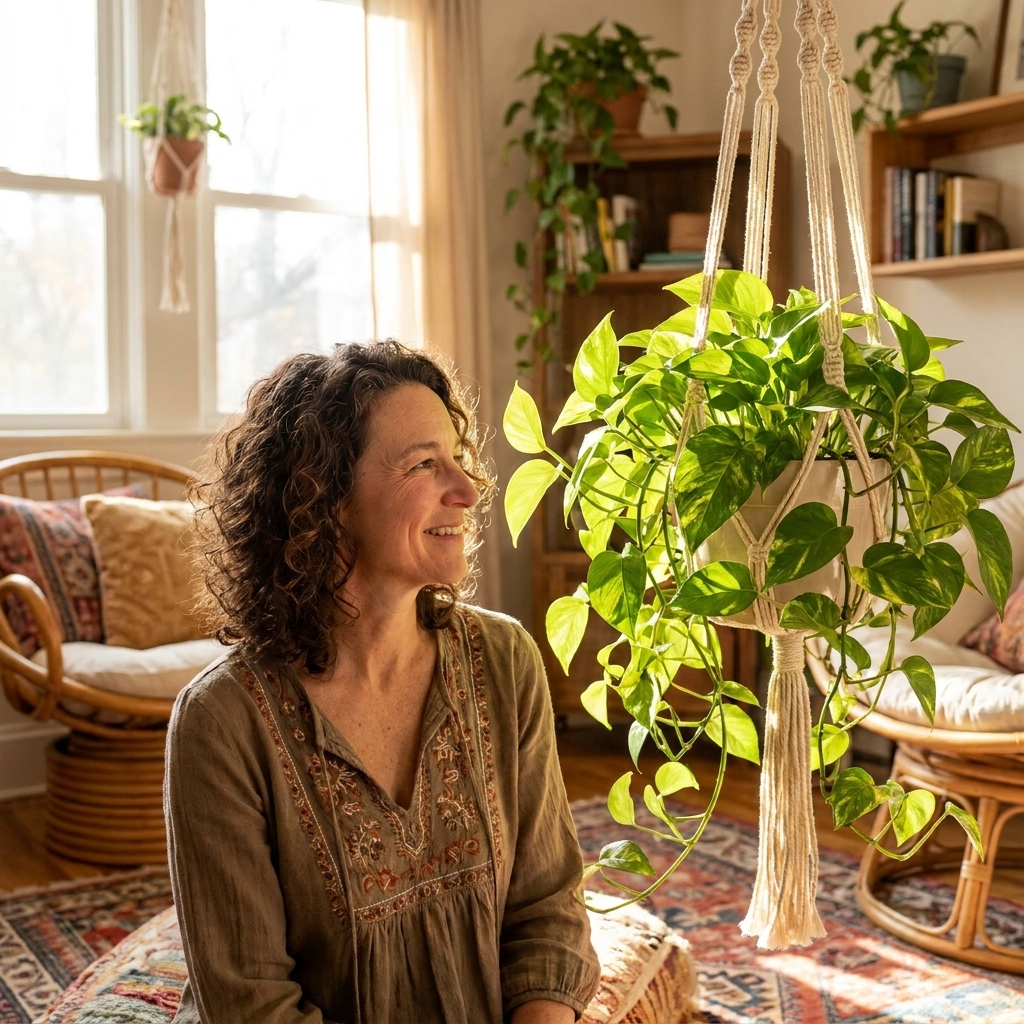
A statement tree looks even better with one or two smaller plants nearby. Think: one tall focal plant plus a trailing plant on a shelf. If you want easy trailing options, start with Top 10 Trailing Houseplants for Macrame Hangers and High Shelves.
Anchor it with texture
If your plant corner feels like it is floating, anchor it with a small vintage stool, a textured basket, or a layered rug moment. I am a huge fan of grounding plant corners with natural fibers, and Layering Vintage and Jute Rugs has the exact vibe.
Common questions
Which one is easiest to keep alive?
Monstera, in most normal homes. It tolerates medium light and bounces back from minor mistakes better than a Fiddle Leaf Fig.
Which one grows the biggest indoors?
All three can get large, but biggest depends on your light and space. Bird of Paradise often wins for dramatic height and leaf size in very bright rooms, while a Monstera can become impressively wide and lush with support and time.
Which one looks best in a boho living room?
Pure boho texture and cozy layering usually points to Monstera. If your boho leans more modern and curated, a Fiddle Leaf is gorgeous. If you want tropical, destination energy, Bird of Paradise is the move.
What if I only have low light?
I would skip all three as your main focal plant unless you are willing to add a grow light. Instead, build your focal point with layered decor and choose tougher low-light plants for support. You can still make it feel lush using the placement tricks in Arrange Houseplants Like a Designer.
My honest recommendation
If you want one plant that looks expensive, styles easily with eclectic decor, and will not punish you for being a human, I would start with a Monstera. If your living room gets strong light most of the day and you want that crisp tree-in-the-corner look, choose a Fiddle Leaf Fig. And if you have the light and the space to let it spread out, Bird of Paradise will give you the most vacation-level impact.
Whichever you choose, take a minute to stand in your living room and pick the plant’s forever spot first. Statement plants look the best when they look like they belong there, like the room was waiting for them.