

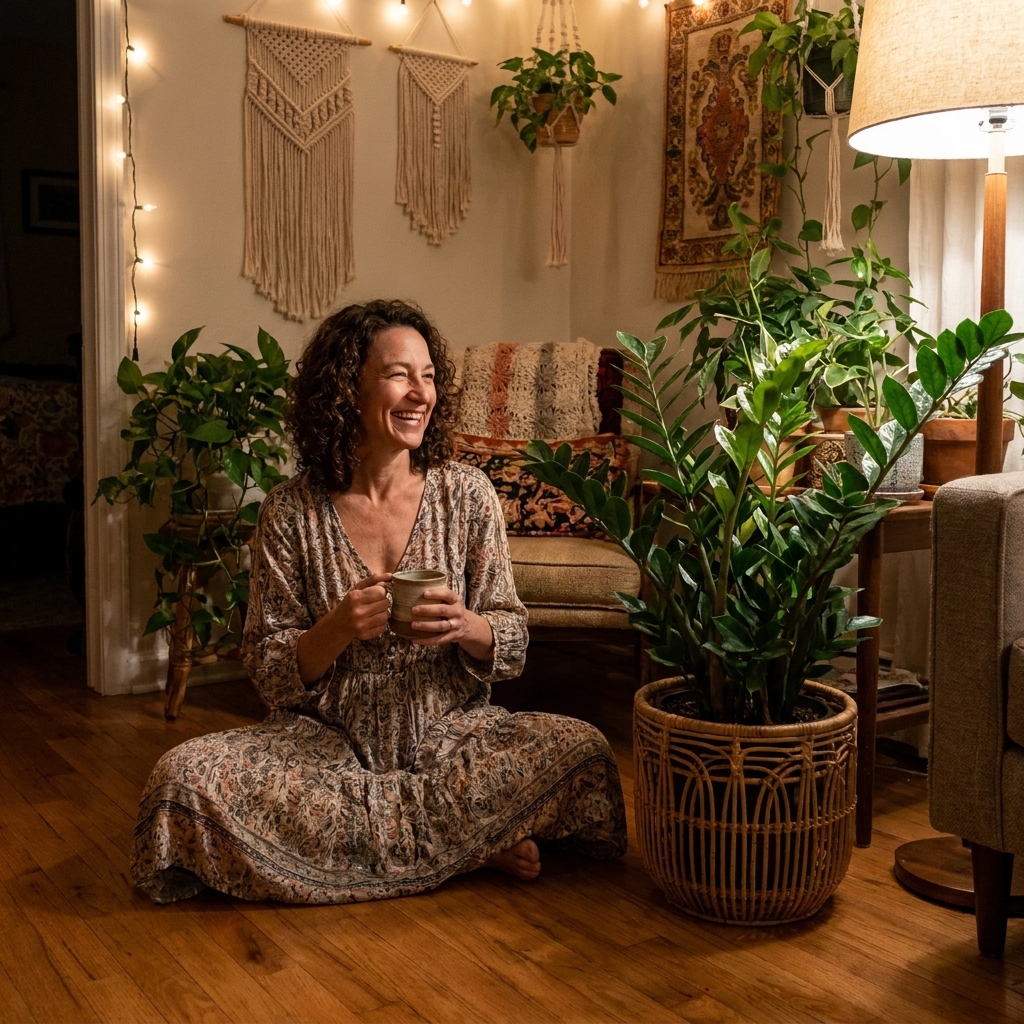
I used to think I had a “black thumb.” Turns out, I just had a “north-facing rental apartment with one sad window” situation. If you have a hallway that feels like a cave, a cozy bedroom corner that never gets direct sun, or a bathroom that stays moody even at noon, you are not doomed to fake plants. You just need the right cast of characters.
This is my go-to list of low-light houseplants that tolerate dim, cozy corners beautifully, plus how I style them in a boho, layered home without turning plant care into a second job.
First, what “low light” really means
Plant labels can be a little optimistic. In real-life homes, “low light” usually means you can read without turning on a lamp for most of the day, but the spot is far from windows and gets no direct sunbeams.
- Bright indirect light: Near a window, but sun is filtered or not hitting the plant directly.
- Medium light: About 3 to 8 feet back from a window (depending on window size and exposure), or in a room with multiple windows.
- Low light: Interior corners, hallways, bathrooms with small windows, rooms with heavy curtains, or any space where you rarely see strong shadows.
If you want a more practical check, a phone light meter app can be surprisingly helpful for comparing spots in your home. And a reality note that saved me a lot of guilt: low-light plants are usually slow plants. In dim corners they tend to maintain, not sprint. That is not failure. That is them doing their job.
My most reliable low-light plants
ZZ Plant (Zamioculcas zamiifolia)
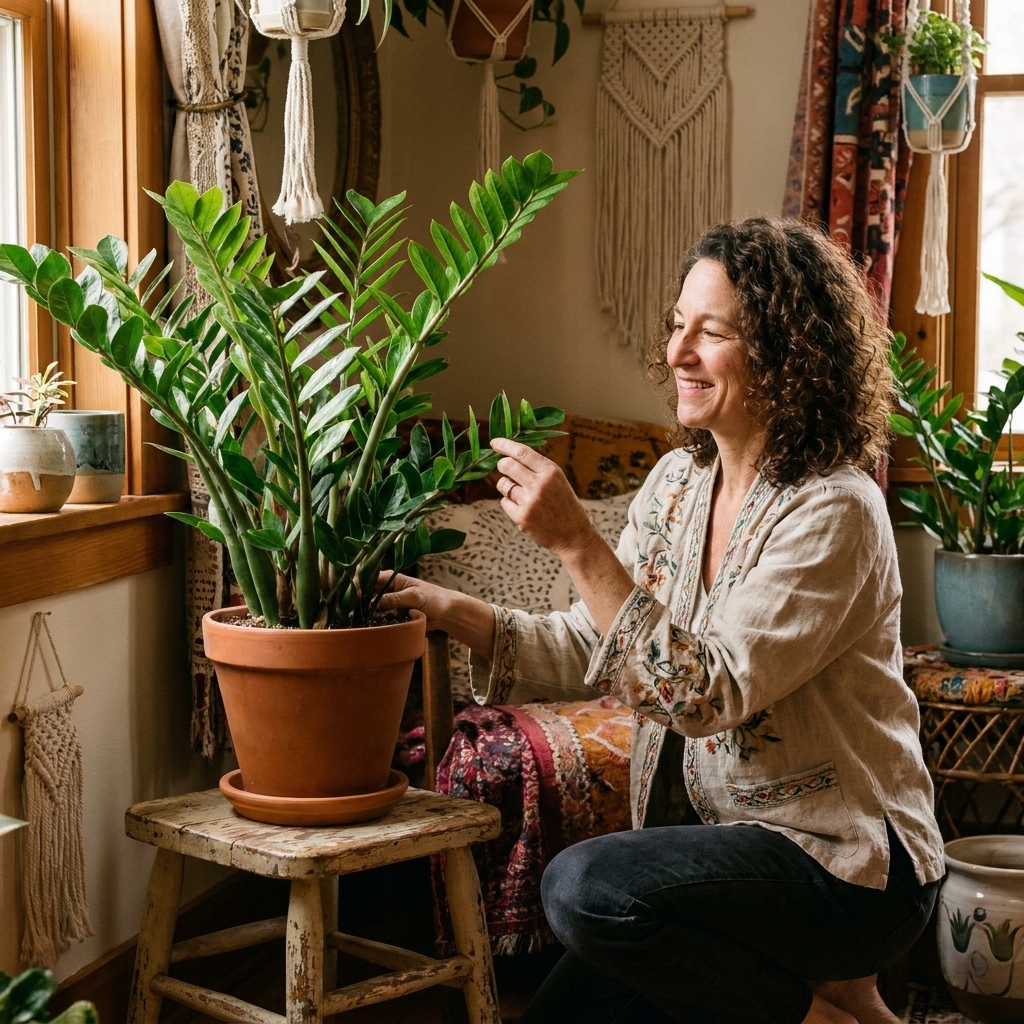
If you want a plant that forgives you for forgetting it exists, this is it. ZZ plants store water in chunky rhizomes, so they handle low light and inconsistent watering like champs.
- Light: Low to bright indirect. It tolerates low light very well.
- Water: Let the pot dry out almost completely. Overwatering is the fastest way to make it miserable.
- Boho styling note: ZZ is sculptural and glossy, which looks amazing against matte textures like mudcloth, linen, and woven baskets.
Snake Plant (Dracaena trifasciata)
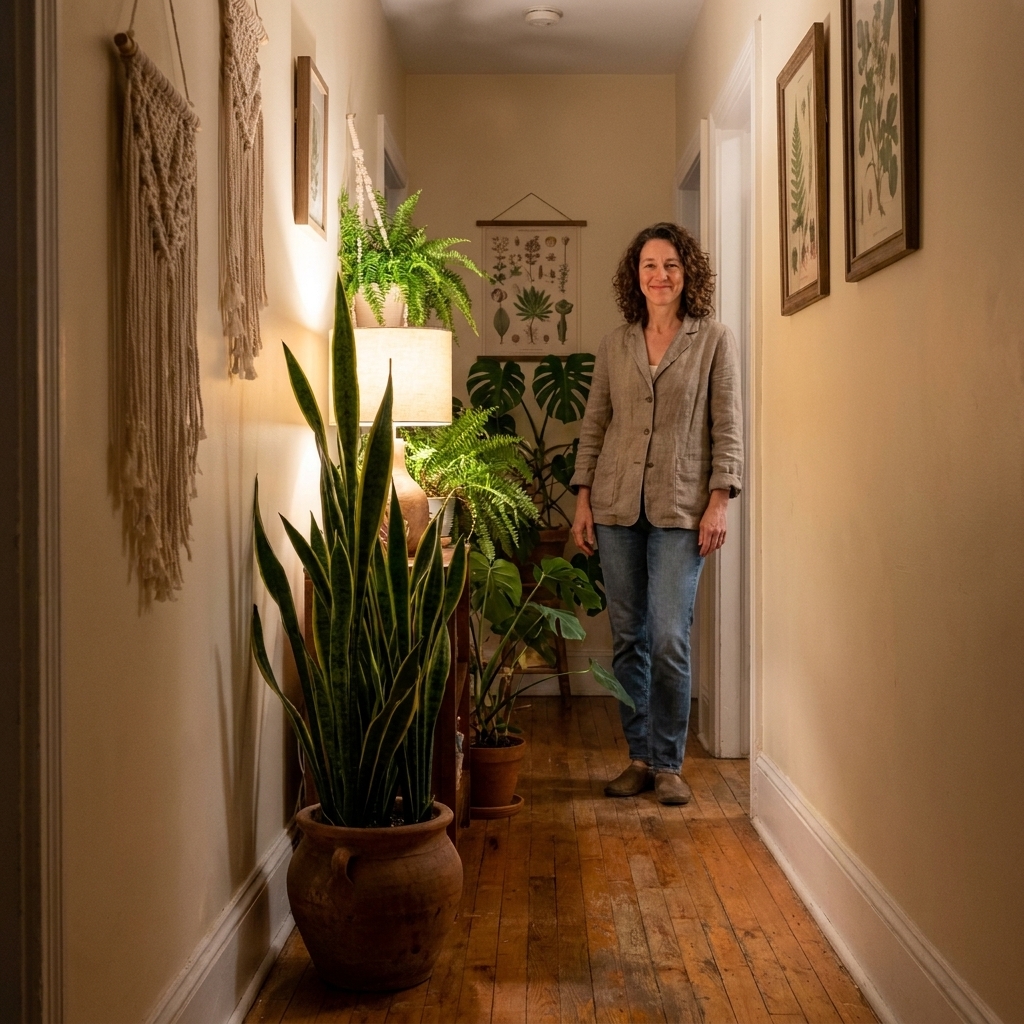
Snake plants are basically the “minimal effort, maximum payoff” option. They are upright, graphic, and perfect for anchoring a dark corner that needs height.
- Light: Low to bright indirect. Growth is slower in low light, but it stays handsome.
- Water: Water only when the soil is fully dry. In winter, even less.
- Quick tip: If the leaves get floppy, it is often too much water, not too little.
Pothos (Epipremnum aureum)
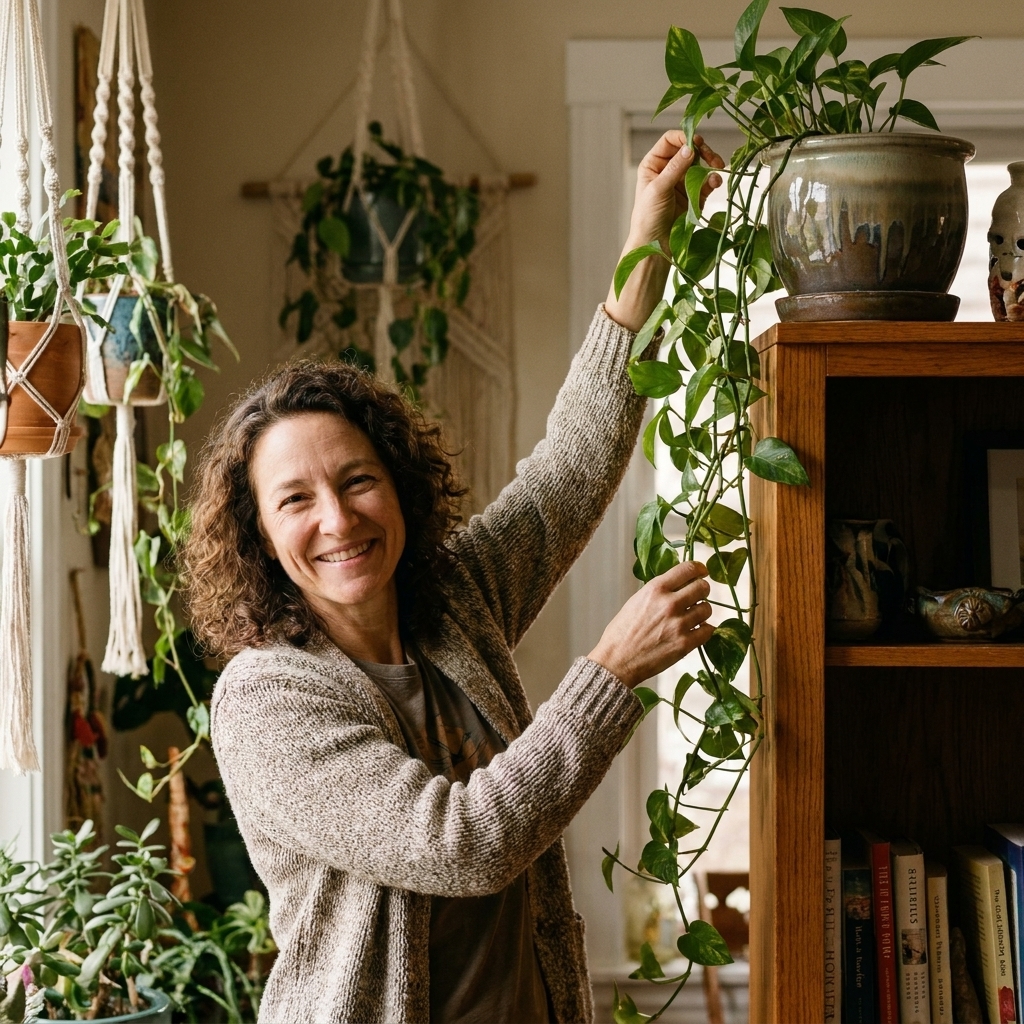
Pothos is my favorite “instant cozy” plant because it drapes and softens hard lines. In low light, it tends to grow more slowly and with smaller leaves, but it is still dependable and pretty.
- Light: Medium is ideal, but it tolerates low light. Variegated types usually fade in dimmer spots.
- Water: Let the top couple inches dry, then water thoroughly.
- Styling idea: Train it along a shelf line or let it spill from a high ledge. If you want a more maximal look, you will love training pothos and philodendrons into a living green wall.
Heartleaf Philodendron (Philodendron hederaceum)
Like pothos, but a little moodier and softer. Heart-shaped leaves, easy care, and that relaxed, collected feeling I always chase in a rental.
- Light: Low to bright indirect.
- Water: When the top third of the soil feels dry.
- Boho styling note: Perfect in a vintage ceramic pot, especially next to books and brass accents.
Cast Iron Plant (Aspidistra elatior)
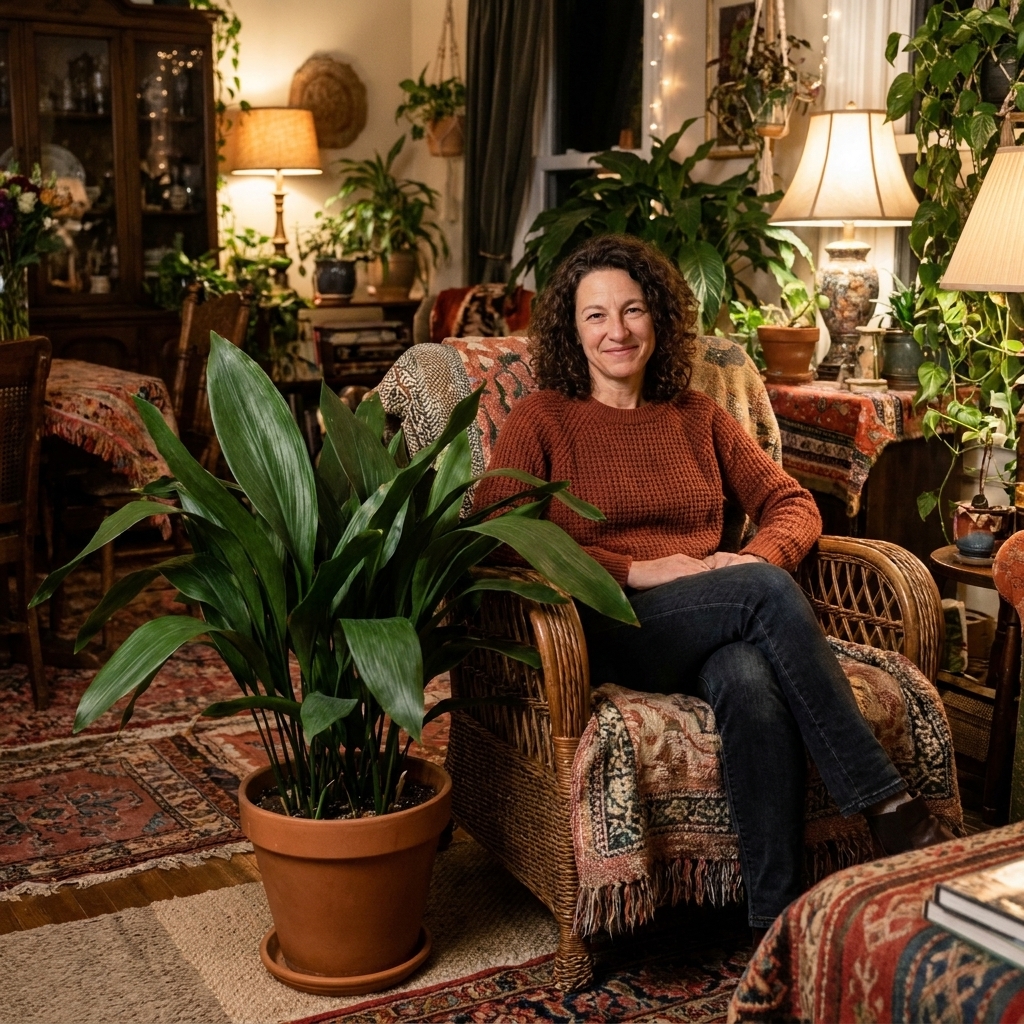
The name is not subtle. This plant has been a low-light hero forever, and it is a wonderful choice if you want leafy fullness without a fussy personality.
- Light: Low to medium. Avoid hot direct sun.
- Water: When the top half of the pot dries out.
- Look: Understated, classic, and a little vintage. It feels right at home with thrifted furniture.
Chinese Evergreen (Aglaonema)
If you want color in a dim room, Aglaonema is your friend. Many varieties have silver, pink, or red tones that read as “alive and vibrant” even when the corner is shadowy.
- Light: Low to medium. More color usually means it wants a bit more light.
- Water: Let the top few inches dry, then water. Do not leave it soggy.
- Styling idea: Pair a pink-toned Aglaonema with earthy pottery and warm textiles for a jewel-meets-clay vibe.
Peace Lily (Spathiphyllum)
Peace lilies are great if you want a plant that communicates. When thirsty, they droop dramatically, then perk up after watering. I treat drooping as a signal, not a routine though. Repeated “fainting spells” can stress the plant and lead to brown tips.
- Light: Low to medium. Avoid direct sun.
- Water: When the top inch is dry, or at the first sign of droop.
- Note: If you have pets that chew plants, check out pet-friendly boho plants for cats and dogs before bringing one home.
Spider Plant (Chlorophytum comosum)
Spider plants can handle lower light than people think, especially green varieties. They are also perfect if you love the boho look of trailing babies.
- Light: Low to bright indirect.
- Water: When the top few inches dry out.
- Reality note: More light and a mature, happy, slightly snug-in-its-pot plant usually means more babies.
Parlor Palm (Chamaedorea elegans)
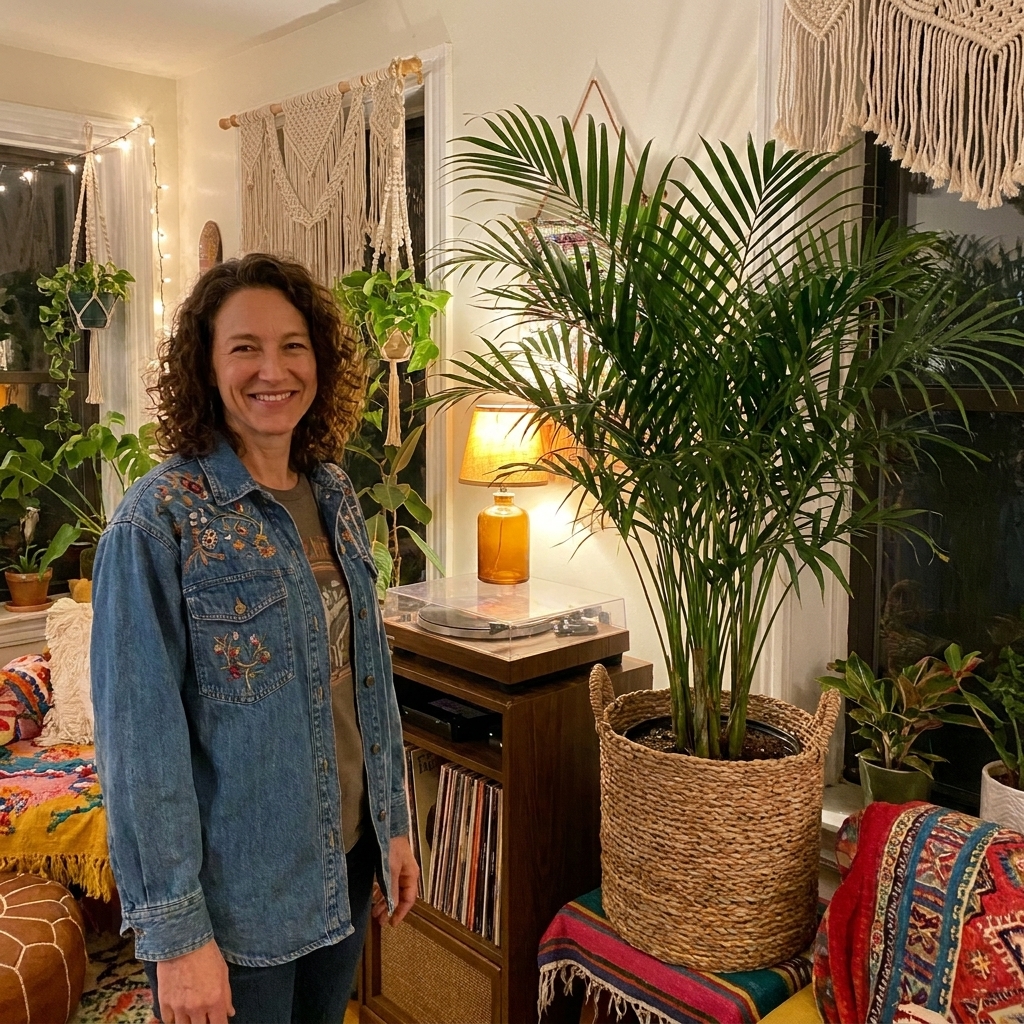
If you want that relaxed “tiny indoor jungle” feeling without a sunny window, parlor palms are a classic. They prefer gentle light and steady, not-soggy moisture.
- Light: Low to medium, no harsh sun.
- Water: When the top inch or two dries. Do not let it sit in water.
- Heads up: In very dim spots, palms can slowly decline over time. If fronds thin out, give it a brighter perch or add a small grow light.
Plant pairings I always use
I style plants the same way I style textiles: with contrast. Glossy next to nubby, tall next to trailing, structured next to wild.
- One tall anchor + one trailing softener: Snake plant on the floor, pothos on a shelf above.
- Two different greens, same calm mood: ZZ plant next to cast iron plant for a deep, easy corner.
- Leafy + textural pot: Parlor palm in a woven basket or warm terracotta. If you love mixing planters, you will enjoy mixing terracotta, glazed ceramic, and woven planters.
- Moody corner glow-up: Aglaonema for color, plus a small lamp and a thrifted brass tray to catch leaves and water drips.
Where low-light plants work best
Hallways and entryways
These spots usually get “drive-by light” only. Go for a snake plant, ZZ, or cast iron plant. I also love placing a plant on a thrifted stand to lift it off the floor and make the corner feel intentional. If you are hunting for plant stands on a budget, start here: thrifted furniture plant stands.
Bedrooms
Bedrooms often have softer light because of window treatments. A heartleaf philodendron on a dresser or a spider plant on a bookshelf adds that relaxed, sleepy greenery without demanding sun.
Bathrooms with small windows
Moisture-loving plants can do well here, but only if there is enough light to read without a lamp for most of the day. Peace lily and parlor palm are solid options. If you are building a full plant moment in the bathroom, peek at the boho bathroom jungle.
Living room corners far from windows
This is where I lean into “statement green.” A tall snake plant or a mature ZZ plant reads like decor, not just a houseplant. If you want help arranging plants like you would art, I wrote a full guide here: arrange houseplants like a designer.
Low-light care that keeps plants happy
Water less than you think
In lower light, plants use water more slowly. A lot of “my plant hates me” stories are really “my plant is drowning quietly.”
- Stick your finger into the soil before watering.
- If the pot feels heavy and cool, wait.
- Empty any saucer or cachepot after watering so roots do not sit in water.
Rotate plants every couple of weeks
Even in low light, plants lean toward the strongest source. A small rotation keeps growth balanced and prevents that one-sided, scraggly look.
Dust the leaves
In darker rooms, every bit of light counts. Dust acts like a little shade cloth. I wipe broad leaves with a damp cloth and rinse smaller-leaf plants in the shower with lukewarm water.
Use the right pot and soil
For low-light plants, I am a drainage stickler. Choose a pot with a drainage hole and use a chunky, airy mix that dries reasonably fast. If you love the look of a decorative basket or ceramic cachepot, keep the plant in a plastic nursery pot inside it, then lift it out to water. I also like to put a saucer or tray inside the basket so water never pools at the bottom where you cannot see it.
If the corner is truly dark
There is a point where a space is so dim that even the toughest plants will just pause. If your corner is basically nighttime all day, you have three options that still work with a warm, boho vibe:
- Add a grow light that looks like a lamp. My favorite solutions are the ones that blend in with decor. I rounded up ideas in stylish grow light solutions for dark rooms.
- Move plants seasonally. Let them hang out closer to a window for a month, then bring them back to their “display spot.”
- Choose one hero plant. Instead of trying to make five plants survive in a cave, place one truly tolerant plant there and style the rest in brighter zones.
Quick troubleshooting for dim corners
Yellowing leaves
- Most common cause: overwatering, especially in low light.
- Also consider: an older lower leaf naturally aging out (common on pothos and philodendron) or soil staying wet because the spot is too dim.
- What to do: let soil dry more between waterings, check for drainage, and trim fully yellow leaves at the base.
Leggy, stretched growth
- Cause: not enough light for that particular plant.
- What to do: move it slightly closer to a window, rotate more often, or add a small grow light.
Brown crispy tips
- Cause: inconsistent watering, dry air, or mineral-heavy tap water.
- What to do: water more consistently, try filtered water for sensitive plants, and trim brown tips with clean scissors.
Fungus gnats and that “damp soil” vibe
- Cause: soil staying wet too long, often paired with low airflow.
- What to do: let soil dry more, bottom-water only when needed, and keep new plants separate for a week or two so you do not bring pests into your whole lineup.
Low-light shopping tips
I love a fancy plant shop moment, but some of the best low-light plants are also the easiest to find secondhand or at big box stores. My thrift-and-save approach:
- Check local listings for “moving sale” plants. ZZ and snake plants are often sold cheap in perfectly good health.
- Spend on the plant, save on the pot. I find baskets, cachepots, and plant stands while thrifting, then upgrade the container later. If you want my general approach, start with budget boho thrifting.
- Inspect before buying: look under leaves for pests, avoid plants sitting in water, and choose sturdy stems over “tall but floppy.”
My easy low-light starter lineup
If you want a no-stress starting point, here is a mix that covers most dim homes beautifully:
- 1 snake plant for height in a dark corner
- 1 ZZ plant as a glossy, sculptural anchor
- 1 pothos or heartleaf philodendron for trailing softness
- 1 cast iron plant or Aglaonema for fuller foliage (and color, if you choose Aglaonema)
That is enough to make a space feel alive without turning your weekly routine into a plant rescue mission.
A dim corner does not need to be empty. It just needs the right plant, the right pot, and permission to grow slowly.
FAQ
Can any houseplant live in a windowless room?
Not long-term without added light. Even the toughest “low-light” plants still need some usable brightness. If the room has no window, a grow light is the most plant-friendly solution. The good news is you can make it look like part of your decor, not a science project.
Do low-light plants need fertilizer?
Yes, but less often. In lower light they grow slowly, so I fertilize lightly during spring and summer and skip it in winter. Over-fertilizing in low light can stress plants.
Why is my pothos losing variegation?
Variegation needs brighter light. In dimmer spots, pothos often reverts to greener leaves because green captures light more efficiently. Move it closer to a window or add a small grow light if you want the pattern back.