
My very first “grown-up” rental had two vibes: charming wood floors and the lighting of a cozy cave. I kept buying plants anyway (because of course I did), then spent months playing musical chairs with my pothos and prayer plant, chasing the one decent window like it owed me rent.
The fix was not a big sci-fi plant rig in the corner. The fix was learning how to hide full-spectrum grow light in the lamps I already loved, so my space still looked layered and collected, not like a lab. If your home leans boho, eclectic, thrifted, or vintage, you can absolutely keep plants happy in darker rooms without sacrificing the mood.
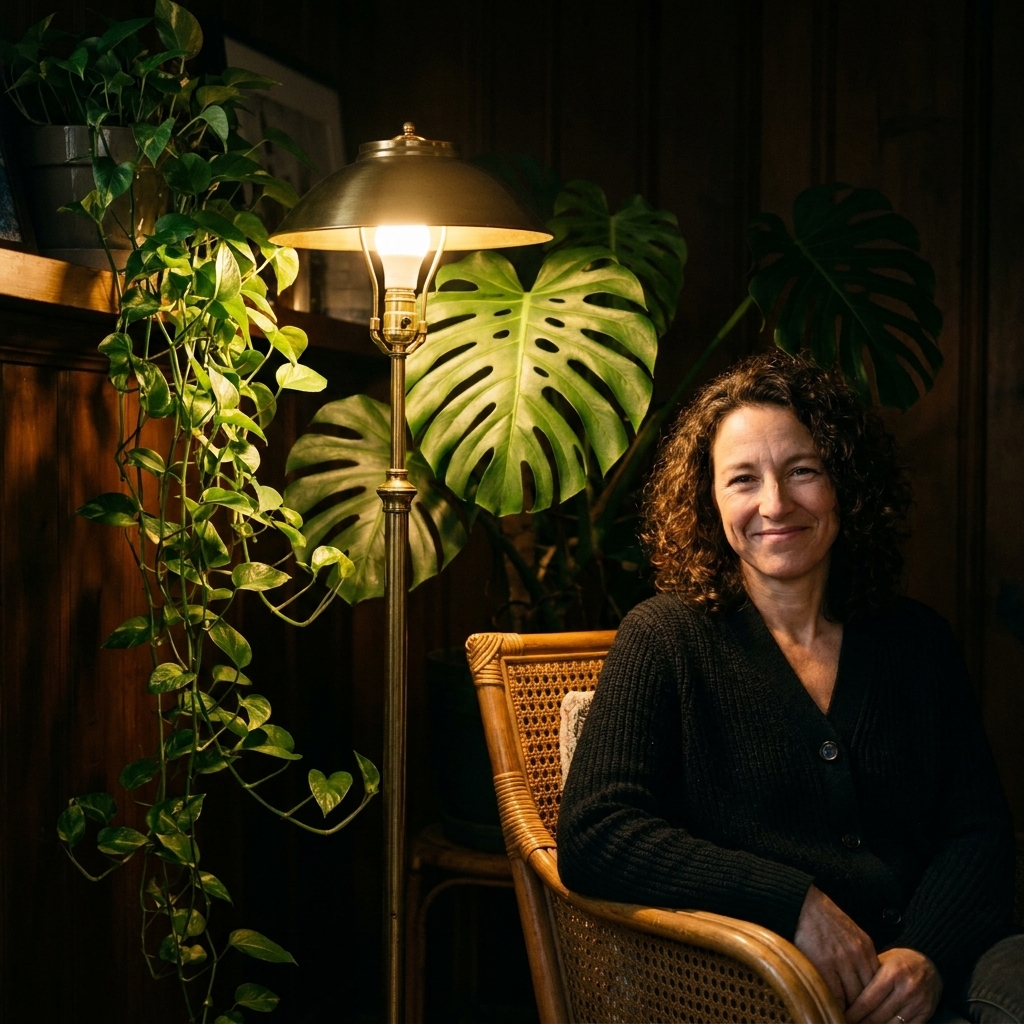
What plants actually need
Low light is the most misunderstood phrase in plant care. “Low light” does not mean “no light.” A practical rule of thumb is bright enough to comfortably read, just not direct sun. The tricky part is that our eyes adapt, so a room that feels “fine” to you can still be dim for a plant.
If you have a room where plants survive but do not grow, stretch toward the window, or slowly lose leaves, you are probably dealing with insufficient light at the leaves, not just “a cozy corner.” Another real-world clue is distance: if your plant lives more than a few feet from a window, it often needs help to actively grow.
A grow light does not need to be harsh or purple to work. For a home that is also a sanctuary, I stick with:
- Full-spectrum white (looks like normal light)
- Warm to neutral tone for cozy rooms (more on this below)
- LED for low heat and low energy use
If you want a deeper dive on building a plant-filled home that still feels styled, my approach to placement and grouping is in Arrange Houseplants Like a Designer.
Make your lamp the grow light
This is the most seamless solution for eclectic spaces: instead of adding a separate grow light fixture, you swap the bulb inside a lamp you already own.
Bulb shapes for vintage and boho lamps
- A19: the standard “regular bulb” shape. Easiest for thrifted table lamps.
- BR30: a wider flood shape. Great in down-facing shades and some pendants where you want more spread.
- PAR bulbs: more directional. Useful when you want to aim light at a specific plant.
What to look for on the box
- “Full spectrum” or “white full spectrum” (not blurple)
- Real output, if provided: PPFD charts, “PPE,” or any measured data is more meaningful than marketing terms
- Beam angle (if listed). Wider beam helps when lighting multiple plants.
- Dimmable only if you truly need it. Many grow LEDs are not dimmable, and that is fine.
A quick reality check: watt equivalent and lumens can help you predict how bright the room will feel, but plant performance depends on how much usable light actually reaches the leaves. If your bulb comes with PPFD info, that is the better clue.
My cozy-room rule: for living rooms and bedrooms, I choose full-spectrum bulbs that read warm to neutral in tone so the light blends with my other lamps. Warm full-spectrum bulbs vary a lot, so I judge by results: if the plant is still stretching, I move the light closer, run it longer, or upgrade the bulb.
Three stylish setups
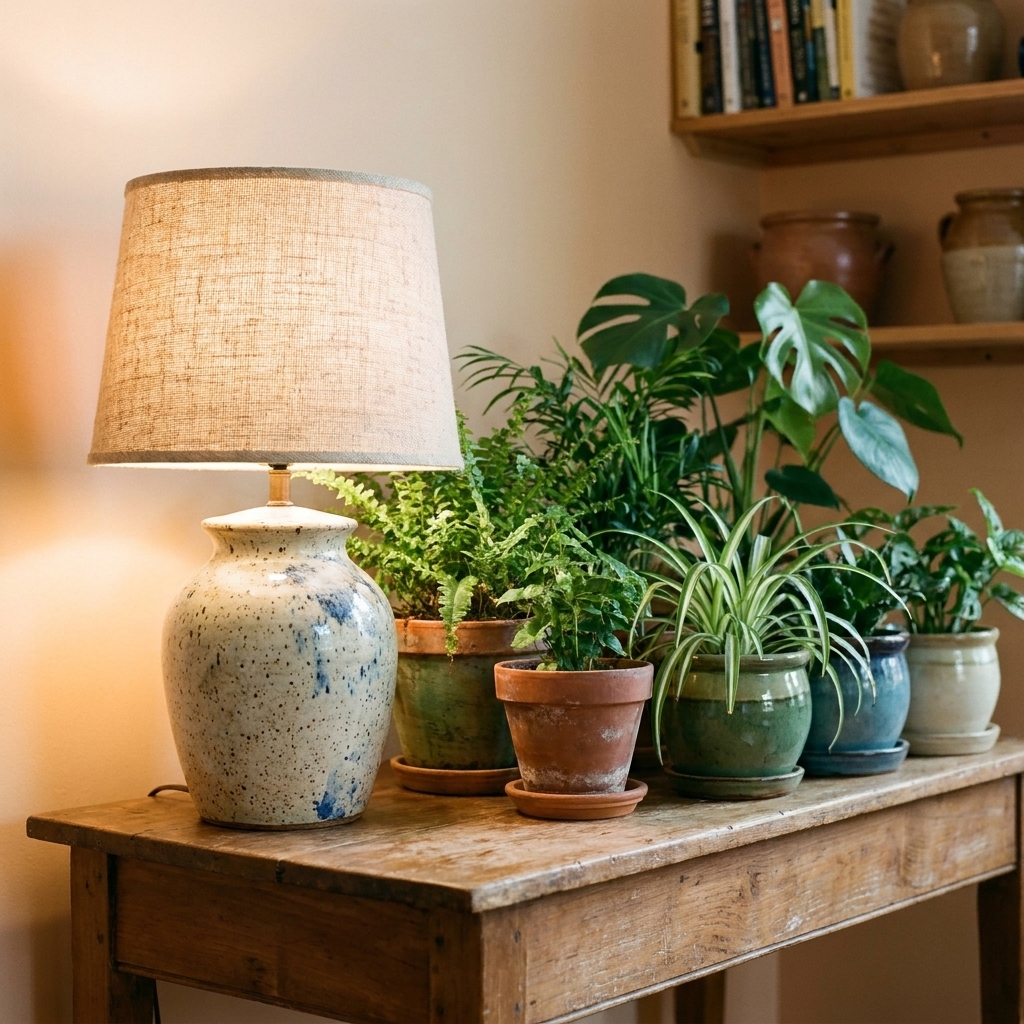
1) Thrifted table lamp spotlight
This is my go-to for sideboards, bookshelves, and nightstands. Put a full-spectrum bulb in a vintage lamp, then use the lamp like a “plant spotlight” that just happens to also look like decor.
- Best for: philodendrons, pothos, hoya, peperomia, and keeping a snake plant steady in a darker spot
- Expectation setting: snake plants tolerate low light, but under a modest lamp setup they often maintain more than they explode with growth
- Placement tip: aim the shade so the light hits the plant canopy, not the ceiling
- Style tip: pair with textured planters to make it look intentional, not like a rescue mission. I love mixing materials like I do in Mixing Terracotta, Glazed Ceramic, and Woven Planters.
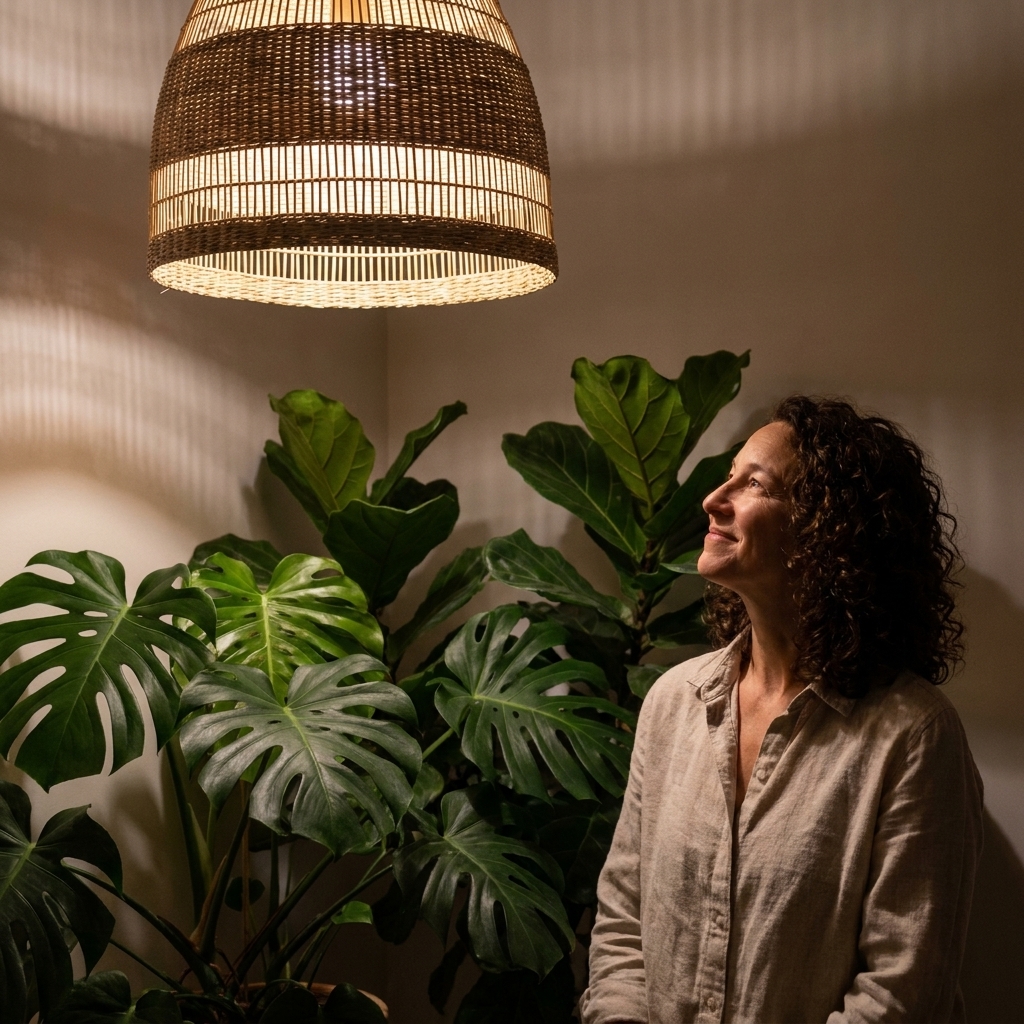
2) Woven pendant, disguised in plain sight
If you have a woven pendant (seagrass, rattan, bamboo), it can be an incredible grow light moment because the shade naturally softens glare. You get that warm, dappled texture on the walls, and your plants get consistent light.
- Best for: a plant corner, a reading nook jungle, dining area plants, tall floor plants
- Bulb choice: a wider-beam bulb (often BR-style) helps spread light across multiple leaves
- Reality check: shades diffuse light, which is beautiful, but it also reduces intensity at the leaves. You may need closer placement or longer hours.
- Safety note: use LED grow bulbs so heat stays low inside woven shades, and avoid fully enclosed fixtures unless the bulb is rated for them
If you love woven elements, you might also like my post on materials and how they change the vibe of a room: Rattan, Wicker, or Bamboo?
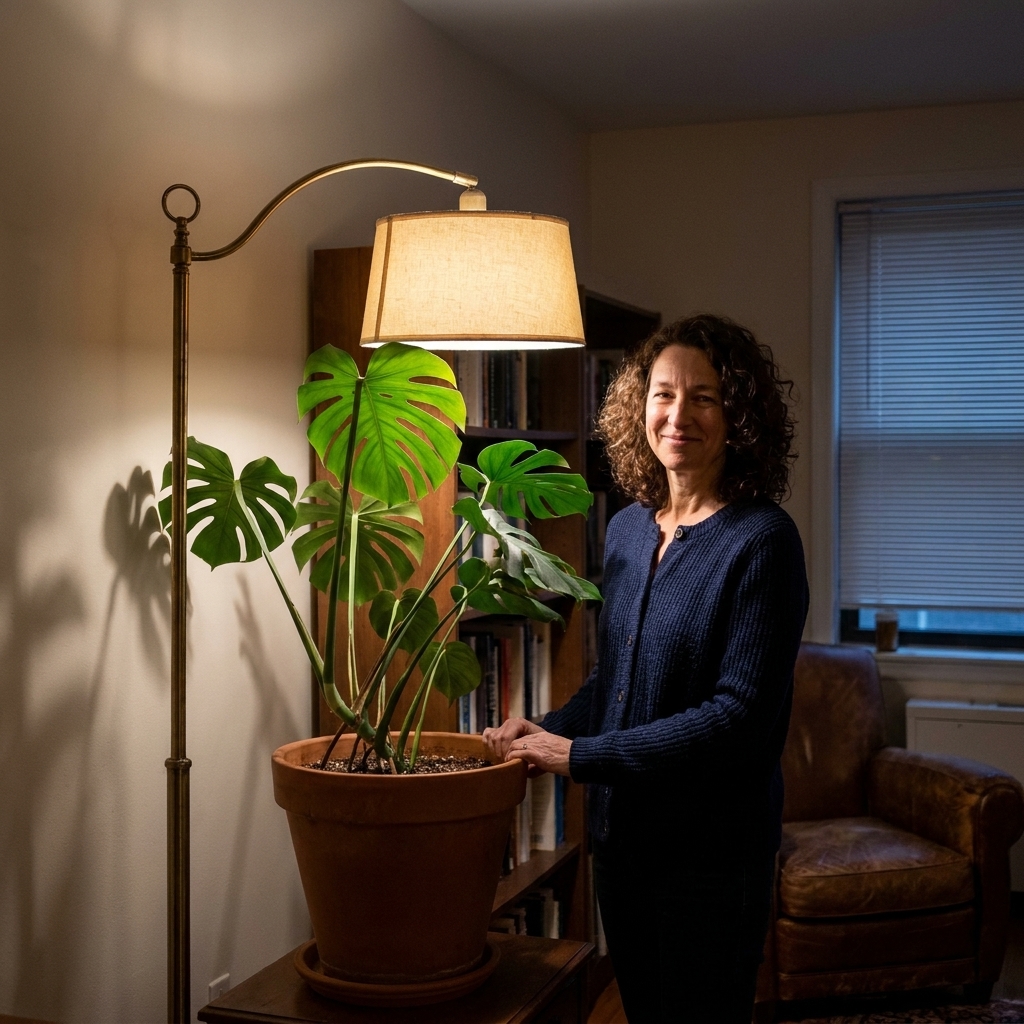
3) Vintage floor lamp for statement plants
For monsteras, bird of paradise, or any tall plant that looks like it is trying to crawl toward the window, a floor lamp can be your secret weapon. I like floor lamps with an adjustable head or a downward shade so the light stays focused on leaves.
- Best for: big plants and “almost bright” rooms that need a boost
- Placement tip: aim the light at the upper canopy first, because that is where new growth happens, and rotate the plant weekly so growth stays balanced
- Visual trick: keep the cord tidy and let the lamp read as a styling element, not equipment
If you are building a fuller plant moment, trailing plants add instant lushness to shelves and corners. My favorites are in Top Trailing Houseplants for Macrame Hangers and High Shelves.
Distance: a practical starting point
Every bulb is different, and the shade you use matters too, but these ranges are a solid real-home place to start for typical screw-in LED grow bulbs.
- Small and medium plants: start about 6 to 18 inches from the leaves
- Big statement plants: start about 12 to 24 inches from the top canopy
- If the bulb is behind a thick shade: expect to move closer or run longer hours
- If leaves bleach, curl, or crisp: back the light off a few inches or shorten the daily run time
My simplest check is low-tech: if the plant is clearly lit, the leaves are not warming up, and new growth is less leggy after a couple of weeks, you are in the zone.
Timing: an easy schedule
I treat grow lights like a predictable sunrise for my plants. Most houseplants do well with a daily, repeatable window of light.
- Good baseline: 10 to 12 hours per day
- In very dark rooms: you can push longer, but I still like giving plants a nightly rest
- Use a timer: it is the difference between “I mean to” and “it actually happens”
Bonus: a timer also makes your room lighting feel intentional. The lamps come on at the same time every day, which is oddly soothing.
Make it look like decor
Use shades to soften the bulb
A full-spectrum bulb can still feel bright when it is bare. Fabric, paper, and woven shades diffuse light beautifully, which is why boho homes have such an advantage here. Just remember that diffusion can reduce the intensity at the leaves, so placement matters.
Hide the plant stuff
- Run cords behind furniture and along baseboards.
- Use baskets to corral timers and power strips on a lower shelf. If you love basket storage, see Creative Ways to Use Woven Seagrass Baskets.
- Group plants so the lit area looks like a styled vignette, not scattered triage.
Mix textures so the corner feels finished
My favorite formula for a grow-lit corner is matte clay + glossy leaves + one woven element. The light makes the leaves shine, and the textures keep it warm.
Safety and sanity checklist
- Check lamp ratings: do not exceed the fixture’s max wattage rating. LED grow bulbs often use lower actual watts than older bulbs, but high-output LEDs can still run hot in a tight shade at close range.
- Match the base: make sure the bulb base matches your fixture (common sizes are E26 and E27).
- Avoid enclosed fixtures: unless the bulb specifically says it is rated for enclosed fixtures, give it airflow.
- Choose LED: less heat, safer in woven shades and near leaves.
- Keep bulbs dry: no misting directly onto hot bulbs or sockets.
- Watch pets: cords can become a chew toy. If you share your home with curious nibblers, I keep a list of safer choices in Pet-Friendly Boho Plants for Cats and Dogs.
Troubleshooting
Your plant is stretching
That usually means the light is too weak or too far away. Move the lamp closer, switch to a wider beam bulb, or add a second light source so coverage overlaps.
Leaves are paling or getting crispy spots
Back the light off slightly, reduce hours, and check watering. A plant under stronger light often drinks faster, which can surprise you.
Nothing is growing, but nothing is dying
Some plants go into a holding pattern in winter or in cooler rooms. If you want active growth, add more intensity or lengthen the light window gradually.
The best grow light is your lamp
If you remember nothing else, remember this: you do not need to choose between a moody, collected home and healthy plants. A thrifted lamp with the right bulb can keep your jungle going year-round, even in the shadowy rooms that never quite catch the sun.
And if you want to lean all the way in on the lived-in, plant-filled vibe, wander through The Indoor Jungle for more of my trial-and-error tips from life in rentals and low-light corners.