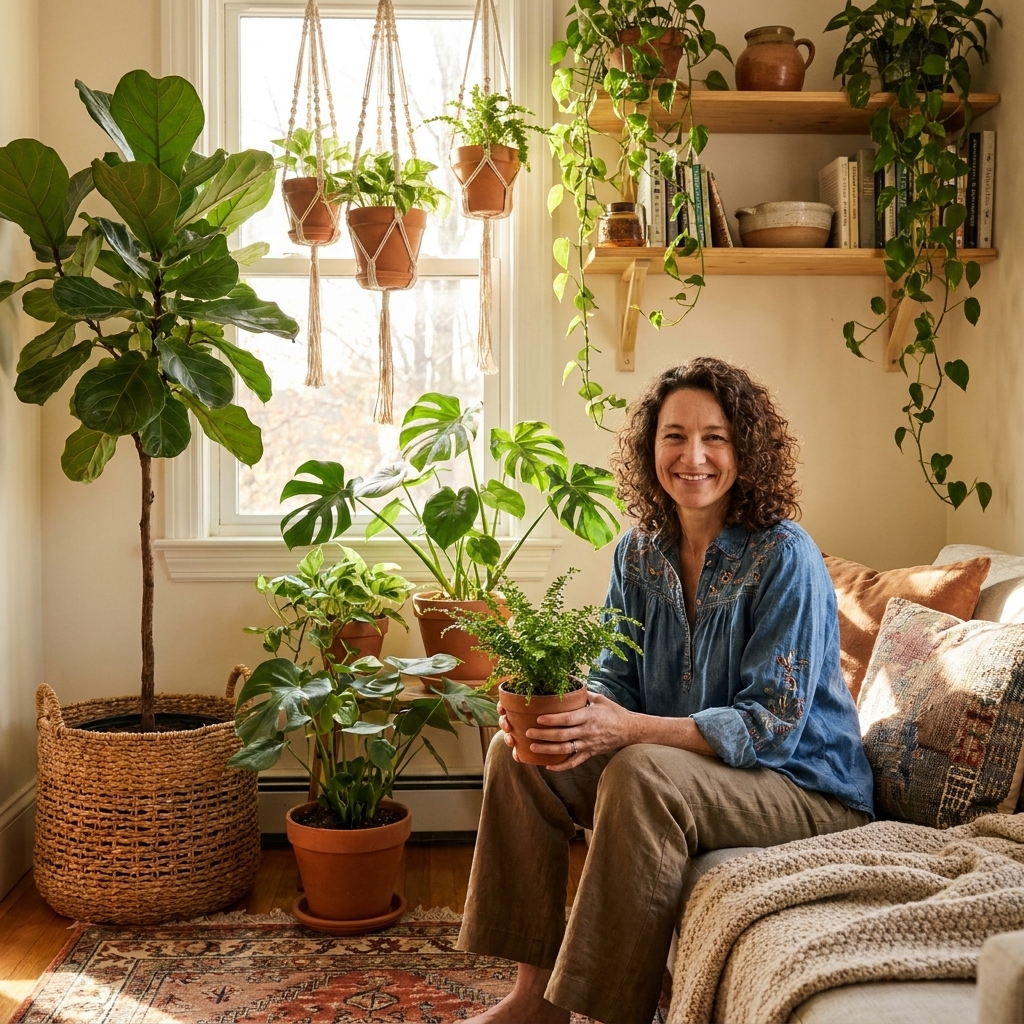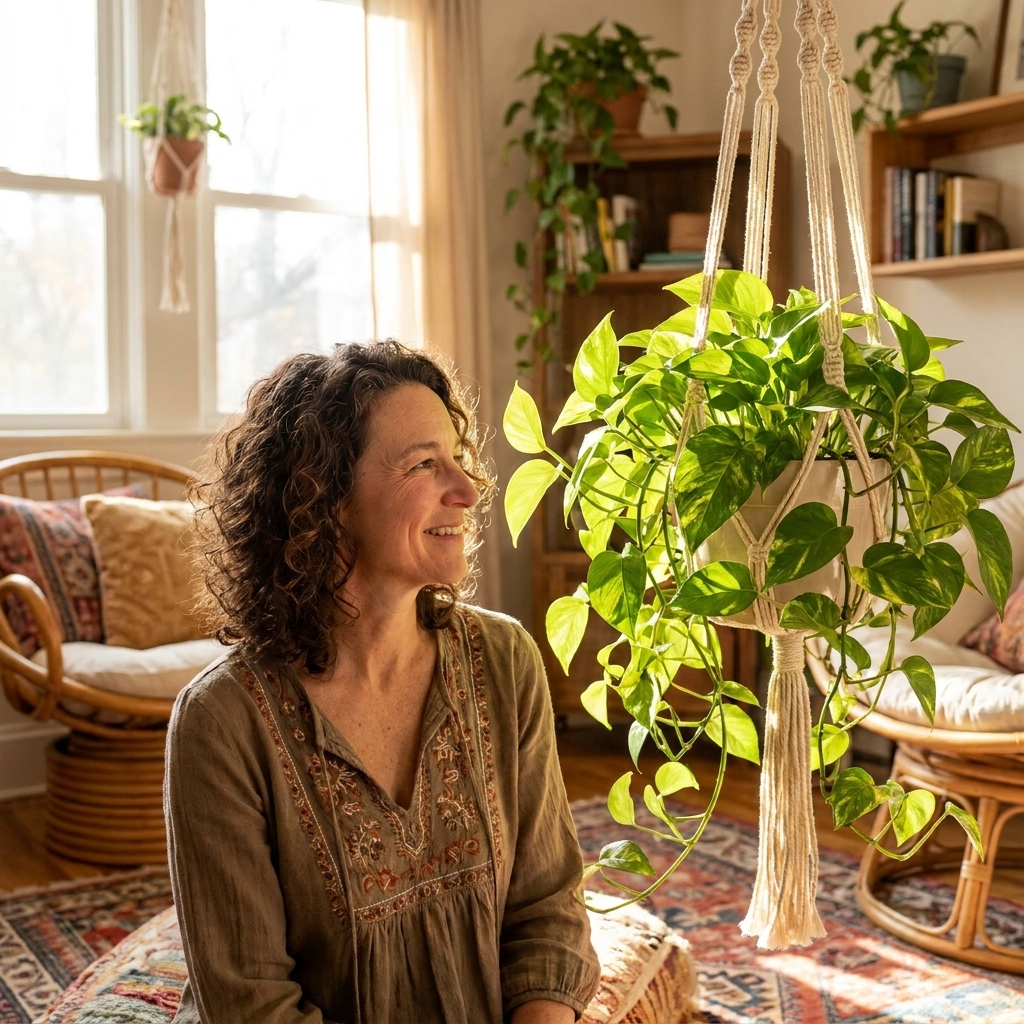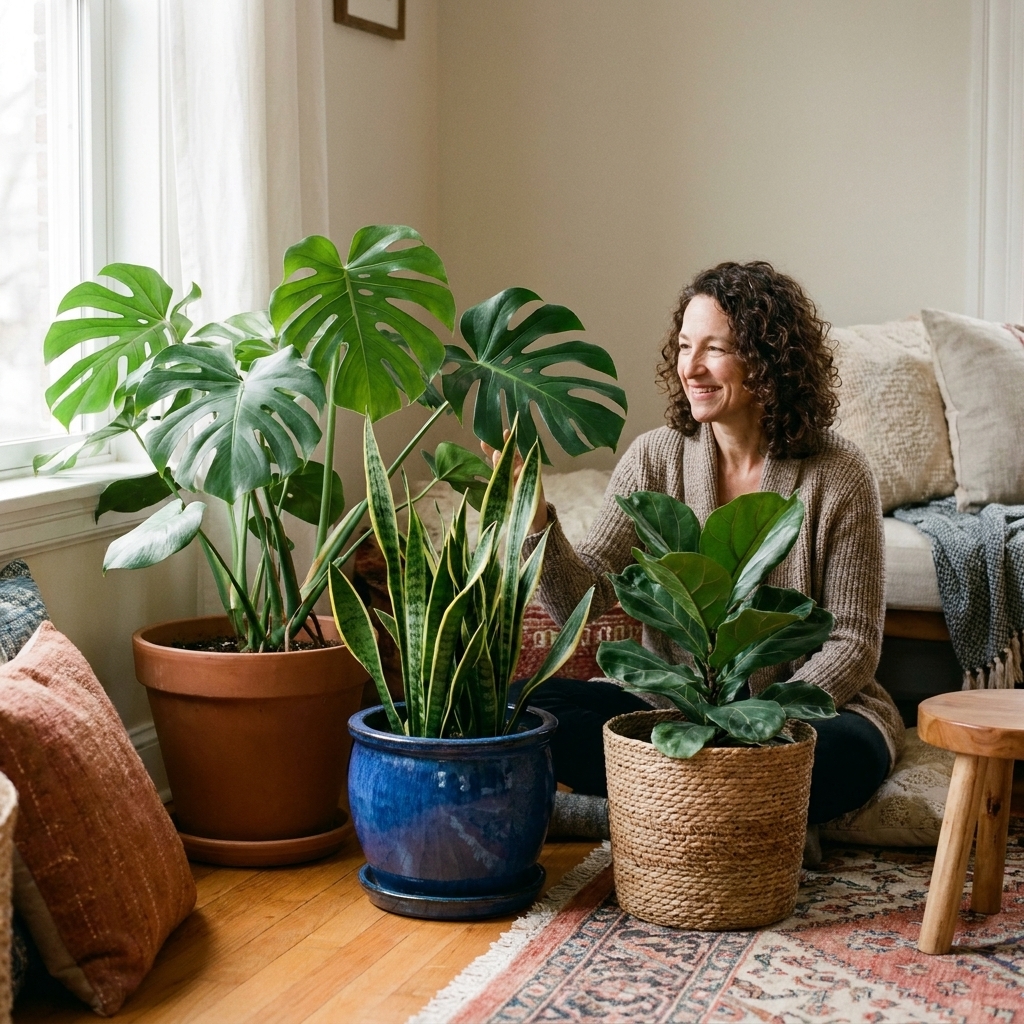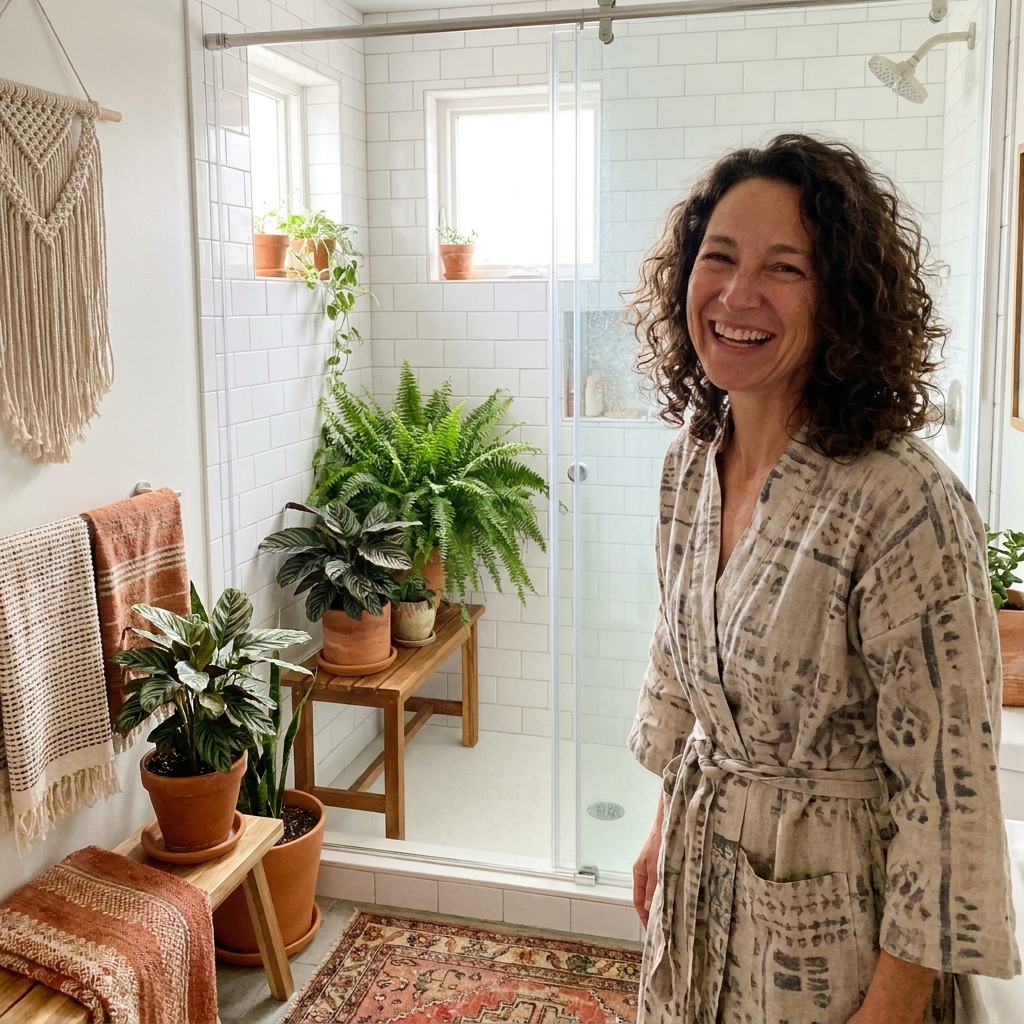

The fastest way I know to make a room feel collected, cozy, and alive is to get your plants off the floor and up into the scene. Not in a stiff, matching-shelf way. In a layered, imperfect, “I found this on a Saturday and it somehow works” way.
My favorite trick is repurposing thrifted furniture into multi-tiered plant stands. Step stools become tiny stages. Old ladders turn into vertical plant galleries. Nested accent tables create that effortless height variation that makes even a small plant corner look intentional.
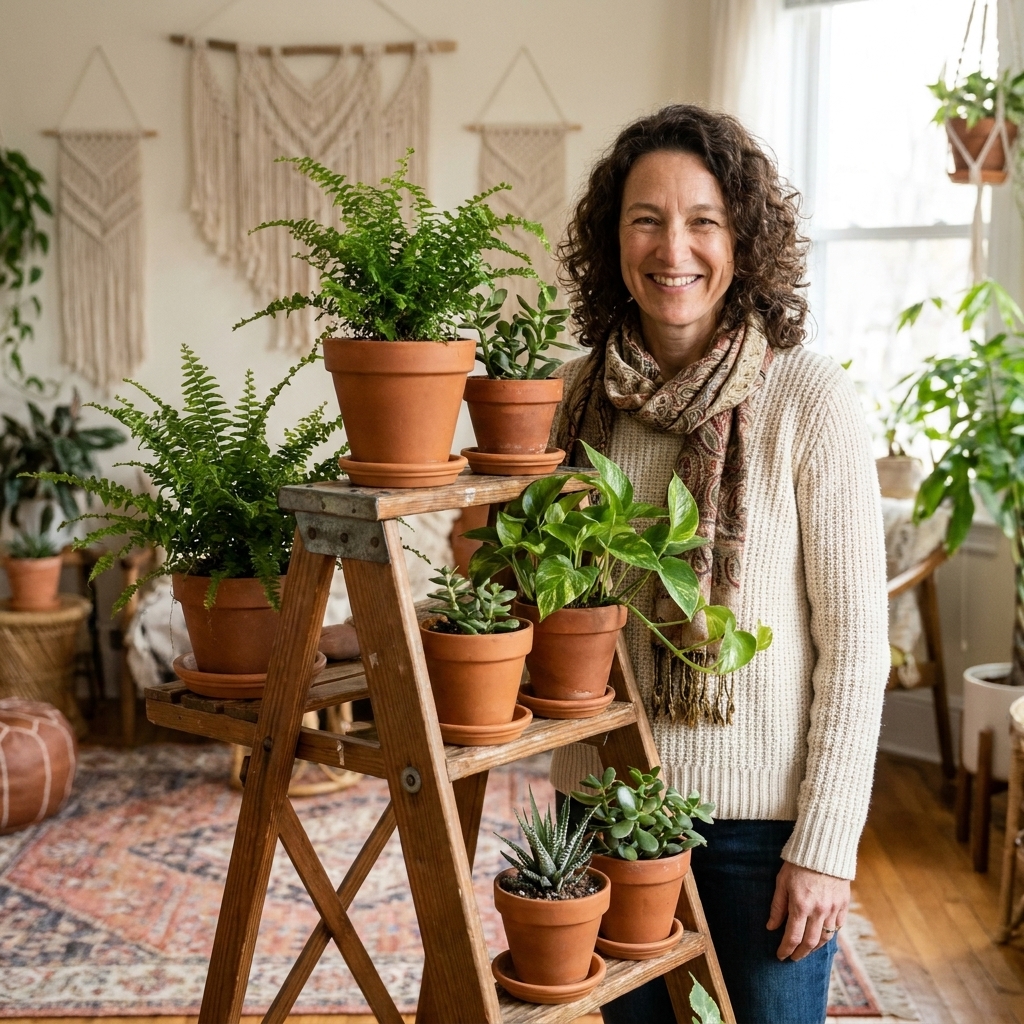
What makes a great thrifted plant stand
Before you fall in love with a piece in the thrift store aisle, do a quick “plant stand reality check.” You are looking for a few things: stability, enough surface area, moisture tolerance, and built-in height variation.
- Solid and steady: Give it a gentle wiggle. If it sways, it can often be fixed, but factor that into your time and budget. Also inspect joints and rungs for cracks, rot, or soft spots.
- Enough landing space: A 6-inch pot needs less space than a trailing 10-inch pothos that wants to sprawl.
- Material that can handle moisture: Wood is totally fine, just plan for a saucer or a sealed top. Metal is sturdy but can rust. Wicker and rattan are pretty but need trays to protect them.
- Height variation: The whole point is tiers. Look for pieces with built-in steps, multiple shelves, or stacking potential.
My non-negotiable: if you have drainage holes, you need a real catch plan. Saucers and trays, a cachepot with a liner, or simply taking plants to the sink to water and letting them drain fully before they go back.
If you want to get better at arranging plants once you have your tiers figured out, I put my go-to approach in Arrange Houseplants Like a Designer. The short version is: repeat shapes, vary heights, and let one plant be the drama.
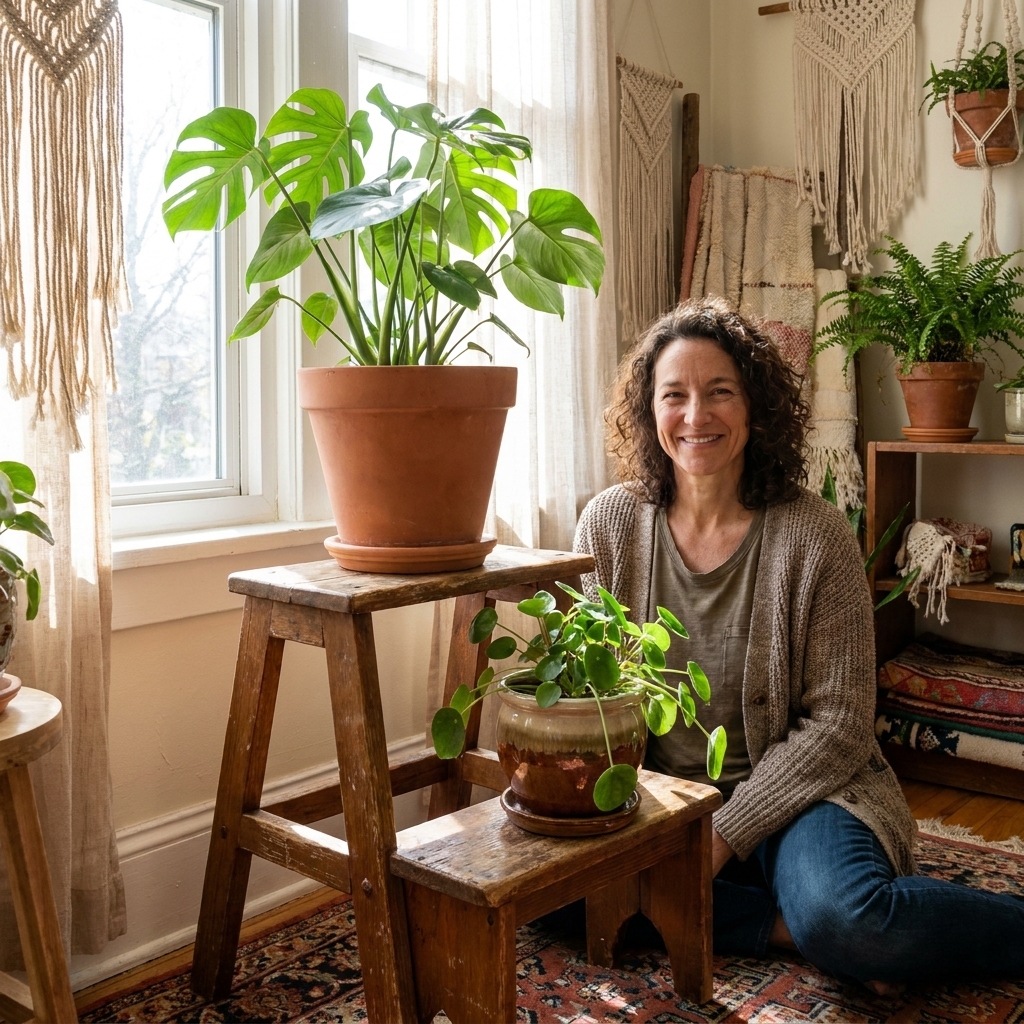
Vintage wooden step stools
Wooden step stools are the unsung heroes of thrift stores. They are compact, sturdy, and already built to hold weight. Plus, they look charming even when they are a little scuffed.
How I like to use them
- Two-tier plant moment: One medium plant on the top step, one smaller plant on the lower step. Add a trailing plant up top if it will not block light to the one below.
- Plant plus styling object: Top step for a plant, lower step for a stack of books or a small bowl that corrals a mister and pruners.
- Bathroom jungle helper: A stool near the tub can be perfect for humidity lovers, as long as the spot gets decent light and your bathroom actually vents well. If you are building that vibe, see The Boho Bathroom Jungle.
Quick upgrades
- Seal the top: A water-based polyurethane is a true moisture barrier. Clear furniture wax can help with light water resistance and keep the vintage look, but it needs reapplication and it can still spot if water sits. Either way, still use saucers and trays.
- Add a tray: A thrifted plate, a terracotta saucer, or a shallow bowl protects the surface and looks intentional.
- Fix the wobble: Tighten screws, add wood glue to loose joints, and clamp if you can. For tiny wobbles, felt pads can level a leg.
My styling note: Step stools are adorable, but they can start to look like kid furniture if everything on them is miniature. Ground the look with one larger-leaf plant nearby on the floor.
Old ladders
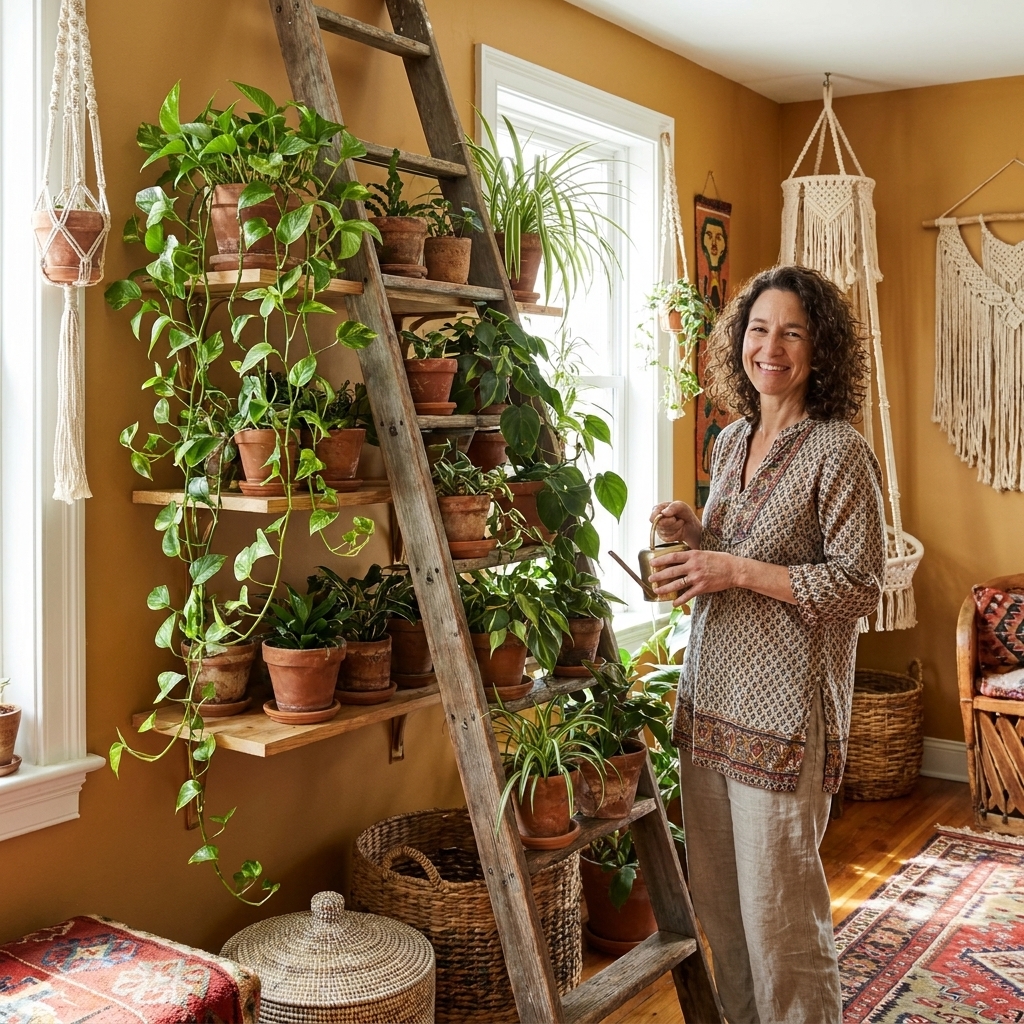
An old wooden ladder is one of my favorite thrift finds for plant people because it gives you height without needing a huge footprint. It is basically instant architecture for your indoor jungle.
You can use an A-frame ladder as-is, or lean a straight ladder against the wall. Either way, you get that gorgeous staggered look that makes trailing plants feel like they are cascading on purpose.
Three easy setups
- A-frame ladder shelf: Set boards or reclaimed planks across the rungs to create wider shelves. Secure the boards so they cannot slide.
- Lean ladder for trailing plants: Hang macrame holders or hook planters onto rungs, then let pothos and philodendrons waterfall down.
- Ladder plus baskets: Slip woven baskets onto rungs as plant holders, but always use a waterproof liner or a nursery pot inside.
For plants that look amazing trailing from a ladder, browse Top 10 Trailing Houseplants for Macrame Hangers and High Shelves. Those are my usual suspects for this exact setup.
Safety first
- Anchor it: If you have pets, kids, or a high-traffic hallway, anchor a leaning ladder to the wall. Locate a stud when you can, or use anchors rated for your wall type and the load you are putting on the ladder.
- Watch the weight: Put heavier plants lower. Use lighter plants up high. When in doubt, assume vintage rungs and joints are stronger than they look, until they are not, then load conservatively.
- Protect your wall and floors: Felt pads on ladder feet save hardwood and help prevent sliding.
- Plan for watering day: I prefer to lift plants down to water them in the sink. If you water in place, every pot needs a saucer and you need a little spill discipline.
Nested accent tables
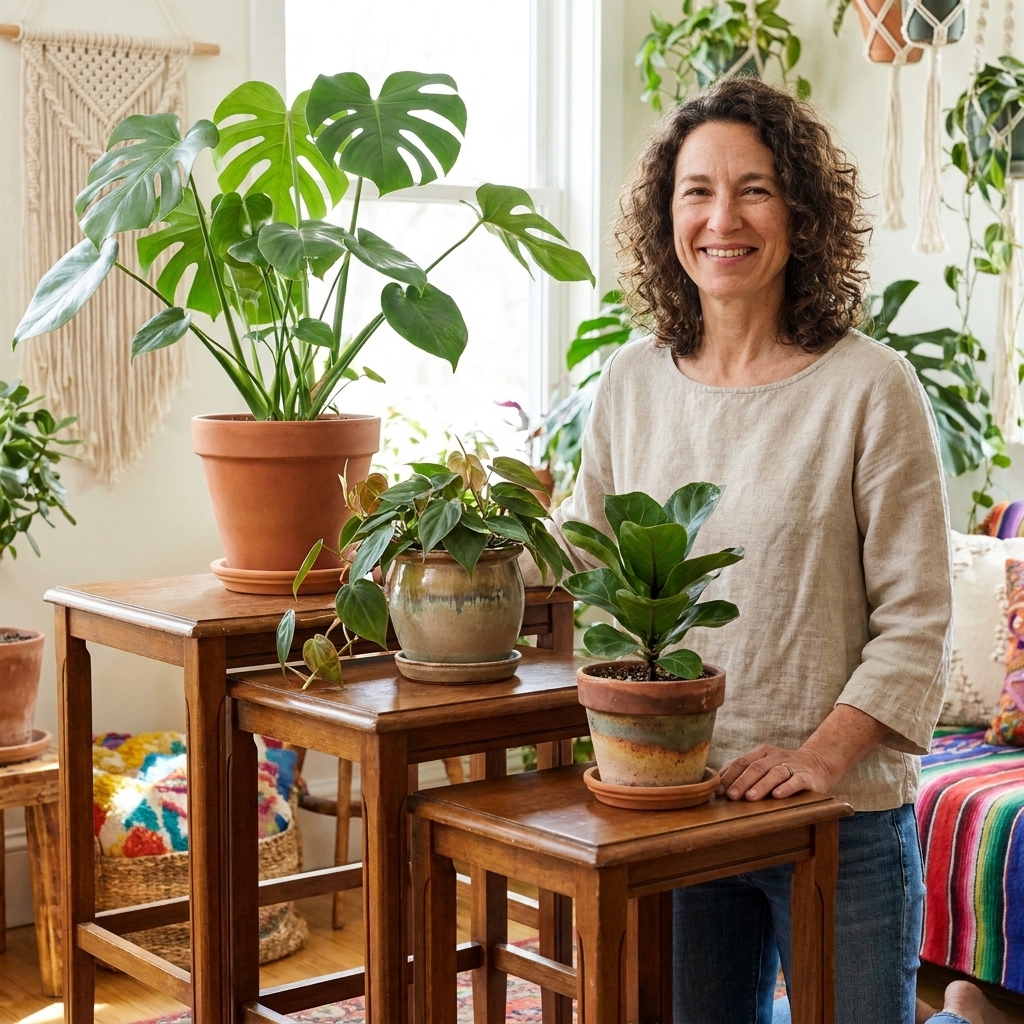
If you want multi-tiered plant styling with zero tools, nested accent tables are the easiest win. You can spread them out, tuck them together, or rearrange them every time your plant collection changes mood.
How to style nested tables
- Think in threes: One table per plant tier, three plants total, then stop. Leave breathing room.
- Mix pot materials: Terracotta, glazed ceramic, and woven planters look especially good together. I go deeper on that mix in Mixing Terracotta, Glazed Ceramic, and Woven Planters.
- Use one anchor plant: A fuller plant on the lowest table makes the whole arrangement look stable.
- Add a small light source: A tiny lamp nearby turns the plant cluster into an evening vignette, not just a daytime windowsill situation.
What to check at the thrift store
- Ring marks and water stains: Not a deal-breaker, but it tells you the surface is thirsty. Plan to seal it or commit to trays.
- Wobbly legs: Often an easy tighten, but make sure the frame is not cracked and the top is not separating.
- Height differences: The more contrast between table heights, the more tiered the final look feels.
- Load distribution: A table that feels fine under your hand might complain under a heavy pot of wet soil. Keep the heaviest planters on the largest, lowest table.
Easy DIY tweaks
You do not need a full workshop to repurpose thrifted furniture. Most of my plant-stand upgrades happen with a screwdriver, sandpaper, and a little patience.
My go-to toolkit
- Screwdriver set and a few spare screws
- Wood glue for loose joints
- Medium-grit sandpaper for splinters and rough edges
- Felt pads for leveling and floor protection
- Clear sealer, wipe-on finish, or polyurethane for moisture protection
- Plant saucers and trays in a few sizes
Moisture protection that keeps the charm
If you love a piece because it looks timeworn and storied, do not feel like you have to paint it. A clear finish keeps the patina while giving you a more wipeable surface. Wax can be a nice low-shine option, but think of it as renewable maintenance, not armor. My rule is simple: if a plant could drip onto it, it gets a saucer and some kind of protection.
Plants that suit tiers
Tiers are not just about height. They are about how plants behave as they grow. I like to mix upright shapes with drapey shapes so the whole setup feels lush, not cluttered.
Best plant types for multi-tier stands
- Trailing plants: Pothos, many philodendrons, hoya, tradescantia. Perfect for top tiers and ladders.
- Medium mound plants: Peperomia, pilea, compact ferns. Great for mid-level shelves.
- Statement leaves: Monstera, fiddle leaf fig, bird of paradise. These usually belong on the floor near your tiers so they frame the display. If you are deciding between them, see Monstera vs. Fiddle Leaf vs. Bird of Paradise.
Pet-friendly note
Quick and important: several of the usual “easy trailing” plants (including pothos, many philodendrons, and tradescantia) are not pet-safe, and fiddle leaf fig is not either. If you share your home with curious nibblers, treat tiered stands like a height strategy and a safety strategy. I keep anything questionable out of reach and lean on safer options where I can. This roundup helps: Pet-Friendly Boho Plants for Cats and Dogs.
Boho finishing touches
This is the part where your thrifted plant stand stops looking like “I put plants on a thing” and starts looking like a styled corner.
- Layer textures: Add a woven basket underneath a stool, or set a glazed pot next to a raw terracotta one. Texture is the whole boho secret. If you want a full-on recipe, I love Leather, Velvet, and Linen: The Texture Mixing Formula.
- Repeat one color: Pick a thread that runs through the pots. Warm clay, deep green, creamy white, or moody black works beautifully.
- Give the plants a backdrop: A textile hung behind a ladder, or a framed print leaning on a shelf, makes the greenery pop. For global textiles, I share sourcing and styling tips in Authentic Mudcloth: Sourcing and Styling Global Textiles.
- Keep one surface open: Negative space makes a tiered stand look curated instead of crammed.
Small but mighty tip: Leave a little airflow between pots when you cluster. Plants dry out more evenly, and you cut down on that damp, stagnant vibe that invites mildew and fungus gnats.
Common mistakes
My stand looks messy
Fix: Pull everything off. Put back only three plants first, one tall, one medium, one trailing. Then add one small object, like a candle or a bowl. Stop there and live with it for a day.
My ladder feels unstable
Fix: Move heavy plants to the lowest level, add felt pads, and anchor the ladder if it is leaning. Also check that any boards used as shelves are secured and not just balanced.
I keep getting water rings
Fix: Use deeper saucers and trays, and protect the surface. I also like to water plants off the stand whenever possible, then return them once they have drained.
My plants are not getting enough light
Fix: Tiers can accidentally create shade. Rotate plants weekly, give the light-hungry ones the top spots, and use lower tiers for shade-tolerant varieties.
A simple layout
If you want an easy starting formula, here is the arrangement I fall back on in rentals where I cannot drill a bunch of shelves:
- Floor: One larger statement plant in a basket or ceramic pot.
- Middle: A thrifted stool or nested table with a medium, bushy plant.
- Top: A higher tier (top step or upper ladder shelf) with a trailing plant that can drape.
- Finish: One small object that ties into the room, like a thrifted brass bowl or a stack of art books.
It is flexible, it looks collected, and it lets your plants do what they do best, which is steal the show.