

The quickest way to make a thrifted rug feel like it truly belongs in your home is not styling it. It is cleaning it. I have dragged home enough vintage treasures to know this moment well: you unroll the rug, fall in love with the colors, then the musty thrift-store funk hits you like a wall.
The good news is you can deep clean and deodorize most secondhand rugs at home without fancy machines or a giant budget. The key is choosing a method that matches the rug fiber and construction, then drying it thoroughly. That last part is where most rug horror stories begin.
Before you do anything: identify what you bought
Vintage and secondhand rugs are a mixed bag. Some can handle a gentle wash. Others will bleed dye, shrink, or warp if they get too wet. I always do a two minute rug check before I even think about water.
Quick rug check
- Fiber: Wool, cotton, jute, synthetic, or a blend. Wool is resilient but hates harsh chemistry and hot water. Jute hates water, period.
- Construction: Flatwoven (kilim style), tufted (often has a backing), knotted/pile, or braided.
- Backing: If you see latex or rubbery backing, avoid soaking. Water can break it down and cause crumbling or delamination.
- Damage: Check for dry rot (fibers snapping), loose edges, fringe that is barely hanging on, and bald spots. If it is fragile, keep it to dry methods and spot cleaning only.
Rugs I avoid getting wet
These show up secondhand all the time, and they can go sideways fast with water:
- Viscose, rayon, or “bamboo silk”: Can brown, ripple, and get permanently fuzzy.
- Hide or fur rugs: Water can cause stiffness, odor, and warping.
- Antique or valuable hand-knotted rugs: If you suspect it is special, treat it like it is special. Start with dry deodorizing, then consider a professional who specializes in rugs.
Do a colorfastness test
Pick an inconspicuous corner. Dampen a white cloth with cool water and press for 10 to 20 seconds. Then blot, and check for dye transfer. I also like to repeat on a couple different colors if the rug is multi-toned. If you see dye transfer, treat the rug as dye-bleeding. You can still deodorize and surface clean, but skip soaking and keep liquids minimal.
What you need (all budget-friendly)
- Vacuum with adjustable height
- Soft brush (like a nylon dish brush or soft scrub brush)
- White cotton cloths or towels
- Spray bottle
- Bucket
- Baking soda (odor absorber)
- White vinegar (acid deodorizer for some smells)
- Mild soap: clear dish soap or a wool wash
- Optional: enzyme cleaner (great for pet smells, but patch test and check the label for wool safety)
- Fans for drying, and a dehumidifier if your home is humid
- Optional but smart: gloves and a mask if you are dealing with mystery thrift grime or anything that smells even slightly moldy
Skip or be cautious with: hot water, chlorine bleach, carpet shampoos with brighteners, and heavy fragrance deodorizers that mask instead of clean. Oxygen bleach powders can be useful on some colorfast cotton or synthetics, but I avoid them on wool, vintage pieces with unknown dyes, and anything that fails a patch test.
Step 1: Dry de-funk first (my favorite low-risk reset)
If your rug is musty but not visibly filthy, start with dry deodorizing. It is cheap, gentle, and honestly works better than most people expect.
Vacuum both sides
Vacuum slowly on the front. Then flip it and vacuum the back. Old grit hides in the foundation of the rug and will keep smelling when it gets damp later.
Fringe tip: If your rug has fringe, do not run a beater bar over it. Use suction only (or an upholstery attachment) and be gentle. Fringe loves to tangle and fray.
Baking soda soak (the leave-it-alone method)
- Take the rug outside or to a well-ventilated room.
- Sprinkle baking soda evenly over the top. Use a sifter if you have one.
- Work it in gently with a soft brush, following the direction of the pile or weave. (Do not go to war on the fringe or edges.)
- Let it sit 8 to 24 hours.
- Vacuum thoroughly, slow passes, until the powder is gone.
Tip: Musty thrift smell often lives in the rug pad or whatever the rug was stored on. If you bought a rug with a secondhand pad, toss the pad. It is not worth trying to save.
Step 2: Choose the right wash level
I think of at-home rug cleaning in three levels. Start as gentle as possible, then move up only if you need to.
Level A: Spot clean only
Use this if the rug fails the color test, has latex backing, feels brittle, or is made of jute or sisal.
How to spot clean safely
- Vacuum first.
- Mix a small bowl of cool water with a few drops of mild soap.
- Dampen a white cloth, blot the stain. Do not scrub aggressively.
- Rinse the area by blotting with a cloth dampened with plain cool water.
- Press with a dry towel to pull out moisture.
- Dry with airflow. No damp rug naps.
Level B: Surface wash
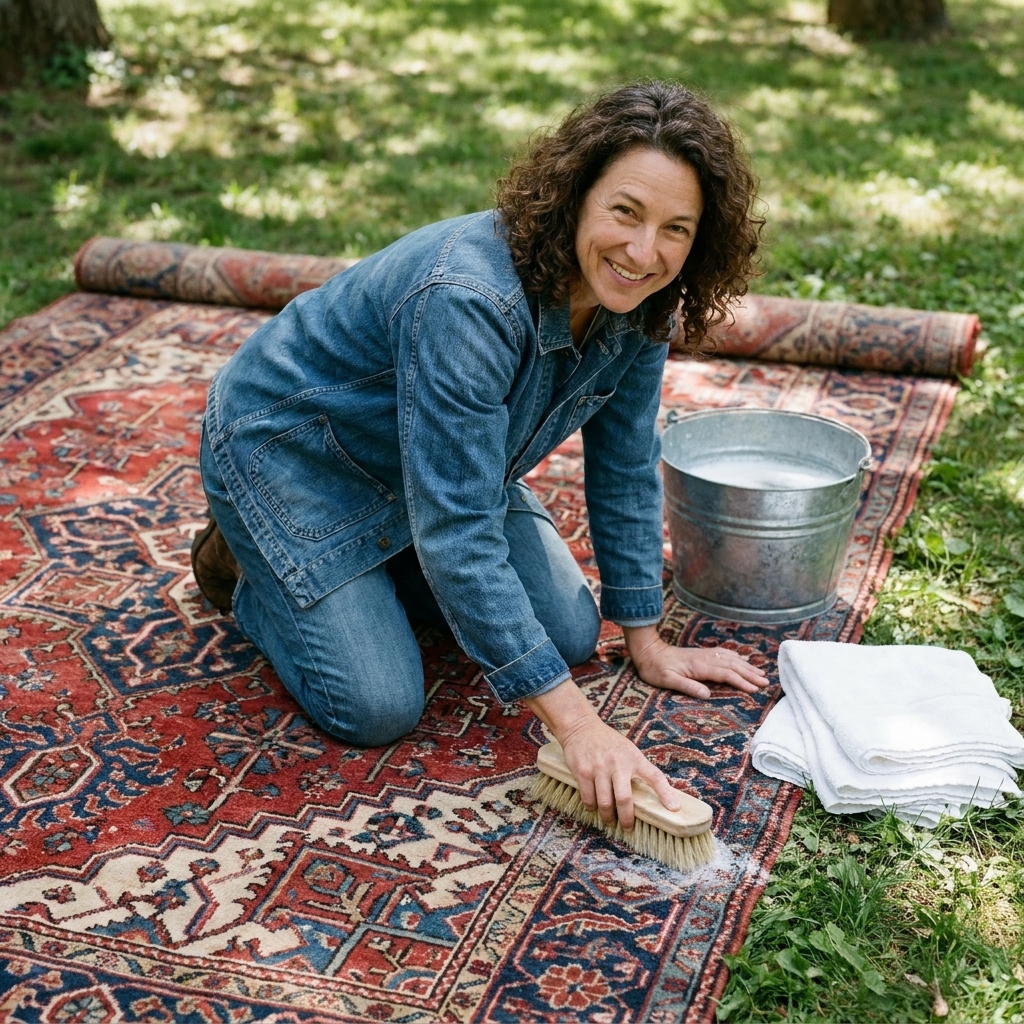
This is a controlled wash where you clean the surface without saturating the rug.
Surface wash steps
- Take the rug outside if possible. If you must do it indoors, protect the floor with a waterproof layer and towels.
- Mix cool water with a small amount of mild soap in a bucket. You want barely soapy, not suds for days.
- Dip your brush in the solution, then brush small sections, lightly. Work with the pile direction.
- Rinse by wiping the section with a cloth dampened with plain cool water. Repeat until you are not lifting soap.
- Blot with clean towels to remove as much moisture as possible.
Level C: Full wash
A full soak can be risky for vintage rugs, especially wool and anything with unknown dyes. I reserve it for sturdy cotton rag rugs, some modern flatweaves, or rugs I have tested thoroughly.
If you do a full wash: use cool water, minimal soap, avoid long soaking, and never wring the rug. Lift and support it as you move it so the wet weight does not stretch the weave.
Deodorizing methods that actually work
Odor is usually a combination of trapped dust, damp storage, smoke, and sometimes pets. Different smells respond to different tools.
Musty basement smell
- Baking soda (dry method) is your first line.
- Sun and fresh air helps a lot, but do not roast it all day. Short sessions are safer for color.
- Vinegar mist can help if the rug is colorfast. Mix 1 part white vinegar to 4 parts water in a spray bottle, lightly mist, then dry fast with airflow. Always patch test first.
Smoke smell
Smoke is clingy. Start with vacuuming both sides, then do a baking soda soak. If it still lingers, a surface wash is usually needed. Airflow during drying matters more than you think.
Pet urine odor (old or new)
This is where enzymes earn their keep. Use an enzyme cleaner made for pet odors, but patch test for dye safety and check the label for wool compatibility. Some enzyme formulas are great, and some are not meant for natural fibers.
- Blot the area dry if anything is still damp.
- Apply enzyme solution according to the bottle instructions, usually you need it to reach the odor source.
- Give it the dwell time it needs.
- Blot, then rinse lightly by blotting with cool water if the product directions allow it.
- Dry completely, with fans.
Important: Do not combine vinegar and enzyme cleaners. Acid can reduce the effectiveness of some enzyme formulas. Follow the product directions, and when in doubt, pick one approach and stick with it.
Sanitizing without ruining wool
When people say sanitize a rug, they often mean: I want it to feel safe in my home. I get it. But harsh disinfectants and high-heat tools can damage fibers, set stains, or cause dye bleed.
Gentle sanitizing options
- Sunlight and airflow: A few hours in bright shade with good airflow can reduce odor and help dry out moisture-loving funk. Avoid prolonged direct sun on saturated rugs.
- Light vinegar mist: Only for colorfast rugs, and only lightly, followed by fast drying.
- Hydrogen peroxide: I use this only for small, targeted stain situations on light rugs after patch testing. It can lighten dyes, so it is not a universal sanitizer.
If you are dealing with heavy contamination, widespread mold, or a rug that was in a flood, that is a professional situation. No amount of baking soda is going to undo deep mold in the foundation of a rug.
Drying: the step that makes or breaks your rug
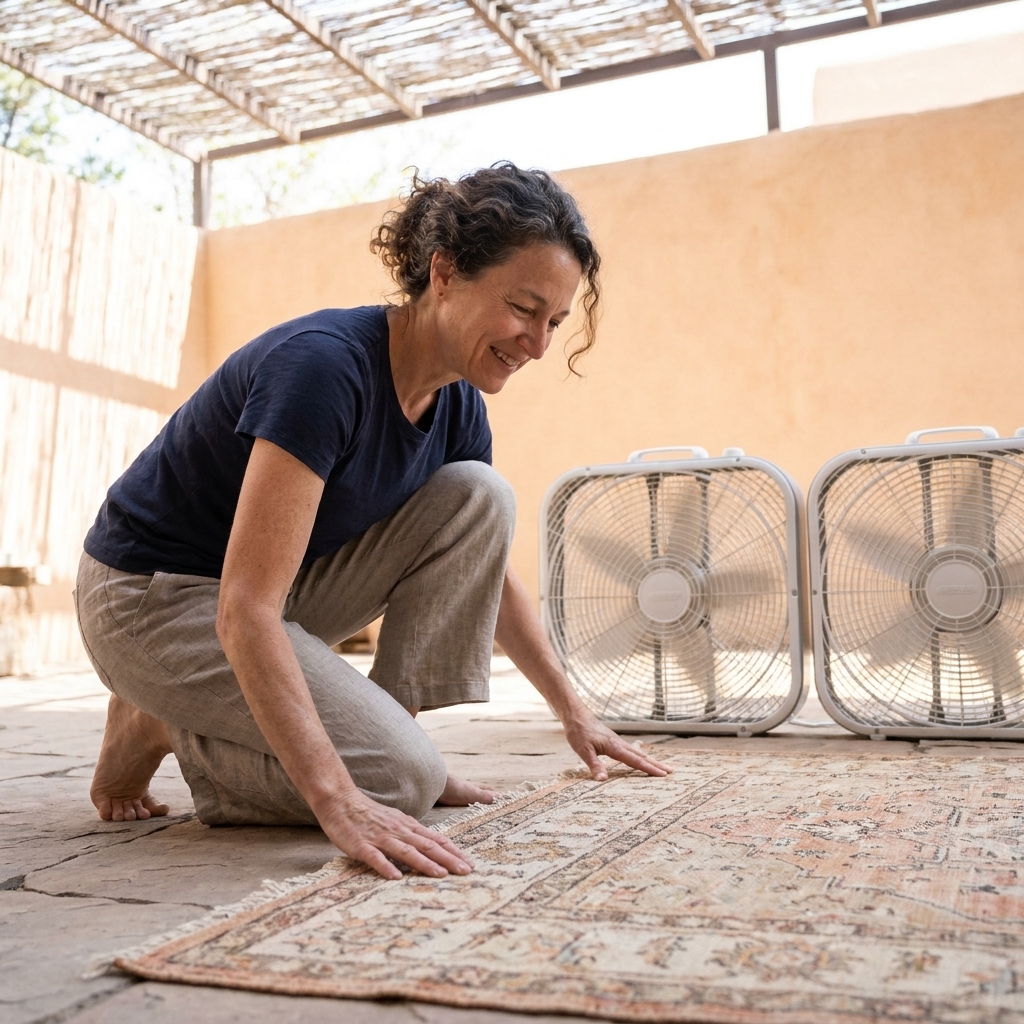
Most rug disasters come from drying slowly. Slow drying equals lingering odor, dye migration, and mildew.
My safest drying setup
- Remove moisture immediately: Blot with towels, then step on the towels to press moisture out.
- Flat dry if possible: Lay the rug flat on a clean surface. If outdoors, choose bright shade.
- Airflow from both sides: Use fans. Flip the rug after a few hours if it is damp underneath.
- Dehumidify indoors: If your home is humid, run a dehumidifier in the room with the rug.
Do not hang a heavy wet rug over a railing for long periods. It can stretch and distort the weave. If you hang it briefly to drip, support it evenly and move it back to flat drying quickly.
Edges and fringe: Comb fringe gently with your fingers while it is damp to keep it from drying into a snarl. Then dry it fast. Fringe holds moisture longer than you think.
Stains: quick fixes that are vintage-rug friendly
Vintage rugs are like vintage denim. They can take some life, but they do not like aggressive chemistry.
Food and general grime
- Blot, do not rub.
- Use mild soap and cool water.
- Rinse by blotting with plain water.
Grease spots
- Sprinkle baking soda or cornstarch on the spot.
- Let it sit a few hours to absorb oil.
- Vacuum.
- Spot clean with mild soap if needed.
Red wine or berry stains
Blot immediately with cool water. Avoid hot water, it can set tannins. If it has already set, you can try a tiny amount of diluted hydrogen peroxide on a light rug only after patch testing.
What not to do (learned the hard way)
- Avoid DIY steam cleaning on vintage rugs, especially wool unless you are very sure the dyes are stable and the construction can handle heat and moisture. If you want steam or hot-water extraction, a rug pro can advise based on fiber and dyes.
- Do not use chlorine bleach or harsh disinfectants. They can weaken fibers and permanently alter color.
- Do not soak rugs with latex backing. The backing can break down and create a sticky mess.
- Do not shampoo and forget. Soap residue attracts dirt and can keep odors lingering.
- Do not dry slowly. If you remember one thing, remember fast drying.
After-care: keep it fresh once it is clean
Once your rug is clean, a little maintenance keeps that thrifted treasure from sliding back into mysterious old house smell.
- Vacuum regularly and vacuum the underside occasionally.
- Rotate every few months for even wear and fading.
- Use a fresh rug pad to reduce slippage and protect fibers.
- Air it out seasonally on a dry day.
If you love the layered, collected look, rugs are the glue that holds it all together. I talk more about mixing textures and making vintage rugs feel intentional in Layering Vintage and Jute Rugs. And if you are building your home piece by piece, my whole approach to hunting for budget-friendly wins lives over on Budget Boho Thrifting.
FAQ
Can I wash a wool rug at home?
Often, yes, but think gentle surface wash, not soak it like laundry. Use cool water, minimal mild soap, and fast drying. Always patch test for dye transfer first.
How do I get rid of musty smell in a vintage rug fast?
Vacuum both sides, then do a baking soda soak for 8 to 24 hours and vacuum again. If the smell persists, do a light surface wash and dry aggressively with fans.
Will vinegar ruin my rug?
Vinegar can be helpful for odor on colorfast rugs, but it is not universal. Patch test first, dilute it, and never saturate the rug. If you have pet urine odor and plan to use enzymes, skip vinegar and follow the enzyme product directions.
What if the rug smells fine when dry but stinks when humid?
That usually means there is still residue in the fibers, either dirt, old moisture funk, or soap. Try another thorough vacuum, then a gentle surface wash with careful rinsing, followed by very fast drying.
When should I take a rug to a professional?
If you see visible mold, the rug was water damaged, dyes bleed heavily, the rug is valuable or fragile, or there is widespread pet contamination, professional cleaning is worth it.