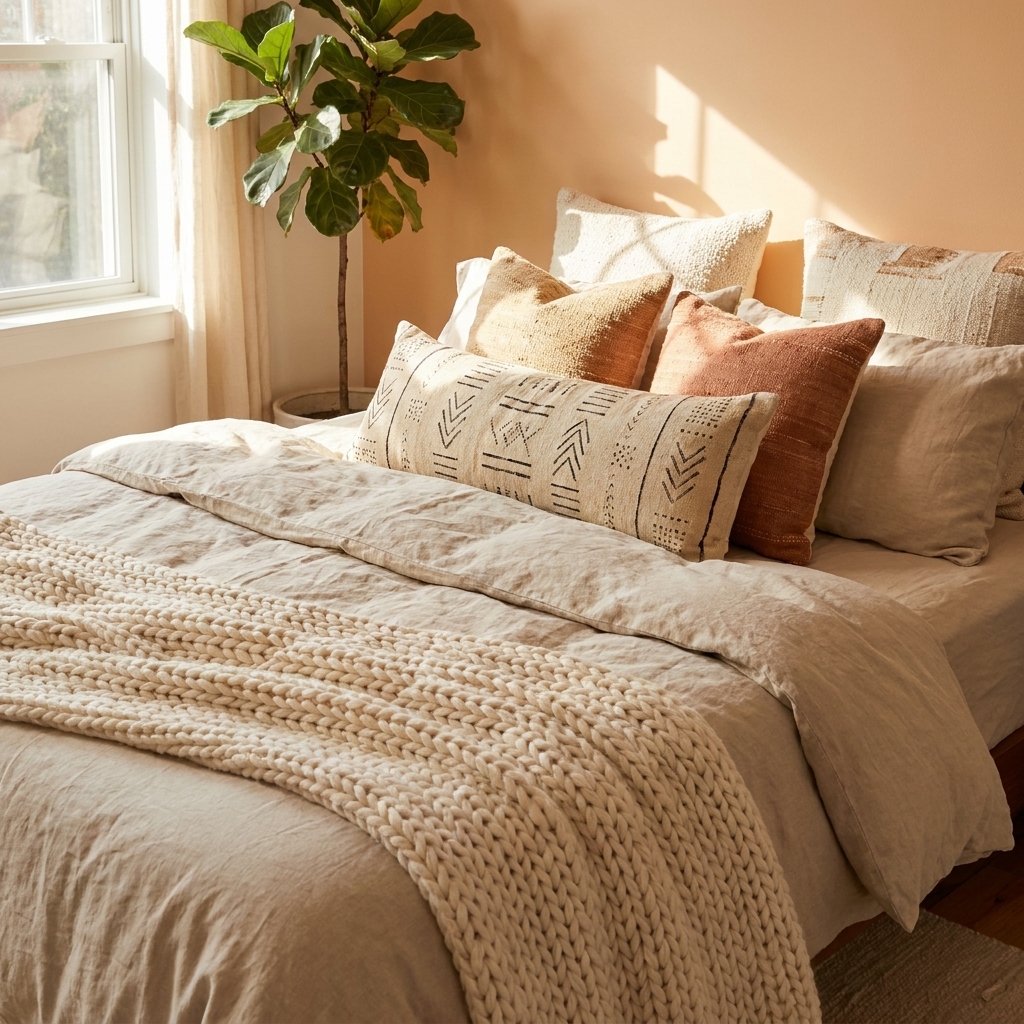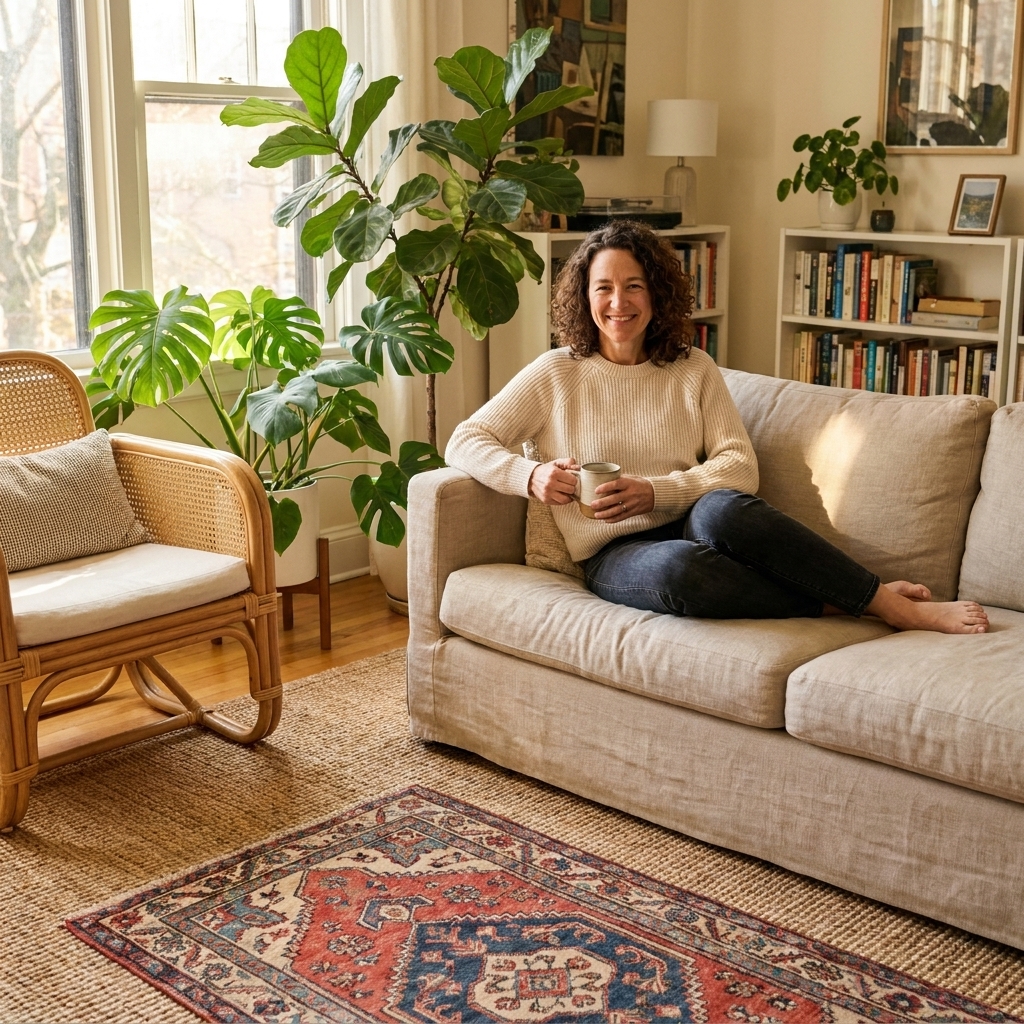

The first time I brought mudcloth home, I treated it like a “special occasion” textile. It stayed folded on a shelf because I was scared of staining it, fading it, or styling it the wrong way. Then I realized the whole point of global textiles is to live with them. Let them soften, let them tell a story, let them make your space feel collected instead of catalog-perfect.
This guide is the cozy, no-pressure deep dive I wish I had from the start: what authentic mudcloth actually is, why it matters how you source it, how to spot the real thing, and a bunch of styling ideas that work in rentals and real life.

What mudcloth is (and why it looks the way it does)
Mudcloth is often used as a catch-all term, but the traditional textile most people mean is bogolanfini, a handwoven and naturally dyed cotton cloth from Mali in West Africa. “Bogo” refers to mud, “lan” to “with,” and “fini” to cloth.
Here is the quick, helpful context that makes the patterns feel even more special once you know it.
Traditional process in simple terms
- Handwoven cotton is woven into narrow strips, then sewn together into a wider cloth.
- The fabric is dyed using plant-based dye baths (often leaves or bark), building a deep base tone.
- Fermented mud is painted onto the cloth to create motifs and lines. The mud reacts with the dye and “sets” the pattern.
- Some areas are bleached or overdyed to sharpen contrast and build that iconic geometry.
Those tiny irregularities you sometimes see? Slight line wobble, a seam where strips join, an imperfect dot pattern? Those are not flaws. They are fingerprints of the process.
If you want a deeper read on using textiles to warm up a room (without it turning into chaos), you might also like Textiles & Natural Elements on Eclectic Nook.
Ethical sourcing: what to look for before you buy
I am a thrifter by nature, so I love a “look what I found” moment. But with globally made textiles, I try to slow down and ask a couple of questions. Mudcloth is widely reproduced, sometimes in ways that flatten the culture into a trend. Ethical sourcing is not about perfection. It is about choosing better when you can.
Green flags for ethical mudcloth
- Clear origin information: the seller can tell you where it was made (Mali is common for bogolanfini), and ideally how.
- Fair pay language: they mention direct trade, artisan co-ops, or transparent pricing.
- Real photos of the exact piece you are buying, not just one stock image for every listing.
- Material clarity: authentic mudcloth is typically cotton, not polyester blends.
Red flags (especially online)
- “Mudcloth” described as microfiber, polyester, or a “mudcloth print.” Prints can be cute, but they are not the same thing.
- Perfectly identical patterns across multiple “one of a kind” listings.
- Prices that are too low to make sense for handwoven, hand-dyed work.
- Vague wording like “tribal” with no region, maker, or sourcing information.
If you want a budget-first approach that still prioritizes smart choices, my thrifting mindset is all over Budget Boho & Thrifting.
How to tell authentic mudcloth from a mass-produced lookalike
You do not need to become a textile historian to make a good call. These are the practical, real-world clues I use when I am deciding whether something is authentic mudcloth or a factory-made imitation.
1) Seamed strip construction
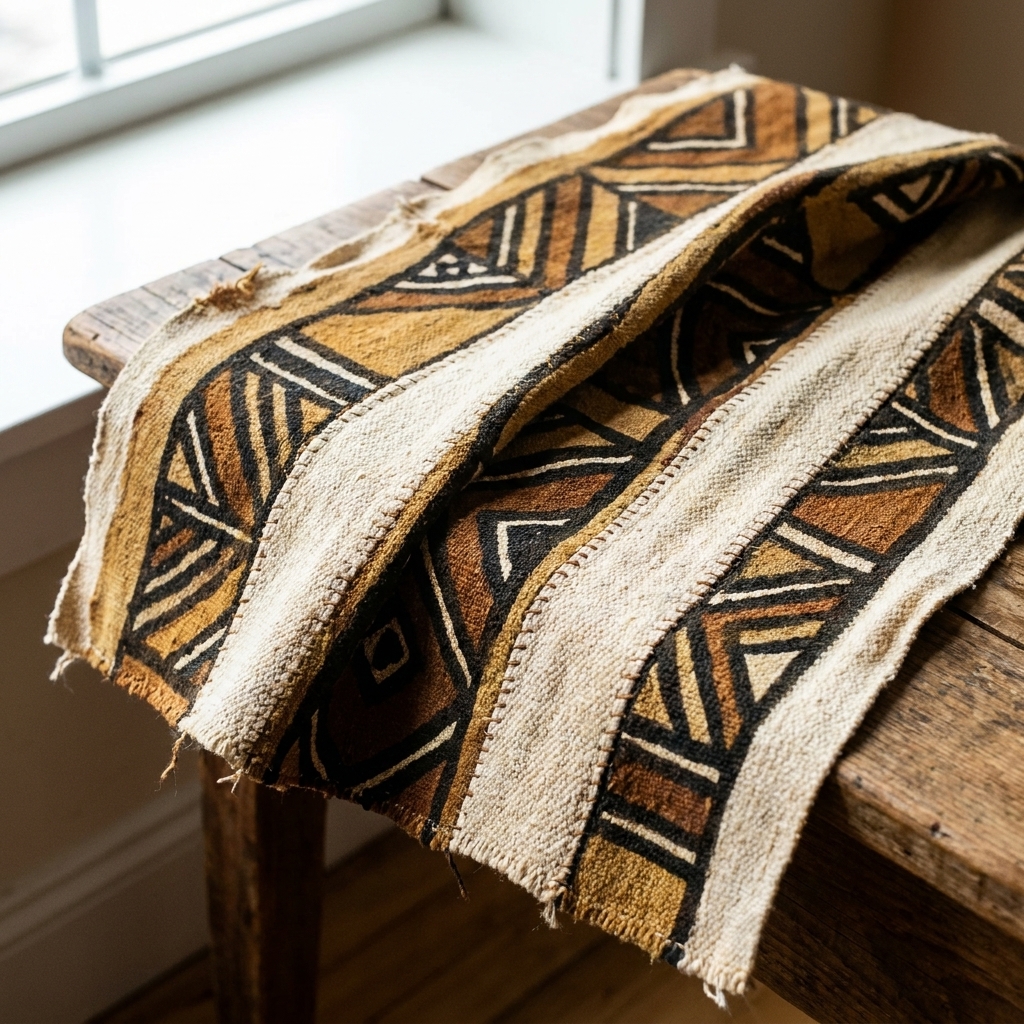
Traditional cloth is often made from narrow woven strips stitched together. Look for long vertical seams running the full length. Not every piece shows this clearly (some are lined, backed, or cut), but it is a strong sign when you see it.
2) Slight irregularities in pattern and dye
Hand-applied mud motifs rarely look laser-perfect. Expect gentle variation in line thickness, tiny gaps, and areas where black is more charcoal. That organic variation is part of the beauty.
3) Feel and weight
Authentic mudcloth usually feels like sturdy cotton. It can be a little crisp at first, then softens with use. Many pieces feel substantial, not flimsy.
4) Color palette that looks naturally achieved
Classic mudcloth is often high-contrast black and off-white, but you will also see warm browns, indigo-leaning tones, and creamy backgrounds. Super bright “optic white” or very saturated neon colors are more typical of printed decor fabric.
5) Smell and rub test (gently)
Natural dye can have an earthy scent, especially in vintage pieces. Also, some authentic mudcloth may transfer a little dye when it is new or freshly dyed. That does not automatically mean “bad,” but it does mean you should wash and test before putting it on a light sofa.
Where to find mudcloth you can feel good about
Because Eclectic Nook is all about a collected home on a real-person budget, I am going to give you options across price points. The best source depends on whether you want a large blanket, a smaller accent, or a truly vintage piece with character.
Direct artisan and fair-trade shops
If your budget allows, buying from sellers who work directly with makers is my favorite route. Look for shops that name the region, explain the process, and show the exact item in photos.
Vintage and secondhand
Vintage mudcloth can be incredible. It is often softer, more broken-in, and less stark than brand-new pieces. Just check for:
- strong odors (mildew can be stubborn)
- weak seams or tearing at the strip joins
- heavy dye transfer if you plan to use it on upholstery
Flea markets and local import stores
These are my happy places. If you can touch the cloth, you can evaluate weight, weave, and construction instantly. Bring a tape measure and take one quick photo of the price tag so you remember what you saw at which booth.
If you are mixing mudcloth with other story-filled pieces, my guide to displaying meaningful objects pairs beautifully with it: How to Tastefully Display Travel Souvenirs and Global Artifacts.
Styling mudcloth without your room feeling theme-y
Mudcloth is bold, graphic, and instantly grounding. It is also easy to overdo if everything around it is also high-contrast and highly patterned. My rule: let mudcloth be the graphic anchor, then layer in supporting textures.
My favorite “mudcloth formula”
- One mudcloth statement: a pillow, throw, table runner, or wall textile.
- Two solids: linen, cotton, or matte-painted surfaces in warm neutrals.
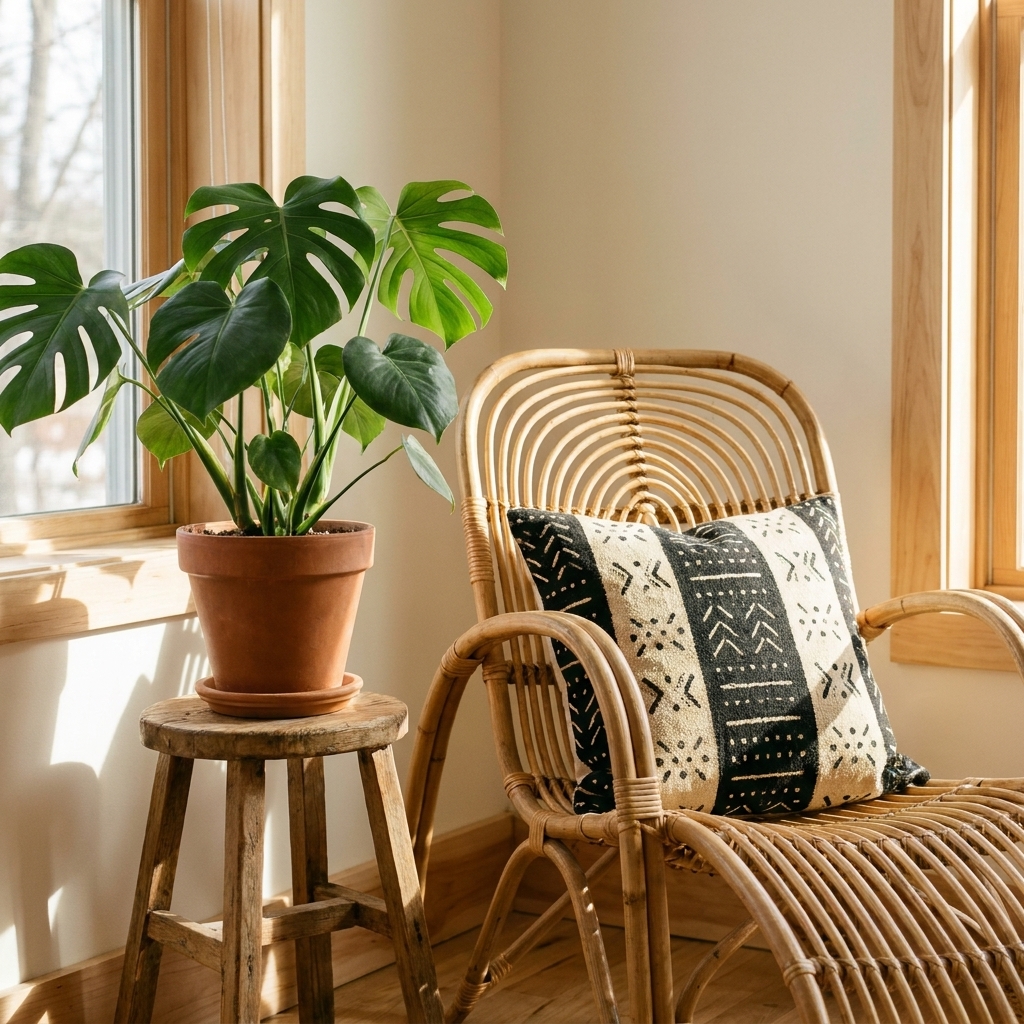
- Two natural textures: rattan, cane, jute, wood, terracotta.
- One living green: a plant with clear shape, like a snake plant or rubber tree.
If you love bold pattern mixing but want it to look intentional, not accidental, read this next: How to Mix Bold Patterns Without Clashing.
1) Mudcloth pillows: the easiest entry point
This is the most renter-friendly option, and it is forgiving. Mix one mudcloth pillow with one textured solid (boucle, nubby linen, chunky knit) and one smaller-scale print (tiny stripe or mini floral).
- On a neutral sofa: choose higher contrast black and cream.
- On a darker sofa: choose cream-forward or brown-forward mudcloth for softer contrast.
- On a colorful sofa: pull one color from the room and keep mudcloth as the black-and-cream “graphic.”
2) Throws and bed layering
Mudcloth looks especially good slightly rumpled. Try it as a throw across the foot of the bed, then layer:
- a waffle blanket or quilt under it
- linen pillow shams in a solid
- one patterned lumbar pillow to bridge the gap
For more bed styling ideas (and how to keep it cozy instead of cluttered), I wrote How to Style a Boho Bed.
3) Wall textile styling that feels collected
You can hang mudcloth as wall art, and you do not need a complicated setup. I like a simple wood dowel or a curtain clip ring approach. Keep the rest of the wall calmer so the pattern reads as art, not background noise.
My go-to pairing is mudcloth plus a small gallery cluster nearby. If you are into mixed frames and layered art, bookmark Eclectic Gallery Wall With Mixed Frames and Art.
4) Mudcloth in a kitchen or dining space
Think smaller and more washable here. A table runner is perfect, especially layered over a plain linen tablecloth. Mudcloth brings instant structure to open shelving moments too, like lining a shelf with a folded textile or using it as a backdrop behind stacked dishes (just keep it away from direct splashes).
If your kitchen has open shelves and you want them to look styled but functional, this helps: Styling Open Shelves in an Eclectic Kitchen.
5) Layering with rugs (yes, you can)
Mudcloth is graphic, so when you layer it with rugs, keep at least one rug low-contrast. I love mudcloth with:
- jute rugs
- faded vintage-look rugs
- flatweaves with subtle stripe
Need the step-by-step for layered rugs? Start here: Layering Vintage and Jute Rugs.
Color pairing ideas that always work
If you have ever bought a bold textile and then panicked because it “does not go with anything,” welcome. Mudcloth is actually one of the easiest patterns to integrate because it behaves like a neutral with structure.
My favorite palettes with mudcloth
- Earthy and calm: clay, sand, camel, warm white, olive.
- Moody and layered: espresso, ink black, deep green, brass, smoky cream.
- Jewel-toned eclectic: mudcloth plus teal, rust, marigold, or burgundy accents.
If you are deciding between earth tones and jewel tones for an eclectic space, I break it down here: Earth Tones vs. Jewel Tones for Eclectic Homes.
Care and cleaning (so you are not afraid to use it)
Care depends on the specific piece, how it was dyed, and whether it is vintage. When in doubt, treat it gently, especially the first wash.
My cautious, real-life routine
- Spot test first: dab a hidden corner with a white cloth and water to see if dye lifts.
- Shake it outside: mudcloth can hold dust from travel and storage.
- Hand wash or delicate cycle in cool water with mild detergent.
- Avoid harsh brighteners and heavy bleach.
- Air dry flat or draped. High heat can set creases and stress seams.
What about that “mudcloth smell”?
Vintage textiles can carry storage odors. I like to air them in shade outdoors first. For stubborn smells, a gentle wash and a long dry in fresh air usually does the trick. If the odor is mildew and it does not budge, I would not use it on bedding or upholstery.
One more practical tip: if you are using mudcloth on a light sofa, consider placing a washable cotton throw underneath it until you are confident the dye is stable.
Smart swaps if you love the look but need a simpler option
There is no shame in loving the mudcloth vibe but needing something more kid-proof, pet-proof, or budget-proof. You can still create the same visual effect with:
- Indigo-dyed textiles (often similarly graphic and global-feeling)
- Woven black-and-cream stripes for a softer take
- Block-printed cotton in geometric motifs
The key is to keep at least one element authentic and tactile, like a woven texture or a hand-printed irregularity, so the room still feels layered.
Quick mudcloth styling checklist
- Pick one mudcloth piece as your anchor.
- Balance it with solids and texture, not more high-contrast patterns.
- Mix in natural materials like rattan, jute, wood, terracotta.
- Keep it feeling personal with one story object, like pottery, a travel find, or vintage art.
- Use plants to soften the geometry. If you want ideas, start with The Indoor Jungle.
FAQ
Is mudcloth always from Mali?
Traditional bogolanfini is Malian, but you will see “mudcloth-inspired” textiles made in other places. If you want authentic bogolanfini specifically, look for Mali as the origin and signs of handwoven strip construction.
Can I upholster with mudcloth?
You can, but I treat it as a specialty move. Authentic mudcloth is often better as pillows, throws, and wall textiles because of dye transfer risk and wear. If you upholster, pre-wash if appropriate, test for crocking (dye rub-off), and consider a protective barrier fabric.
Does mudcloth go with maximalism?
Absolutely. Mudcloth can act like a visual “pause” among colors and patterns because it is graphic and grounded. If you are working in a smaller space, this article helps keep maximalism from turning into clutter: Maximalist Boho in Small Spaces Without the Clutter.
A final thought from a recovering “perfect decor” person
The most beautiful mudcloth moments I have seen are not pristine. They are lived-in. A mudcloth pillow next to a dog-eared book. A throw tossed over a chair that gets used every day. A wall textile that makes a rental feel like home.
If you source thoughtfully, style it simply, and let it age naturally, mudcloth will do what global textiles do best: it will make your space feel like it has a past, even if you are still building your story.