
One of my favorite “make the living room feel like a hug” tricks is adding a floor seating zone. It instantly reads relaxed and welcoming, like people are allowed to actually live in the space. Moroccan poufs are the anchor here, but the magic is really in the mix: oversized cushions you can melt into, a rug that defines the footprint, and a handful of textiles that make it feel intentional instead of like a pile of pillows.
If you have ever wanted your home to feel like the cozy corner of a riad lounge without buying a whole new sofa, this is for you.
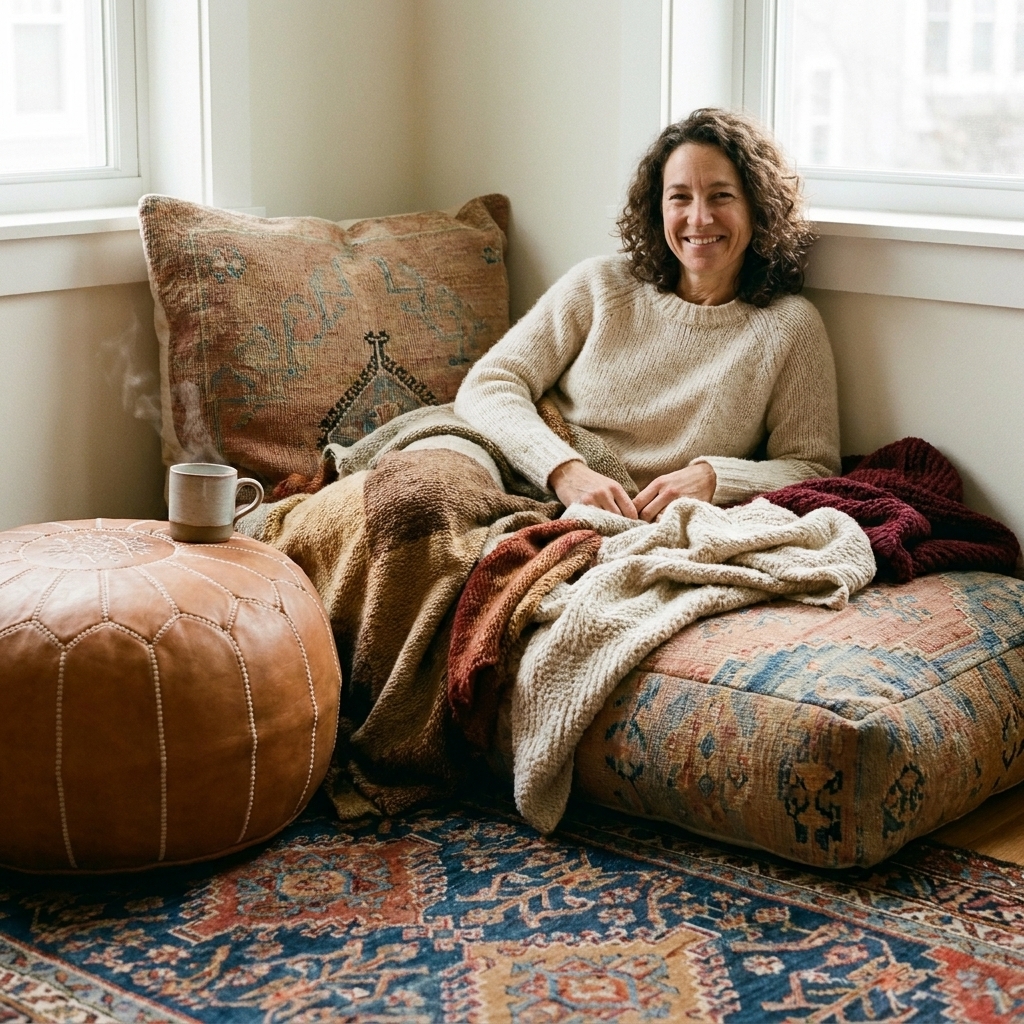
Start with the vibe, then pick a footprint
Before you buy anything, decide what the floor seating area is for. This is the step that keeps it from turning into a random pillow graveyard.
- Tea and conversation: lower, tighter circle seating, more back support, small tray table.
- Movie nights: deeper cushions, more loungy sprawl, throws within reach.
- Board games: stable surfaces and poufs that can double as perches.
- Reading nook: one hero cushion, one pouf, and a lamp nearby.
Now choose a footprint. I like an area that is big enough for bodies but small enough to feel like a “zone” rather than a second living room.
- Small space: about 4 ft by 6 ft, or the size of a compact rug.
- Medium: about 5 ft by 8 ft for around 2 to 4 adults comfortably, or more if you mix in a pouf perch and some casual sit-on-the-rug lounging.
- Large: 8 ft by 10 ft if you want it to function like the main hangout.
If you are working with a tight layout, you might also like my tips on doing maximalist boho in small spaces without the clutter. A floor seating nook can feel maximalist in texture without swallowing your square footage.
The core pieces: poufs, floor cushions, and a rug that does the heavy lifting
Moroccan poufs: what to look for
A good pouf earns its keep. It can be a footrest, an extra seat, a low table with a tray, or the visual “dot” that ties your palette together.
- Size: Many classic round poufs land around 20 to 22 inches wide and 12 to 14 inches tall, but makers vary. If you are tall or you want it to double as seating often, going a touch taller can feel better.
- Fill: An unfilled pouf is not a red flag. It is often how they are shipped. You can stuff it firmly for seating or softer for feet.
- Leather patina: Small scuffs are not flaws, they are character. If you want that lived-in look fast, choose a slightly distressed finish.
- Structure: Check that the seams look tight and the zipper feels sturdy. The zipper is your maintenance access point.
Color tip: if you are mixing patterns, a warm tan or cognac pouf is basically a neutral. If your room leans moody, a darker brown pouf can ground everything.
Oversized floor cushions: the comfort makers
If the pouf is the anchor, the oversized cushions are the invitation. I love a mix of two types:
- Tufted floor pillows (they stay put and feel tailored)
- Overstuffed lounge cushions (they feel like a casual mattress for one)
Practical sizing that tends to work:
- Square cushions: 24 to 30 inches for casual seating
- XL lounge cushions: 30 to 36 inches if you want full-on sprawl
- Back support: add a couple 20-inch pillows behind, or use a long lumbar
My personal rule: at least one cushion should be big enough that nobody has to fight for it.
Rug first, always
A rug makes floor seating look designed. Without it, the cushions can float awkwardly and the whole area reads temporary. If you want that layered, collected look, start with a base rug and build up.
For comfort and safety, I also recommend a rug pad. It adds cushiness under knees and ankles, helps keep layers from creeping, and keeps the whole zone from sliding around on hard floors.
If you want a cozy boho formula that works in real homes, my guide to layering vintage and jute rugs is exactly how I approach this. A jute base rug plus a smaller patterned rug on top is floor seating perfection.
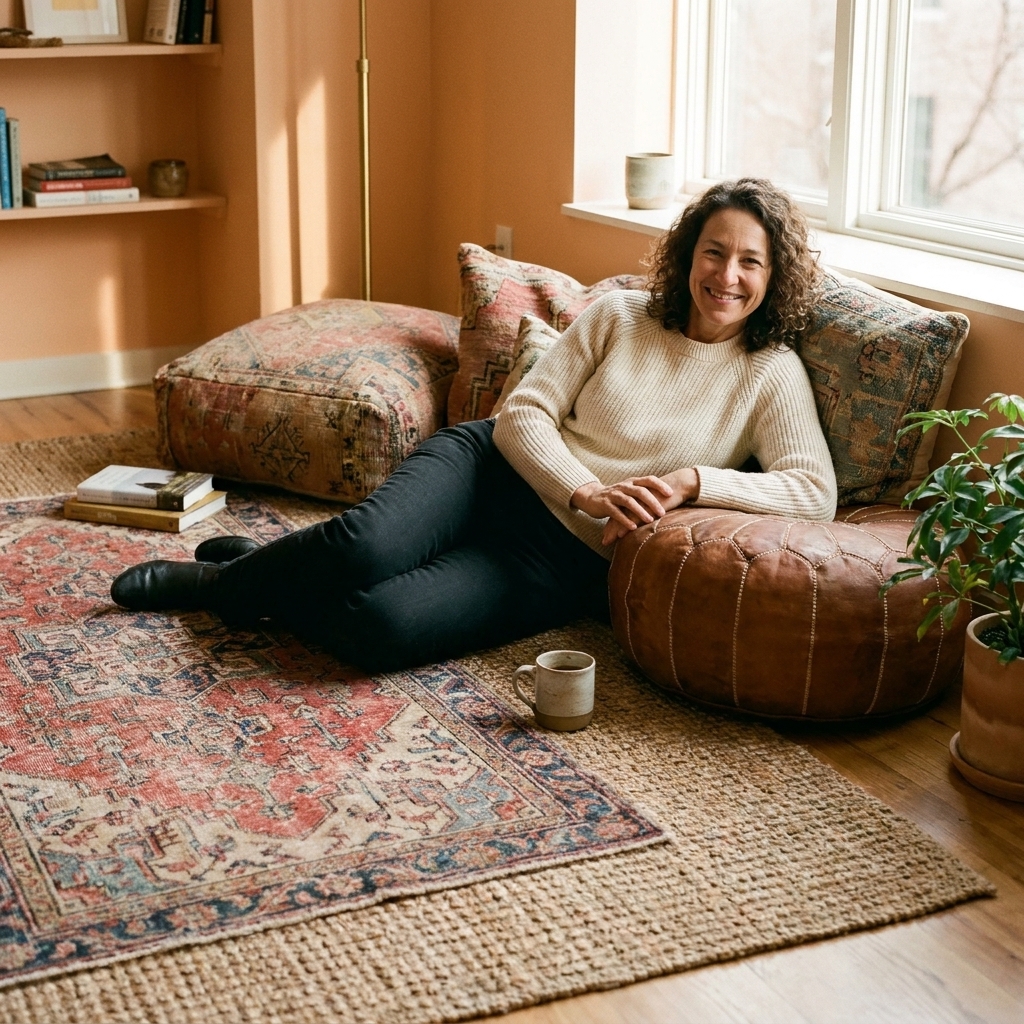
Easy layout formulas that feel natural
Layout 1: The conversation crescent
Best for: hosting, tea, chatting.
- Place 1 pouf slightly off-center as the “table” or footrest.
- Arrange 2 to 3 oversized cushions in a soft crescent facing inward.
- Add 2 smaller pillows behind the cushions for back support.
- Finish with one throw draped where someone will grab it easily.
Layout 2: The movie-night stack
Best for: TV rooms, dens, family spaces.
- Push the rug a little closer to the sofa so the zones connect.
- Place 1 or 2 poufs in front for feet and snacks with a tray.
- Stack two floor cushions slightly overlapping like a daybed.
- Add a chunky knit or quilt at the “end” like a bed throw.
If your sofa has seen better days, you can make the whole room feel refreshed by pairing your floor seating nook with my budget sofa revival tips using draped throws. Cozy on cozy, in the best way.
Layout 3: The reading corner triangle
Best for: small apartments, quiet corners.
- One oversized cushion angled into the corner.
- One pouf to the side for a mug and a book stack.
- One lumbar pillow and one throw for comfort.
- A plant nearby softens the edges and makes it feel like a destination.
If you want your plants to look intentional and not like they are randomly “parked,” you will love how to arrange houseplants like a designer. Floor seating and plants are best friends.
Textile mixing that feels collected, not chaotic
Here is the trick I learned after years of trial and error in rental living rooms: repeat texture, not exact patterns. If everything is a bold print, it gets loud fast. If everything is plain, it gets flat.
A simple 60-30-10 formula
- 60% quiet: solids, subtle weaves, or low-contrast patterns (think linen, cotton canvas, soft wool)
- 30% patterned: one or two statement motifs (kilim-style, block prints, stripes)
- 10% shiny or special: embroidery, metallic thread, beading, or leather
Leather poufs are naturally in that “special” 10%, which is why they look so good with relaxed fabrics.
My go-to texture trio
If you want a foolproof mix, combine:
- Leather (pouf)
- Tufted cotton (floor pillow)
- Nubby throw (chunky knit, bouclé, or a textured weave)
I break this down even more in my texture mixing formula with leather, velvet, and linen. It is the quickest way I know to make a space look layered without making it busy.
Pattern mixing, the gentle version
If pattern mixing makes you nervous, start here:
- Choose one “hero” pattern you love for one cushion.
- Add one stripe or simple geometric in a similar color family.
- Keep everything else solid and textured.
When you are ready to level up, this pattern mixing guide walks you through it in a way that feels doable, not intimidating.
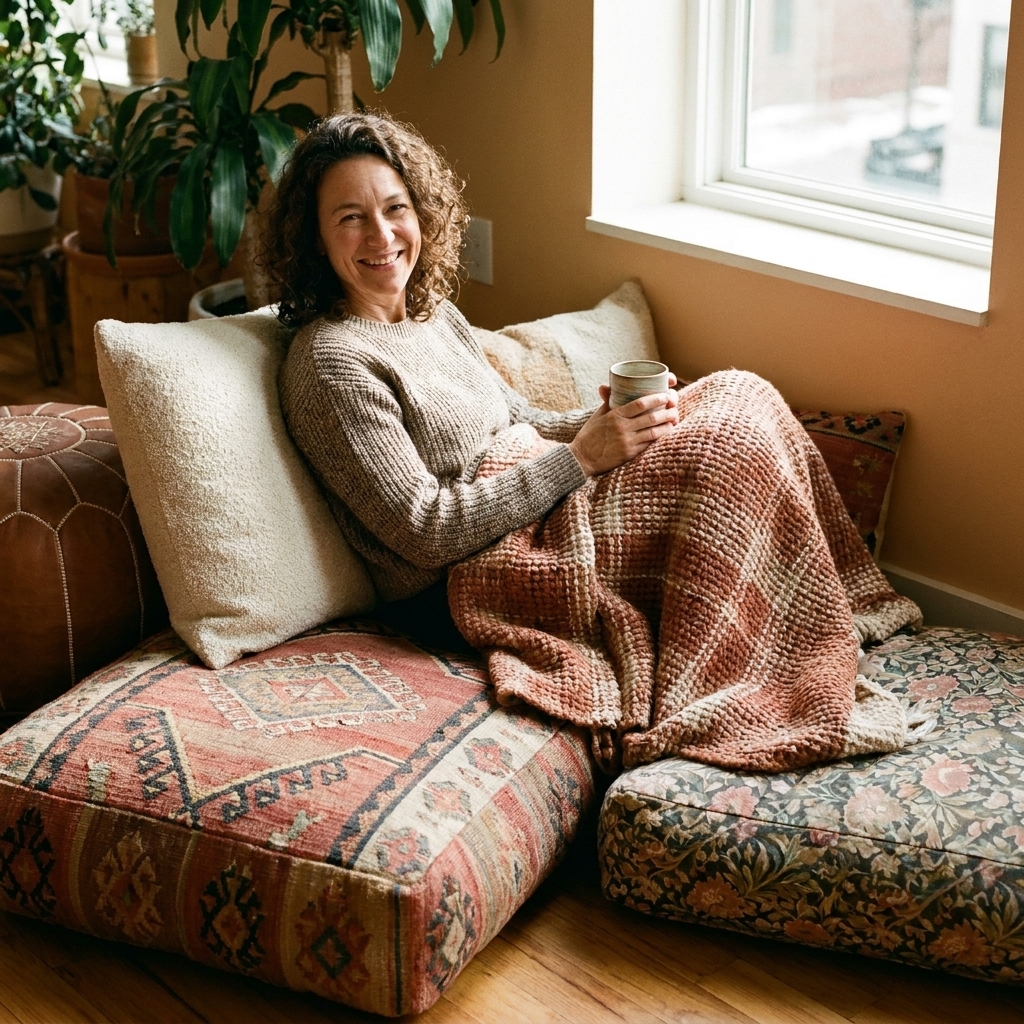
How to style a pouf so it works hard
As a footrest
Keep it soft and slightly underfilled, and position it close enough that guests naturally use it. If it is too far away, it becomes decor, not function.
As a low table
Add a tray with a steady base. I like a tray with a slightly raised edge so cups feel secure. Keep it simple: a candle, matches, and a small bowl for remotes is plenty.
As extra seating
Stuff the pouf firmly, and make sure you have a back support plan. Even one oversized cushion behind someone turns “cute” into “actually comfortable.”
Budget-friendly ways to build the look
This kind of seating area is one of the easiest to thrift, because you can mix eras and styles and it only looks better.
- Use what you have first: pull sofa throw pillows down to the floor temporarily and test the layout.
- Thrift the layers: woven blankets, quilts, and even sturdy tablecloths can become your “top layer” textiles.
- Stuff smart: if your pouf arrives unfilled, you can use old linens, worn towels, or fabric scraps. Pack it tight for structure.
- Look for imperfections: a slightly faded textile often looks more authentic and relaxed than something brand new.
If you want more secondhand strategy, my budget boho thrifting guide will help you spot the good stuff without overbuying.
And if you are building from thrift store basics, these thrift staples are the pieces I see over and over that instantly add soul.
Make it comfortable for real humans
Floor seating should feel fun, not like a test of flexibility. A few small tweaks make a huge difference.
Add back support
- Use a couple of firm pillows behind the oversized cushions.
- If your seating is against a wall, lean a long lumbar cushion along the baseboard.
Make the floor feel good
- Go thicker than you think: if you are buying cushions, look for something that will not bottom out on a hard floor.
- Use a rug pad: it adds softness and helps the whole setup stay put.
- Stop the slide: on slick floors, a grippy pad under the rug plus a few non-slip rug corners can keep layers from drifting.
Keep a throw within reach
Even in warm climates, a throw makes the nook feel finished. Drape it casually over one cushion or fold it at the edge of the rug.
Mind the pathway
Aim for about 24 to 36 inches of clear walking space around the seating zone when you can, so people do not have to hop over pillows to move through the room.
Include a landing spot
Somewhere for a mug, phone, or book makes the area feel livable. If you do not want a table, a tray on a pouf is the easiest solution.
Color palettes that play nicely with Moroccan poufs
Warm neutrals with spice
Think sand, cream, terracotta, tobacco leather, and a touch of black. This one always feels grounded and grown-up.
Jewel tones with earthy anchors
Emerald, saffron, and deep teal look incredible with a cognac pouf, especially when you repeat warm tones in a throw or rug.
Soft desert pastels
Dusty rose, clay, faded mustard, and sage with natural textures. Add one darker accent so it does not go too sweet.
If you are torn between earthy and bold, this earth tones vs jewel tones breakdown can help you choose a direction while still keeping it eclectic.
Buying notes: artisan-made vs Moroccan-style
There is nothing wrong with “Moroccan-style” decor, but if you are specifically shopping for artisan-made pieces, it helps to know what to ask so you get what you think you are getting.
- Ask how the leather is finished: some Moroccan poufs are more natural and porous, others are sealed. More natural finishes can patina beautifully, but they can also be more sensitive to spills.
- Expect variation: handmade leatherwork often comes with slight tone shifts and small marks. That is part of the charm.
- Check the inside details: a lining and a sturdy zipper make stuffing and long-term use easier.
- Plan for “new leather” smell: it usually fades, but give it a few days to air out in a well-ventilated spot before putting it in a tight corner.
- Be mindful of dye transfer: if the leather is richly dyed, keep it off light textiles at first. A simple test is rubbing a white cloth on an inconspicuous area to see if any color lifts.
If you love global textiles in general, you might also enjoy my guide to sourcing and styling mudcloth. The same “ask a few questions and embrace the variation” mindset applies.
Care and upkeep (especially for leather poufs)
Leather pouf basics
- Dust regularly: a soft cloth keeps it from looking dull.
- Condition occasionally: if your pouf starts to feel dry, a small amount of leather conditioner can revive the finish. Always test in a hidden spot first. Be aware that some more natural or richly dyed leathers can darken with conditioner, and oily products can leave blotches.
- Blot spills: do not rub. Let it air dry naturally away from direct heat.
- Rotate it: if one side gets constant sun, the color can shift over time. Turning it every so often keeps it even.
Cushion covers and textiles
- Use removable covers when possible.
- Vacuum floor cushions like you would a rug, especially if you have pets.
- For vintage textiles, spot clean gently and avoid harsh detergents.
Quick styling checklist
- Rug down first to define the zone
- Rug pad underneath for comfort and grip
- One leather pouf as the anchor
- Two oversized floor cushions minimum
- Back support pillows included on purpose
- One textured throw for softness
- One tray or landing spot for drinks and books
- One plant or warm lamp nearby to make it feel like a destination
FAQ
How many poufs do I need?
One is enough to start. Two feels balanced if you have the space and host often. In a larger room, a pair of poufs can replace a coffee table, especially if you use a tray.
Can I do floor seating if I already have a sofa?
Yes, and it can actually make the room feel more flexible. I like placing the floor seating zone adjacent to the sofa so it becomes an extension of the main conversation area, not a separate island.
What if my room is small?
Choose one pouf and one oversized cushion, then layer in smaller pillows. Keeping the palette tighter helps a small floor nook feel intentional, not cluttered.
Are Moroccan poufs comfortable to sit on?
They can be, especially when stuffed firmly. For longer lounging, most people prefer a floor cushion for the main seat and use the pouf as a footrest or flexible extra perch.