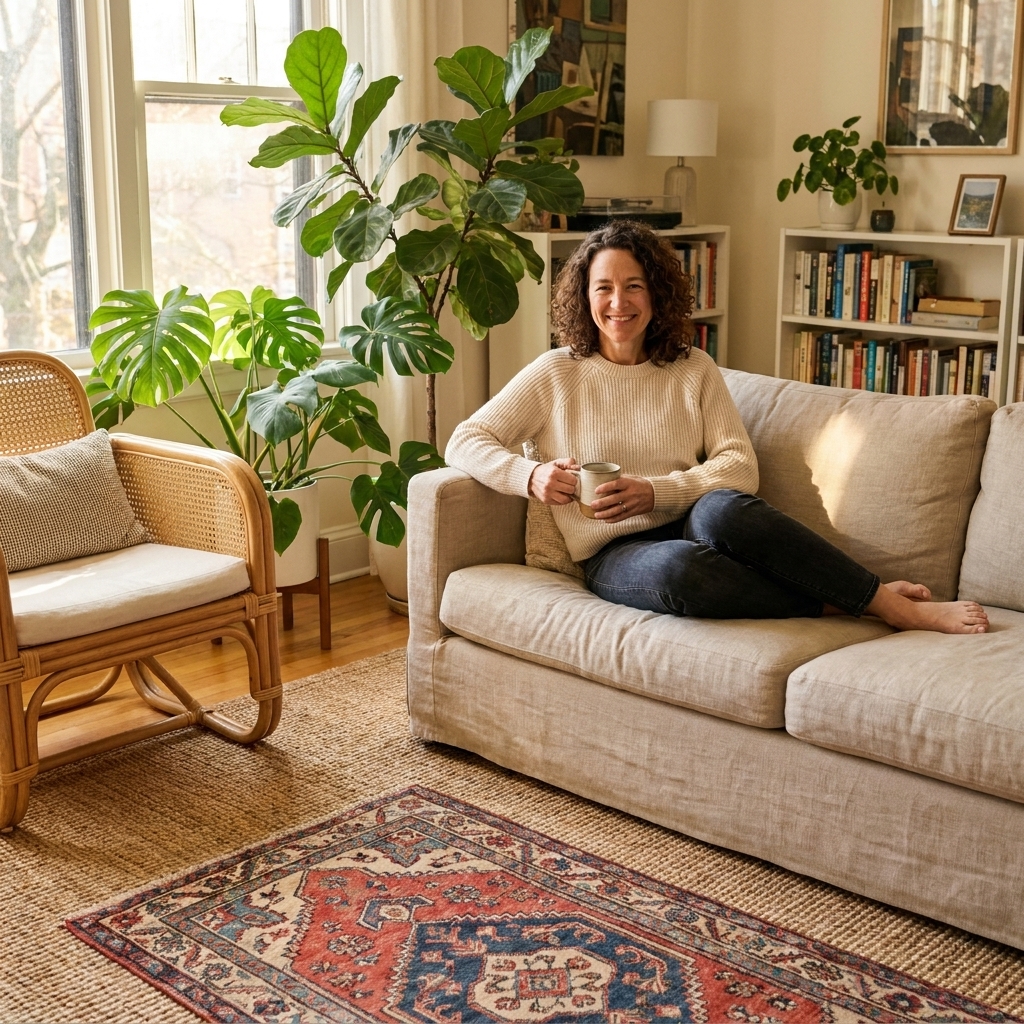

There is a very specific kind of cozy that happens when daylight gets filtered through woven bamboo and then softened again by a floaty linen sheer. It makes even a basic rental window feel intentional, like you planned your whole room around that warm, dappled glow. This is my go-to “boho but grown-up” window combo because it gives you privacy without turning your space into a cave.
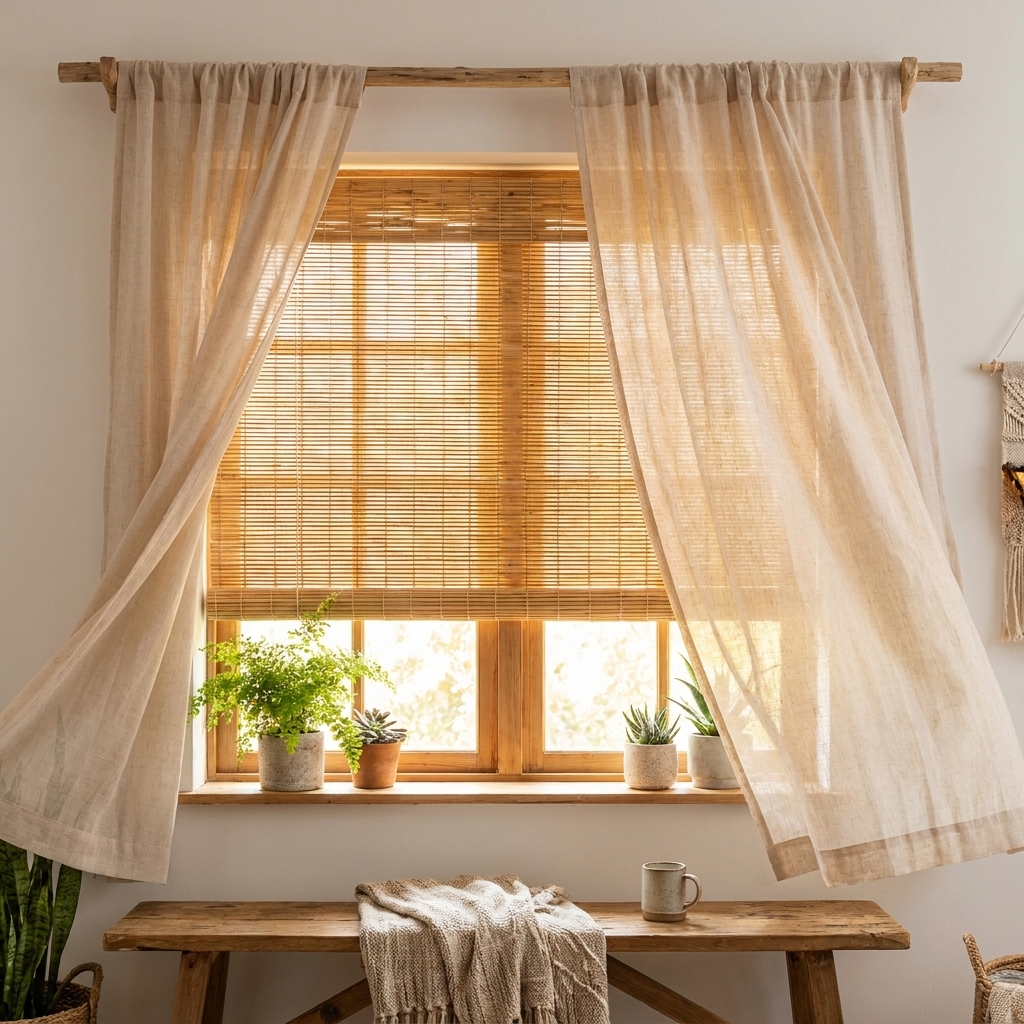
Below is exactly how I layer natural bamboo blinds with sheer linen curtains for that relaxed, global-inspired look, plus the little details that keep it from feeling bulky or fussy.
Why this combo works
Boho style is basically a love letter to texture. Bamboo brings the earthy, woven element. Linen sheers bring movement and softness. Together they:
- Filter light in layers: Woven shades break up harsh sun, then linen diffuses the rest so the room glows instead of glares.
- Give “choose your privacy” flexibility: Shade down for coverage, sheers closed for daytime softness, and both layered when you want a little extra screening from outside.
- Add instant warmth to plain windows: Especially in rentals with standard white vinyl blinds.
- Play nicely with other naturals: Rattan, jute, cane, and warm wood tones.
If you love natural materials, you will probably also enjoy my breakdown of rattan, wicker, or bamboo and where each one shines.
What to buy
Bamboo blinds (woven wood shades)
- Best look for boho: Natural, warm-toned woven shades with visible texture.
- Privacy option: Consider a privacy liner if your window faces a street or a close neighbor. Without a liner, woven shades can be more see-through than you expect when lights are on at night.
- Lift style: Cordless looks cleaner and feels less cluttered, especially if you already have curtain panels.
Sheer linen curtains
- Best fabric vibe: Linen or linen-blend sheers that look slightly slubby and organic, not shiny.
- Color choices I use constantly: Warm white, flax, oatmeal, soft sand. They stack well with most palettes.
- What to skip: Super crisp voile sheers if you want the relaxed boho look. They can read a little too formal and flat.
Rods and hardware
- Rod finish: Aged brass, matte black, dark bronze, or natural wood. Pick what matches your other metals and wood tones.
- Mount type: Simple brackets work, but a wraparound rod (where the rod curves to the wall) helps block side gaps if privacy is a big deal.
- Rings or tabs: Rings make panels glide easily and feel a little more elevated. Tab-top reads more casual.
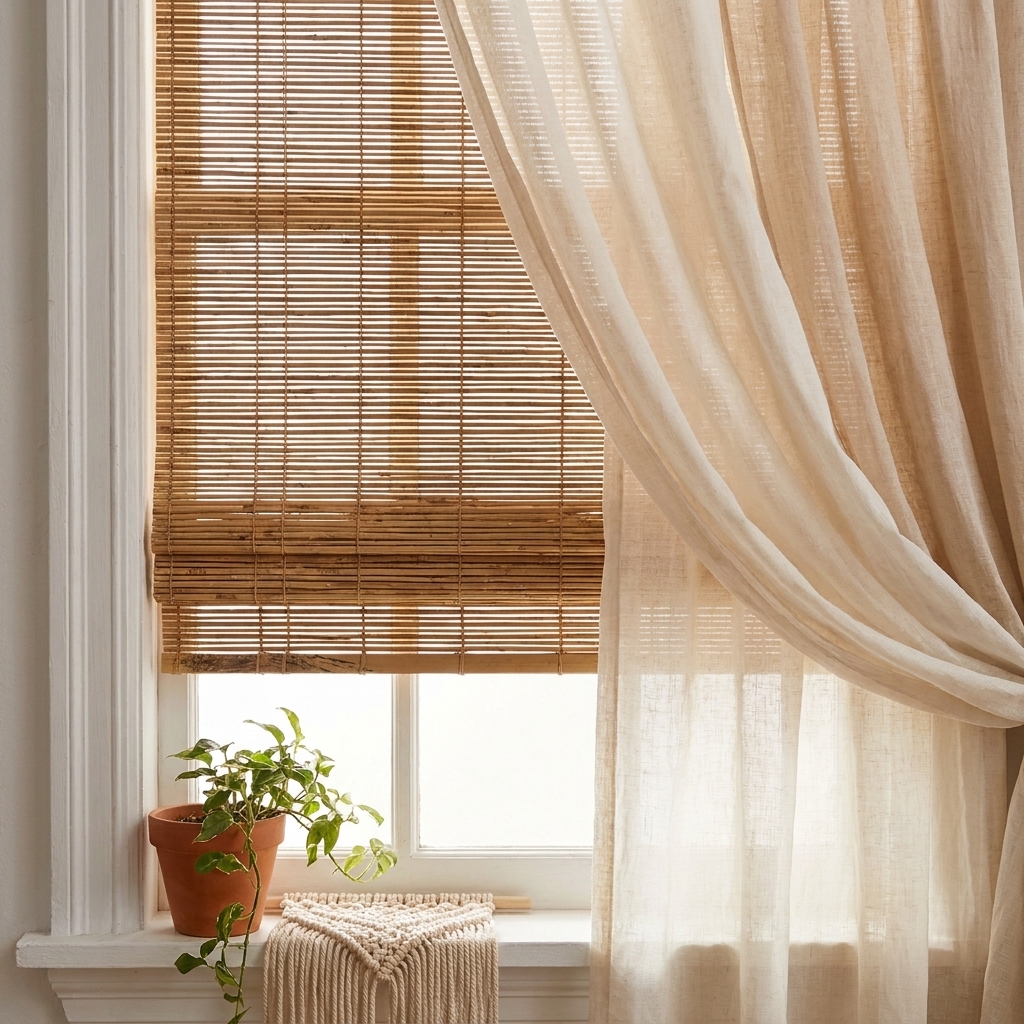
Step 1: Inside or outside mount
This is the fork in the road that makes everything else easier.
Inside mount (my favorite)
Inside mount means the woven shade sits inside the window frame. It looks clean and custom, and it keeps the window area from feeling crowded when you add curtains.
- Use inside mount if: your window has enough depth for the shade you choose. Many woven shades need around 3/4 inch to 1 inch or more, but always check the product requirements.
- Bonus: It is usually the easiest way to keep the layered look airy.
Outside mount (best for shallow frames)
Outside mount means the shade mounts above the frame on the wall or trim.
- Use outside mount if: your window frame is shallow or you want better coverage at the edges.
- Tip: Mount it a little higher than the frame to visually stretch the window.
Step 2: Measure carefully
Measuring for an inside-mount woven shade
- Measure the width at the top, middle, and bottom inside the frame. Use the smallest number unless your shade instructions say otherwise.
- Measure the height on the left, middle, and right. Many brands have you use the largest number so the shade fully covers, but follow the manufacturer measuring instructions for your exact product.
- If your window is older and a little wonky (hello, charming rentals), inside mount will show that. It can still look beautiful, just measure carefully.
Measuring for an outside-mount woven shade
- Add at least 1.5 to 3 inches on each side for better coverage. Go wider if you want more privacy or less light peeking in at the edges.
- Add about 2 to 4 inches above the top of the window if possible. Higher looks taller, and a little extra height can help with coverage too.
Measuring for sheer curtains
- Rod width: Extend the rod 6 to 12 inches past the window on each side if you can. This lets the curtains stack off the glass so you get more light when they are open.
- Panel fullness: For sheers, I like 2x the rod width in total fabric for that soft, rippled look. 1.5x can work if you want it cleaner.
- Length: My favorite is kiss the floor or hover about 1/2 inch above it. If you love a puddle, keep it intentional and small, especially if you have pets.
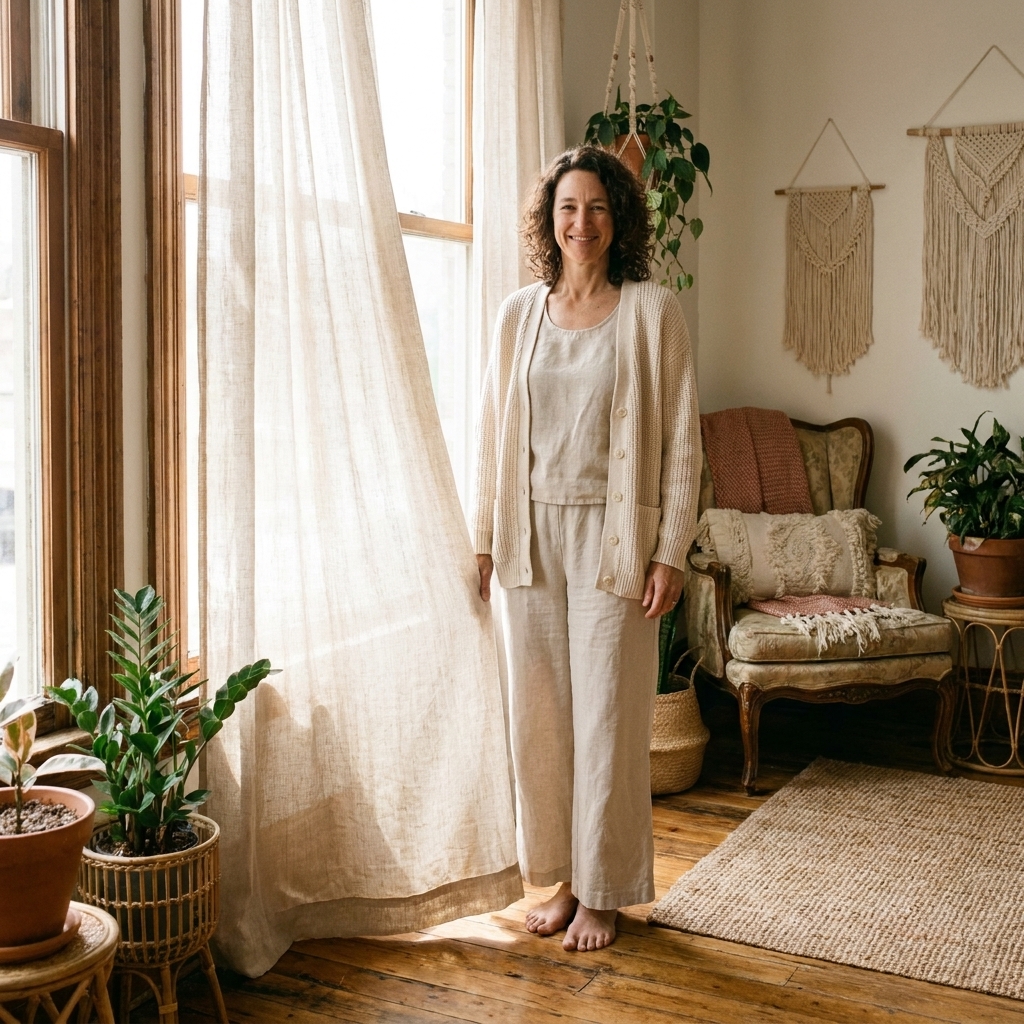
Step 3: Install order
To avoid a bulky stack of hardware, install in this order:
- Mount the woven shade first. Inside mount goes in the window frame. Outside mount goes above the frame.
- Mount the curtain rod second. Place it higher and wider than the window so the curtains frame the view instead of covering it.
- Hang sheer panels last. Steam them, then hang, then adjust. Linen relaxes a bit over the first few days.
My spacing rule of thumb
- If the woven shade is inside mounted, you have lots of flexibility. Hang the curtain rod 4 to 8 inches above the window frame if your ceiling height allows.
- If the woven shade is outside mounted, keep the shade high, then place the curtain rod above the shade or high enough that the curtain fabric does not bunch into the shade hardware.
Step 4: Light and privacy
For daytime glow without feeling exposed
- Lower the woven shade to about two-thirds down.
- Close the sheers fully.
- This gives you a soft, bright room while breaking sightlines from outside.
For more privacy at night
- Lower the woven shade all the way.
- Close the sheers, too, but treat them as a softening layer, not your main privacy layer.
- If you do not have a liner, do a quick check from outside if possible. Woven shades can silhouette at night when lamps are on.
For maximum light during the day
- Raise the woven shade.
- Stack the sheers fully to the sides (this is why extending the rod is worth it).
Styling it so it feels boho
Natural bamboo can lean vacation condo if the rest of the window styling is too plain. The fix is simple: add soul through texture and a little contrast.
Easy upgrades that make a big difference
- Add tiebacks with character: Leather straps, chunky wood beads, vintage scarves, or a simple piece of rope. Keep it relaxed.
- Layer nearby texture: A rattan chair, a jute rug, a woven basket, or a nubby throw helps the bamboo feel intentional.
- Bring in plants: A trailing pothos or a tall floor plant near the window makes the light feel lush and lived-in. If you want to go full indoor jungle, start here: The Indoor Jungle.
- Warm up your palette: Creamy walls, clay tones, tobacco leather, and aged brass all love bamboo.
If you are building a whole layered look, I also love pairing this window combo with natural fiber rugs. My rug layering guide is here: Layering Vintage and Jute Rugs.

Common problems
My woven shade looks orange next to my curtains
That is usually a temperature mismatch. If the bamboo is warm and the sheer is a cool white, they can clash. Swap to a warmer ivory or flax sheer, or repeat warmth elsewhere (wood, brass, tan pillows) so it feels balanced.
The whole setup feels bulky
Go for inside-mount shades if possible and use sleeker curtain headers (rings or pinch-pleat style) rather than thick grommets. Also check your curtain width. Too much fullness can feel heavy in a small room.
I can still see in at night
Add a privacy liner to the woven shade, or layer a slightly less sheer linen panel. Another option is a double-rod setup where the inner layer is a light-filtering curtain and the outer layer is sheer, but I usually only do that in bedrooms.
My curtains never hang straight
Steam first, then let them hang for 48 hours. Linen relaxes. If they still twist, the panels might be off-grain. A quick fix is adding small curtain weights at the bottom hem (even a few hidden coins in the hem corner can help in a pinch).
Care and maintenance
How I clean woven shades
- Dust regularly: A microfiber cloth, feather duster, or vacuum with a soft brush attachment keeps fibers from looking dull.
- Spot-clean only: If you have a mystery smudge, use a barely damp cloth and gentle pressure. Many natural woven shades do not love water, so I avoid soaking or aggressive wiping.
How I handle linen sheers
- Expect a little shrink: Linen and linen-blends can draw up slightly after washing. If you plan to launder them often, consider buying a touch longer.
- Steam beats ironing: Especially once they are already hanging.
Liner quick notes
- Privacy liners: Great for reducing see-through at night, while keeping some of that woven texture and glow.
- Blackout liners: Best for bedrooms, but they will mute the dappled light effect that makes woven shades feel so special.
Room by room
Living room
Keep it airy. Woven shade plus linen sheers is usually enough. If you have a street-facing window, choose a liner on the shade so you are not constantly thinking about silhouettes.
Bedroom
If you need darkness, bamboo alone will not cut it. Do bamboo for texture, then add an additional layer elsewhere (like a lined curtain panel) or choose a woven shade with a blackout liner. You can still keep it boho by using warm neutrals and natural textures.
Kitchen
Woven shades are great here because they feel casual and are usually easier to dust and spot-clean than full fabric panels. For curtains, consider short café-style sheers if full-length fabric feels impractical near cooking areas.
Bathroom
Only use bamboo in a well-ventilated bathroom. Consistent humidity can warp natural materials over time. If you do it, keep the shade lifted when showering and let the room dry out.
Layered window checklist
- Shade first: inside mount if you can for a clean look.
- Rod high and wide: it makes everything feel taller and brighter.
- Warm sheers: choose flax or warm white to complement bamboo.
- Test nighttime privacy: especially if your woven shade is unlined.
- Finish with texture: tiebacks, plants, and a nearby natural fiber piece.