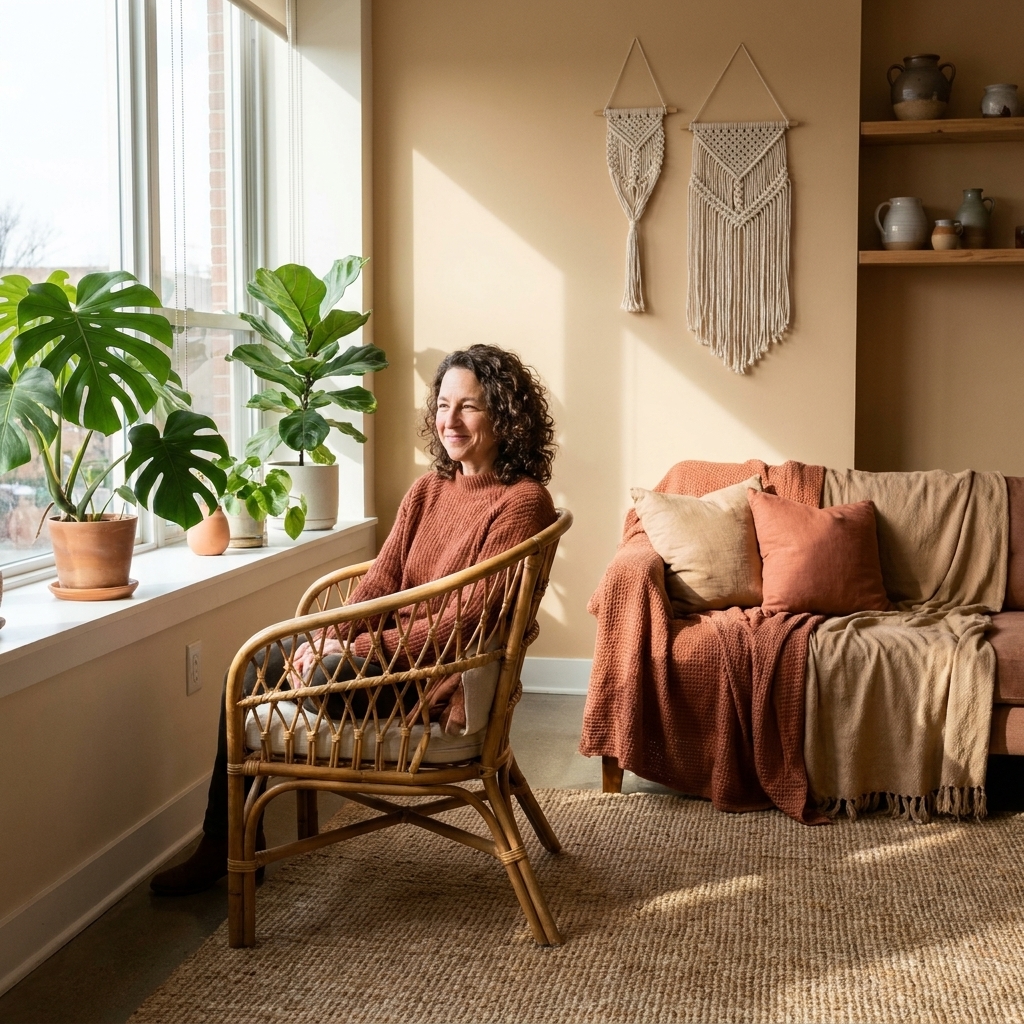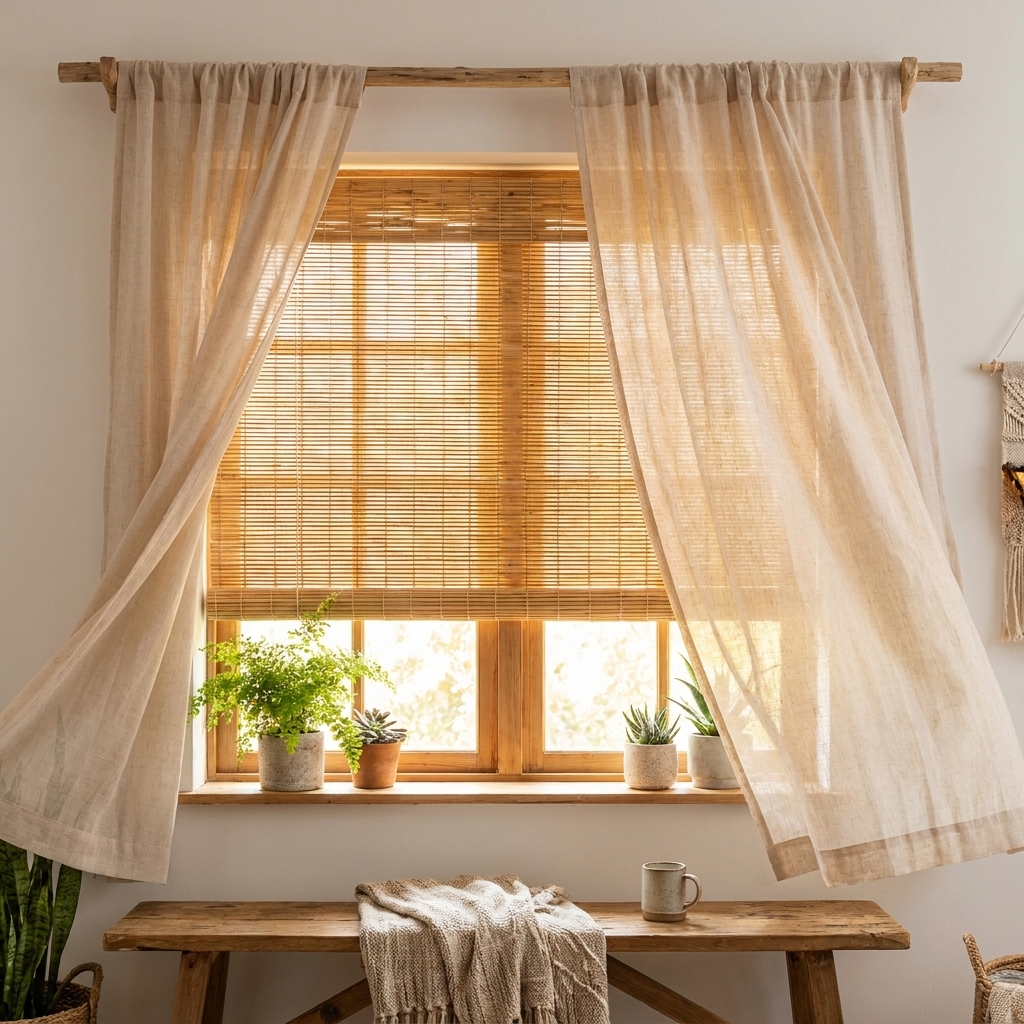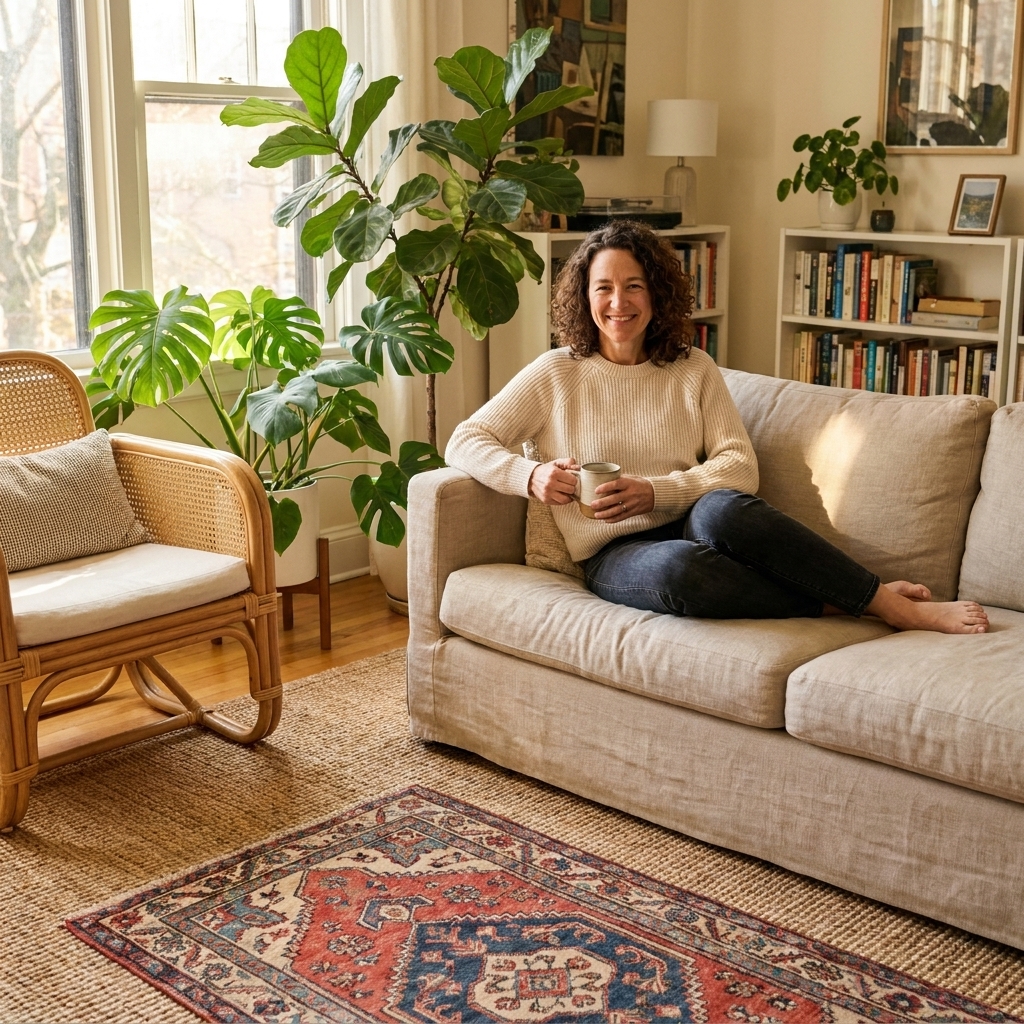

The quickest way to make a room feel collected (not catalog) is texture. Not more stuff. Texture.
I learned this the hard way in a tiny rental living room where I had exactly one “adult” piece (a secondhand leather chair) and a whole lot of thrifted optimism. The chair looked lonely. Then I added velvet pillows and a slouchy linen throw and suddenly everything clicked. The leather felt intentional, the velvet felt lush, and the linen kept it grounded and relaxed.
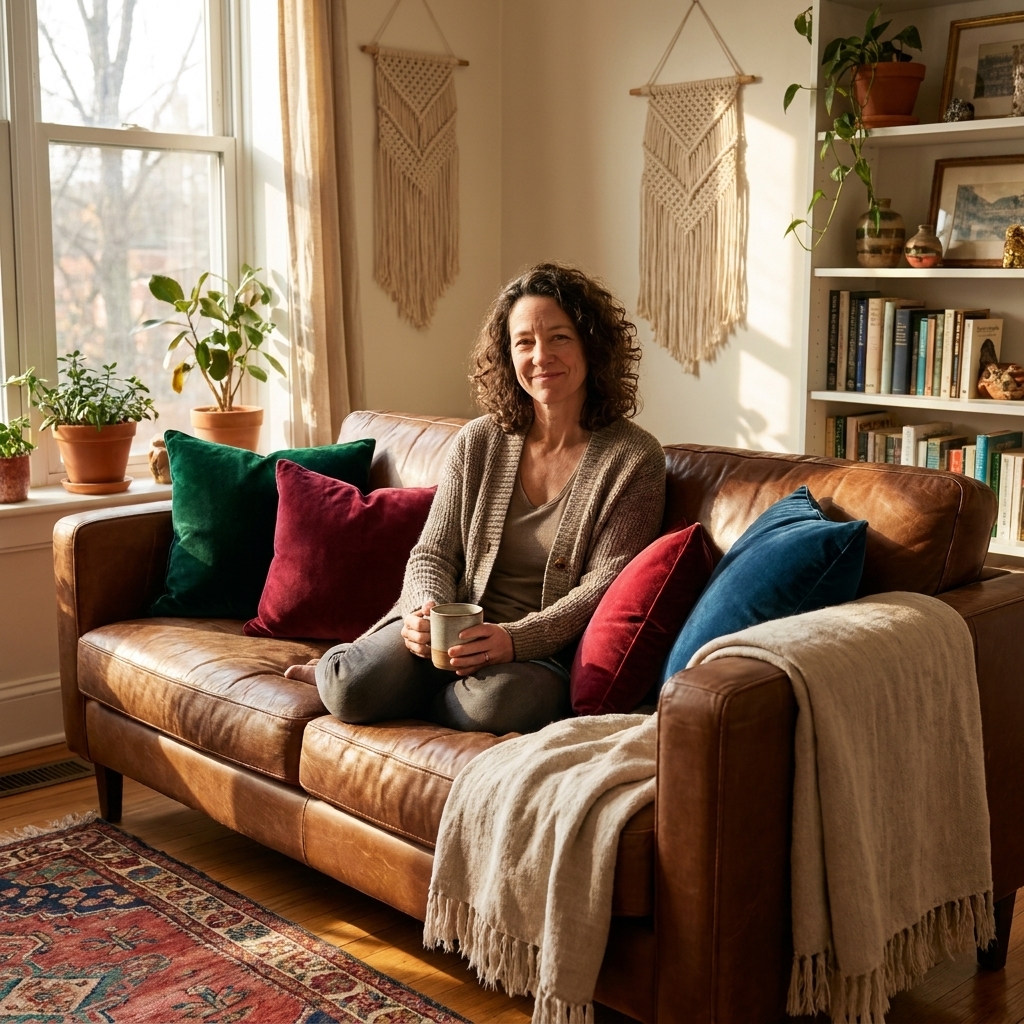
This is my go-to designer-ish formula for eclectic homes: one smooth and structured texture (leather), one plush light-catching texture (velvet), and one raw breathable texture (linen). When you balance those three, the room looks layered without feeling busy.
Why leather, velvet, and linen work together
Think of these as a built-in “texture triangle.” Each fabric brings a different visual weight and a different kind of light reflection, which is what keeps the mix from turning into chaos.
- Leather is smooth, slightly reflective, and structured. It reads as grounded and architectural.
- Velvet is plush and directional. It changes tone as you move around the room, which adds depth without adding clutter.
- Linen is matte, breathable, and a little rumpled on purpose. It softens the whole look and makes everything feel lived-in.
In boho and eclectic spaces, this trio is especially helpful because we tend to layer patterns, wood tones, plants, vintage art, and rugs. Texture becomes the quiet organizer that holds the visual story together.
The simple formula
Instead of trying to find a leather, velvet, and linen that all match perfectly, assign each one a role. This keeps the room balanced even if your pieces come from five different thrift stores and one impulsive online sale.
Role 1: Leather as the anchor
Leather is your visual weight. It works best as a larger piece or a repeating accent that shows up at least twice.
- Sofa, armchair, ottoman, or dining chairs
- Smaller repeats like leather drawer pulls, a tray, or a vintage belt used as a curtain tie
Thrift tip: If leather is out of budget, look for genuine leather bags or belts and repurpose them as decor accents. It gives you that “worn-in richness” without needing a full leather sofa. Faux leather can work too as an anchor, it just will not patina the same way over time.
Role 2: Velvet as the glow
Velvet is your “jewelry.” It catches light and adds a soft luxe note, even in a very casual room.
- Throw pillows, a bench cushion, a footstool, or drapes
- One statement piece like a velvet accent chair if your room is otherwise simple
If your space already has a lot going on, keep velvet to small, touchable surfaces like pillows. You still get the depth, but it will not overpower your patterns. If you want the easiest upkeep, performance velvet tends to be the most forgiving in real life.
Role 3: Linen as the exhale
Linen is what makes the room feel breathable. It is the fabric that says, “Come sit down.”
- Throws, pillow covers, slipcovers, and curtains
- Table linens and bed linens (a very easy place to add it)
If you are mixing a lot of rich tones (like cognac leather and emerald velvet), linen is your pressure release valve. It keeps everything from feeling too heavy. If wrinkles make you twitchy, a linen blend or a linen-look cotton gets you the vibe with less rumple.
How to balance textures
Here are the rules I actually use when I am styling a room with this mix.
1) Spread texture around
If the leather chair, velvet pillows, and linen throw all sit on one sofa, it looks like a fabric sample display. Instead, distribute the textures across zones.
- Leather: chair or sofa
- Velvet: pillows on the opposite seating piece or a bench
- Linen: curtains, a throw, or an ottoman slipcover
This is also why I love styling open shelves with textiles draped in small doses. If you are working with shelving, styling open shelves in an eclectic kitchen has the same “spread the visual weight” logic, just with pottery and everyday items.
2) Keep the colors tight
Texture is already doing a lot. If you add three different fabrics and twelve unrelated colors, the room can feel noisy.
My easiest approach is:
- Leather in a classic tone (cognac, chocolate, black)
- Velvet in 1 to 2 intentional colors (a jewel tone or a moody neutral)
- Linen in a soft neutral (flax, cream, warm gray)
If you want help choosing a palette, I like thinking in terms of earth tones vs jewel tones for eclectic homes. Both work beautifully with this trio.
3) Mix finishes too
Texture does not stop at fabric. A room feels cohesive when your other materials support the same idea.
- Leather pairs beautifully with warm woods, black metal, and aged brass.
- Velvet loves soft lighting, curved shapes, and slightly glamorous details.
- Linen looks best next to raw woods, ceramic, stone, jute, and rattan.
Rattan and bamboo are especially good “bridges” between the three because they add warmth without adding shine. If you are debating natural accents, rattan, wicker, or bamboo can help you pick the right vibe.
4) Use pattern on purpose
This fabric trio plays nicely with pattern, but pattern needs boundaries. My favorite approach is to let one element carry pattern and let the others stay mostly solid.
- Patterned rug + solid velvet pillows + linen curtains
- Patterned mudcloth pillow + solid velvet pillow + linen throw
If your brain short-circuits when you mix prints, you are not alone. I wrote how to mix bold patterns without clashing for exactly that reason.
Room-by-room ideas
Living room
- Leather: sofa, chair, or ottoman
- Velvet: two pillows in a deep color (teal, rust, plum, olive)
- Linen: one relaxed throw and/or linen curtains
If your sofa is looking rough, you can still get the leather-velvet-linen balance by covering the sofa with a linen slipcover style throw and using leather in a chair or accessories. My approach to making tired seating look intentional is in budget sofa revival: draping throws over worn upholstery.

Bedroom
- Leather: a headboard, bench, or small accents like a leather tray on the dresser
- Velvet: one lumbar pillow or a quilted velvet throw at the foot of the bed
- Linen: linen duvet cover or pillowcases as your base
This trio makes a bed feel elevated fast, even if the frame is basic. If you want a full layered bed formula, how to style a boho bed goes deeper.
Dining room
- Leather: dining chairs or seat cushions
- Velvet: a pair of velvet host chairs, or velvet cushions on one side of a banquette
- Linen: table runner or tablecloth to soften all the hard surfaces
Home office
- Leather: desk chair or a vintage leather portfolio used as decor
- Velvet: curtain panel or a single accent cushion
- Linen: roman shade, pinboard cover, or a linen throw over a reading chair
Common mistakes
Mistake: Everything is the same weight
If you have leather, velvet, and linen but the room still feels flat, you might be keeping them all in the same size category. For example, three tiny accents and no anchor.
Fix: Make one texture the big statement (often leather), and keep the other two as supporting layers.
Mistake: Too much shine
Between leather and velvet, you can end up with a room that feels glossy or heavy, especially at night.
Fix: Add more matte linen and other dry textures like jute, boucle, or unfinished wood. A natural rug helps too. If you are rug layering, layering vintage and jute rugs is a great way to add that raw base note.
Mistake: Velvet looks random
Velvet can look out of place if it is the only plush thing in the room.
Fix: Repeat velvet twice, even in small ways. Two pillows. Or a pillow and a curtain panel. Repetition makes it feel deliberate.
Mistake: Linen feels too wrinkly
Linen is supposed to have a relaxed look, but there is a fine line between “effortless” and “I pulled this out of the laundry basket.”
Fix: Use linen in structured forms (a tailored curtain, a crisp pillow cover) if you want it to read cleaner. Or blend linen with cotton for a similar look that wrinkles less.
Quick care basics
This mix looks relaxed, but it is not high drama to maintain. A few small habits go a long way.
- Leather: Wipe spills quickly with a barely damp cloth, then dry. Condition occasionally, and know that protected or pigmented leather is usually more kid and pet friendly than delicate aniline leather.
- Velvet: Vacuum with a soft brush attachment and spot-clean gently. If you notice crush marks, a little steam and a soft brush can help lift the pile (test first). Performance velvet is the lowest-effort option if you can swing it.
- Linen: Embrace a little rumple, or hit it with a steamer for a cleaner drape. Linen blends tend to wrinkle less and still look right in eclectic spaces.
Thrifting for texture
Texture is a thrift shopper’s best friend because you do not need perfect sets. You need good bones and interesting surfaces.
- For leather: check chair arms, cushion seams, and sun fading. Patina is fine. Flaking is not.
- For velvet: rub your hand both directions. Look for bald spots on seat cushions and elbows.
- For linen: hold it up to the light to check for thinning. A little slub is normal and charming.
If you are new to hunting these pieces secondhand, start with my thrift-first approach in budget boho thrifting. It will save you money and regret.
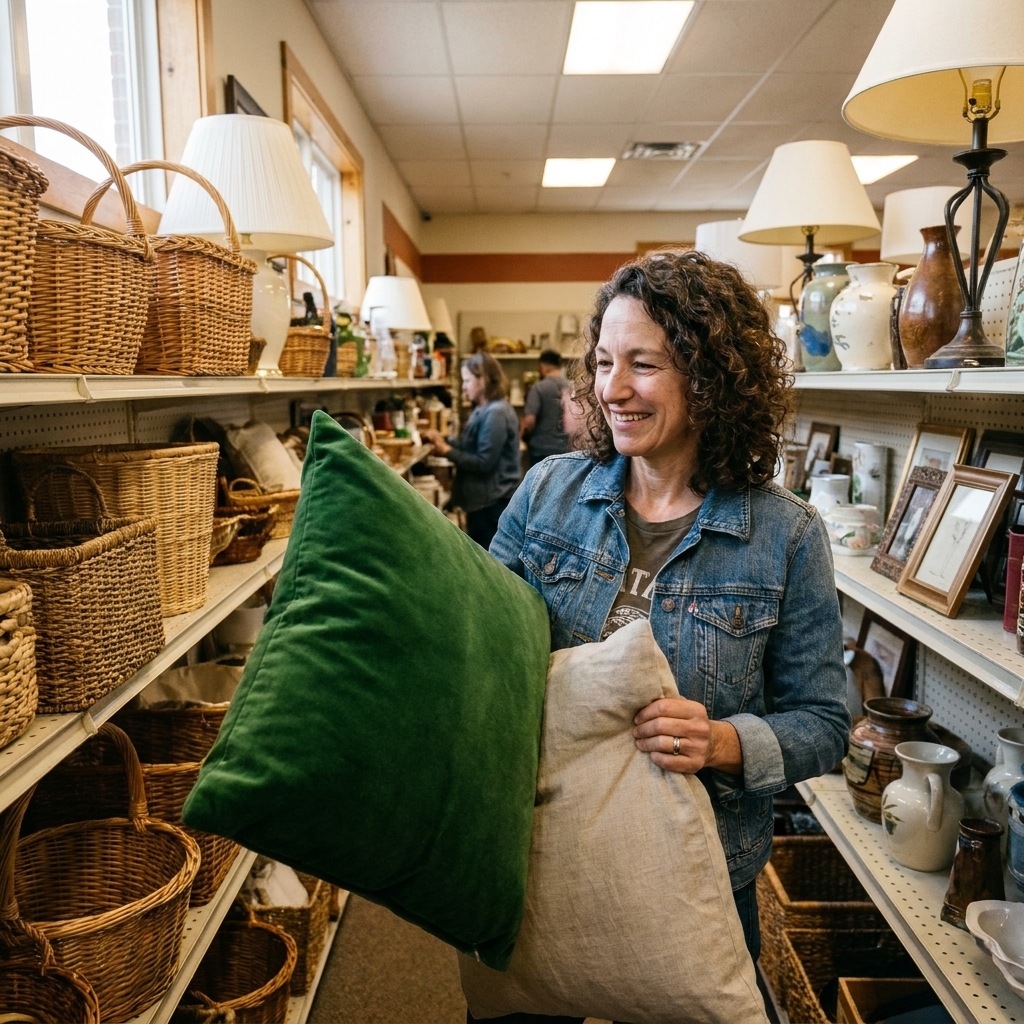
Mini cheat sheet
- 1 anchor: leather in a larger piece (or repeated accents)
- 1 glow: velvet in a limited number of touches
- 1 exhale: linen in the pieces that drape and soften
- 1 dry texture: add jute, rattan, ceramic, or wood so the mix does not feel too polished
If you try this and your room still feels visually loud, do a quick audit: make sure each texture shows up in more than one spot, and make sure linen has enough “surface area” to calm the scene.
FAQ
Can I mix leather and velvet without it feeling too formal?
Yes. Keep velvet to casual shapes (like squishy pillows) and bring in linen and natural fibers. A jute rug or woven basket instantly relaxes the combo.
Do leather, velvet, and linen have to be the same color family?
No, but they should share a temperature. For example, warm cognac leather looks best with warm-toned velvet (rust, olive, ochre) and warm linen (flax, cream). Cooler black leather can lean into cooler velvet (navy, forest, charcoal) with a crisp neutral linen.
What if I have pets or kids and velvet feels unrealistic?
Use velvet in smaller, replaceable pieces like pillow covers, or choose velvet-like textures such as cotton velour. If you want the easiest cleanup, look for performance velvet, and stick to mid-tones that hide everyday life a little better.
What is the easiest way to start if my room is all one texture right now?
Add one linen throw (instant softness), then two velvet pillow covers (instant depth), then look for a leather accent in a smaller piece like an ottoman, chair, or even a vintage leather tray.