
The first time I tried ceiling draping in a rental, I did it for the most practical reason possible: my bedroom felt like a plain shoebox, and I wanted it to feel like a little sanctuary. I hung a few panels of gauzy fabric above the bed, added a warm lamp, and suddenly the whole room felt quieter. Softer. Like the edges blurred in the best way.
Ceiling draping is one of those high-impact, low-furniture tricks that makes a space feel immersive and collected. It is basically “textile styling,” but instead of a throw blanket on a sofa, you are using the ceiling as your canvas.
What it does
Before we talk hardware, here is why this works so well, especially in boho and eclectic spaces:
- Softens hard lines like low ceilings, boxy rentals, or sharp drywall corners.
- Creates a focal zone without buying a headboard, canopy bed, or new light fixture.
- Adds “layered lived-in” texture even when the rest of the room is minimal.
- Improves the glow because sheer fabric catches light and makes it feel warmer and more diffused.
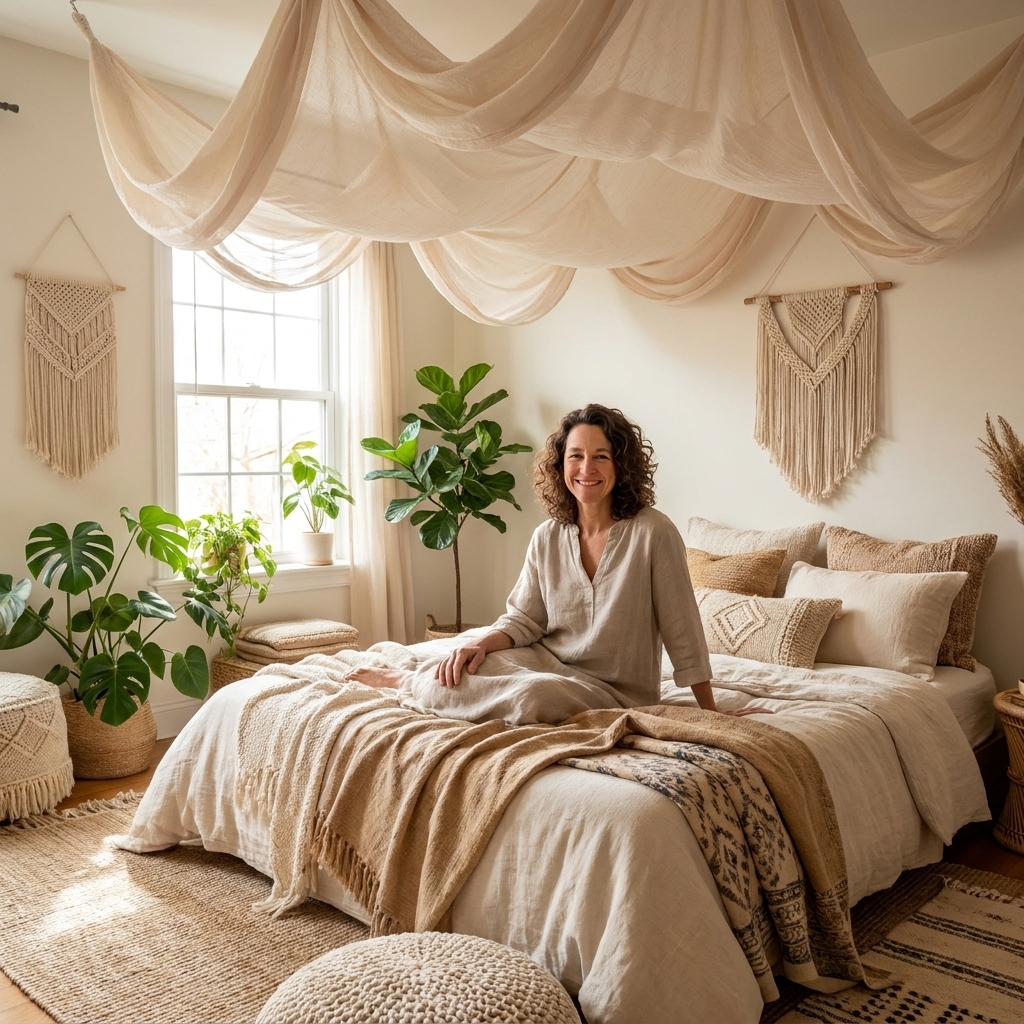
- Brings that tent-like oasis vibe that pairs beautifully with rattan, vintage rugs, and plants.
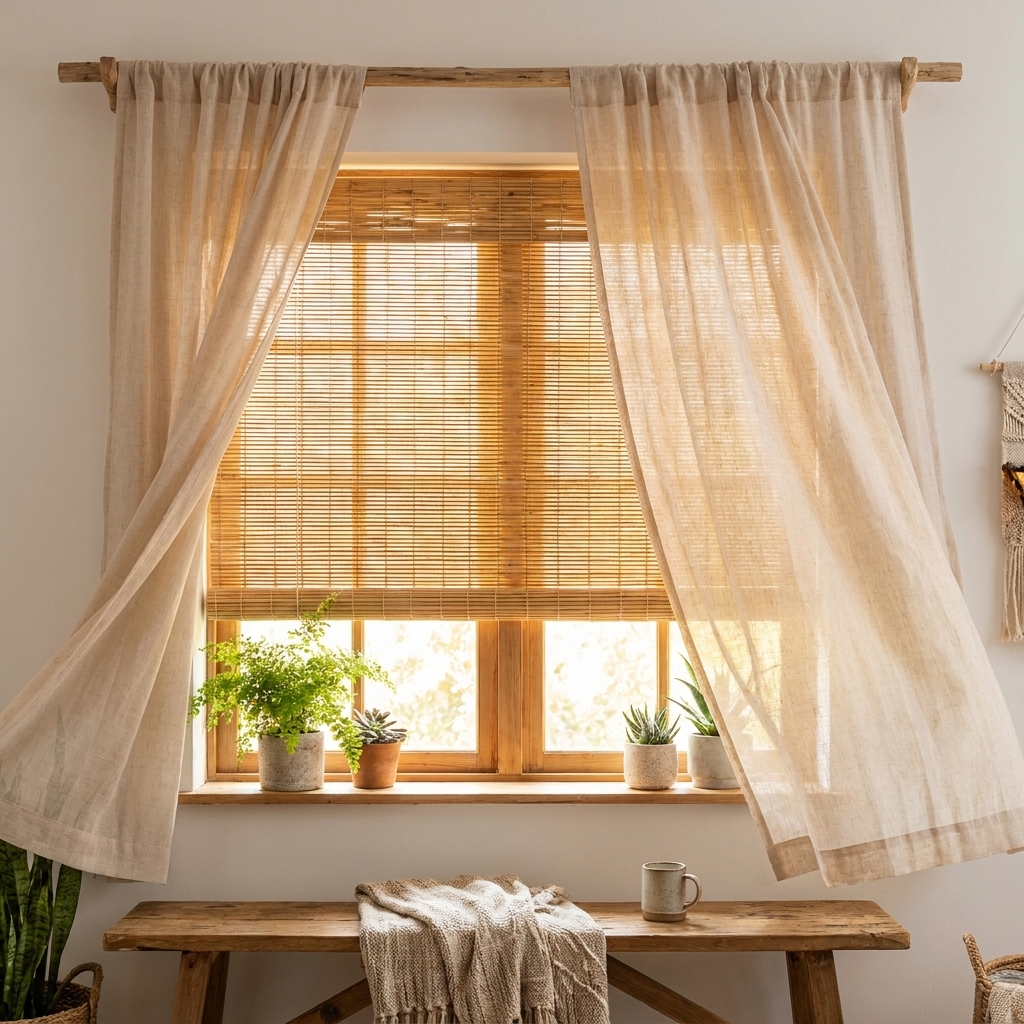
If you already love the look of airy window panels, you will probably also like my guide to boho window treatments with sheer linen curtains and bamboo blinds. The same fabric logic applies, just flipped up to the ceiling.
Choose the right fabric
The number one beginner mistake is grabbing a fabric that is too heavy. Ceiling draping should look effortless, and it should be lightweight enough that your hardware is not doing Olympic-level work.
Best fabrics
- Sheer cotton voile: airy, easy to pleat, not too shiny.
- Gauze or double gauze: cloud-like texture and a cozy boho feel.
- Sheer linen blend: slightly more body, still drapes beautifully.
- Chiffon: very floaty, but it can lean “event decor” if you do not style it thoughtfully.
Fabrics I avoid
- Velvet, heavy linen, or upholstery-weight fabric: too much pull and too much sag.
- Very stretchy knits: they droop over time and can look sloppy fast.
- Anything that sheds glitter: you will be finding sparkles in your coffee for months.
How much fabric do you need?
This is a rule of thumb, not a law of physics. Fabric width, how “floaty” it is, and how many attachment points you use all change the math.
- Soft swags (simple, breezy): often about 1.5x the distance you are spanning.
- Full tent effect (lush and gathered): often 2x to 2.5x the distance you are spanning.
Example: If you want fabric to run 10 feet across the room in a swoop, you will typically want 15 to 25 feet of fabric to get that gathered look, depending on how dramatic you want the dips.
Hardware options
Let’s keep this real: ceilings can be tricky. You are working overhead, and gravity is not forgiving. The safest setup is the one that matches your ceiling type, your fabric weight, and whether you rent or own.
Option 1: Tension rods
If your space has two opposing walls or a nook, a tension rod is the easiest “no holes” solution. You can drape fabric over the rod like curtains, then shape the swags with ribbon ties or small clips.
- Best for: between two walls, closets, dorm-like nooks, window bays.
- Look: clean and simple, more linear than canopy-like.
- Tip: go lighter on fabric so the rod stays stable.
Option 2: Adhesive ceiling hooks
Adhesive hooks can work, but only when the fabric is truly featherweight and you use many hooks to distribute the load. Heat, humidity, ceiling paint, texture, and time can all make adhesive fail.
- Best for: temporary styling, short-term installs, ultra-light voile.
- Not for: heavy fabric, strong pulls, or “I never want to think about this again” installs.
- My rule: if you would be upset if it fell at 2 a.m., do not rely on adhesive alone.
- Practical check: if an adhesive hook struggles on a wall, it usually will not magically improve on a ceiling.
Option 3: Screw-in ceiling hooks with anchors
If you want a lasting canopy effect on a typical drywall ceiling, screw-in hooks with the right anchors can be a solid approach for lightweight fabric. It is secure when properly installed, but it is not stronger than fastening into joists.
Important note: not all drywall anchors are rated for overhead use, and overhead load ratings can differ from wall ratings. Follow the packaging guidance and keep your fabric light.
- Best for: a true draped canopy over a bed, reading nook, or daybed using lightweight sheers.
- Look: swoopy, romantic, “room-within-a-room.”
- Tip: more anchor points means less stress on each one.
Option 4: Toggle bolts or fastening into joists
If you are hanging anything that creates real tension, or you want to incorporate curtain rings, cables, or a more structured layout, secure attachment matters. When in doubt, fastening into ceiling joists is the gold standard.
If you are not sure where your joists are, a stud finder helps. If you rent, check your lease and choose reversible methods whenever possible.
Ceiling types to watch
Before you commit to a method, take an honest look at what is overhead. The ceiling surface changes what “safe” means.
- Popcorn or heavily textured ceilings: adhesives are less reliable, and hooks can sit unevenly.
- Plaster and lath: it can crack if drilled improperly. If you are not confident, get advice from someone who is.
- Concrete ceilings: this is a different tool-and-fastener situation entirely. Many renter-friendly methods will not apply.
- Drop ceilings: do not hang weight from the tiles. Use the grid appropriately, or skip ceiling drapes in that space.
Safety checklist
- Keep fabric away from bulbs and heat sources. If you have a ceiling fan, do not drape anywhere near it.
- Do not cover smoke detectors. Also keep clear of sprinklers, vents, and anything your building needs to function safely.
- Use more attachment points than you think you need. Spreading the weight prevents sagging and failures.
- Test your hardware low first. If an adhesive hook is questionable on a wall, treat that as a warning sign.
- If you are adding string lights, use cool-running LEDs and avoid pinching cords under hardware.
- Respect landlord and building rules. Some leases and buildings limit ceiling attachments for good reasons.
Three easy layouts
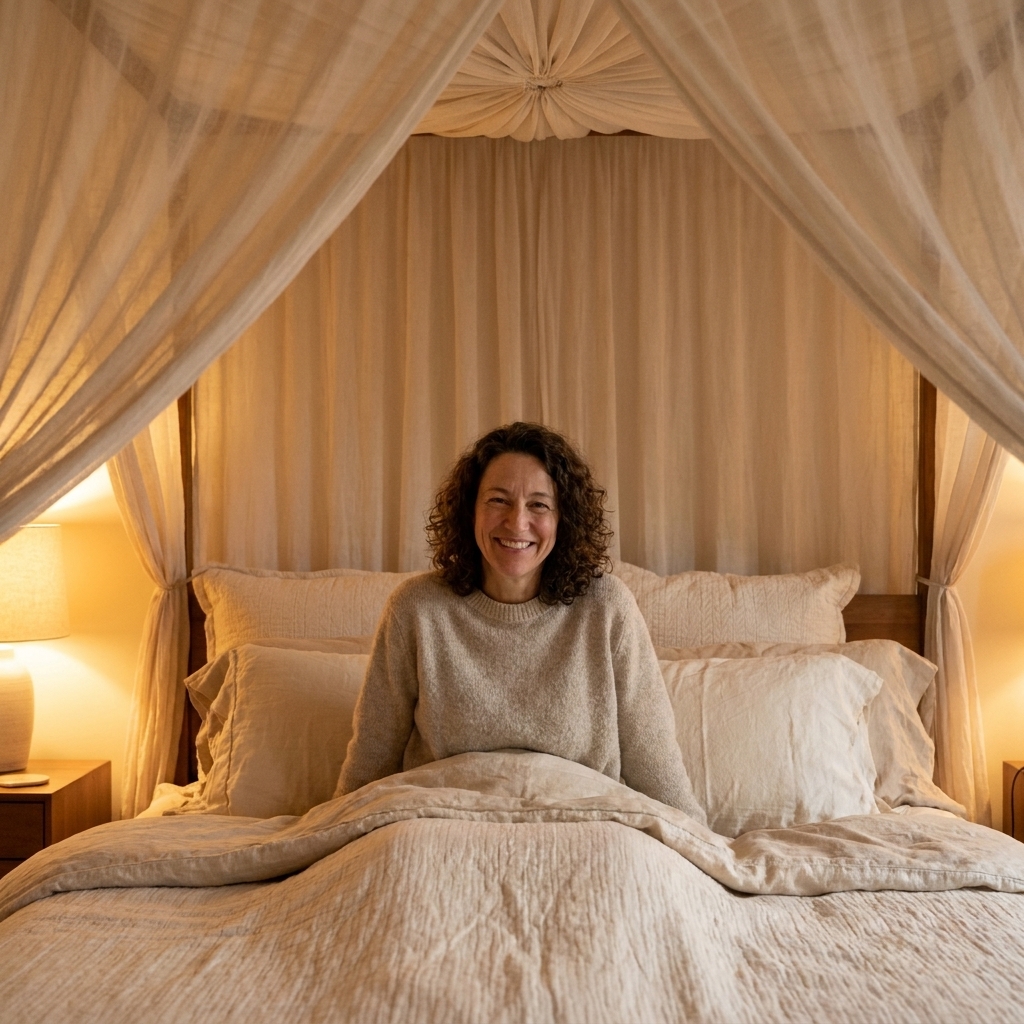
1) Soft canopy over the bed
This is the classic: fabric gathered above the headboard area and draped toward the corners, like a relaxed tent.
- Where it shines: bedrooms, studio apartments where the bed needs a boundary.
- Styling tip: make the drape dip slightly lower at the foot of the bed to feel extra cozy.
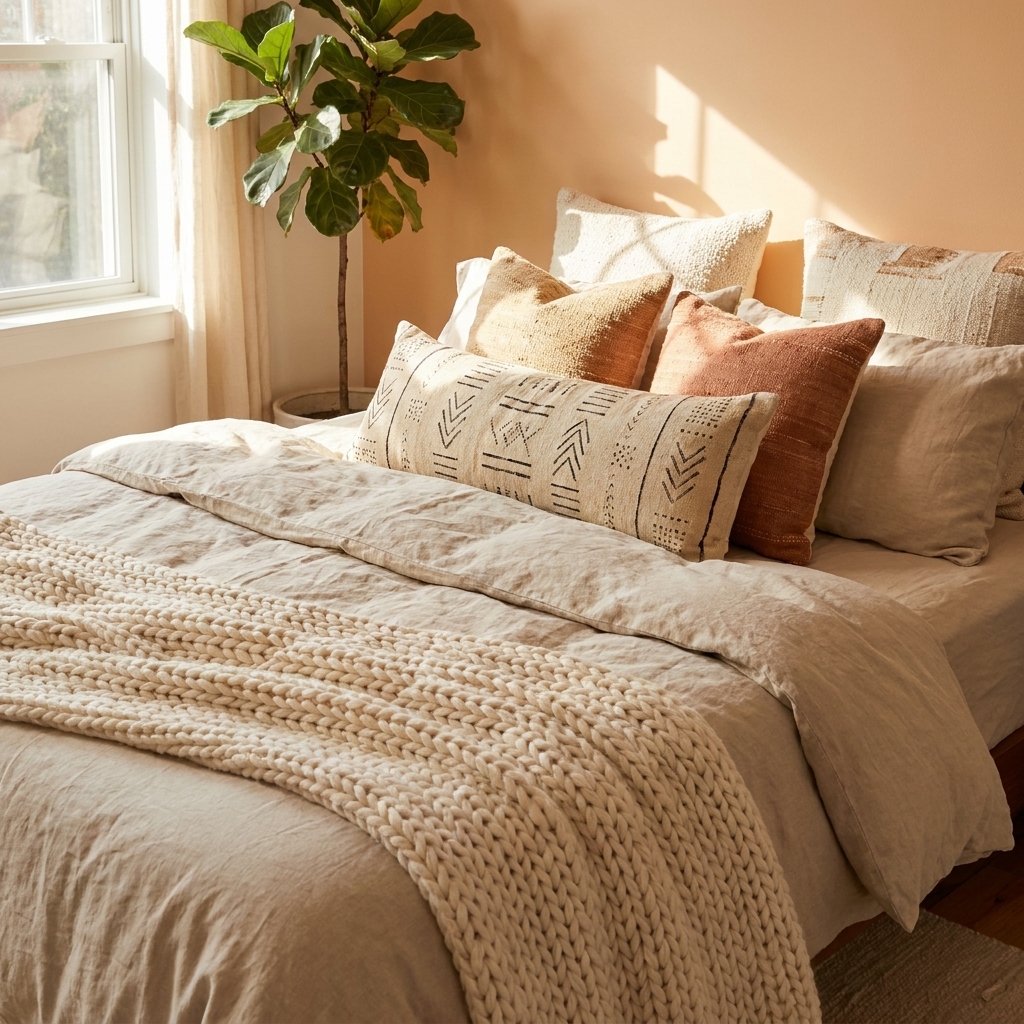
- Pairs beautifully with: layered bedding. If you want that look, see how to style a boho bed.
2) Center point tent
Pick one central ceiling point and let multiple fabric panels radiate out like sunbeams to the corners of the room.
- Where it shines: small rooms that need drama, dining nooks, meditation corners.
- Styling tip: a simple ceiling medallion, a small hoop, or even a wrapped ring can act as the gathering point. Keep it lightweight.
- Plant lover note: this is gorgeous near a cluster of plants. If you want that lush layered feel, I love the approach in arranging houseplants like a designer.
3) Perimeter drape
Instead of a tent, you run sheers along the perimeter of the ceiling, letting them billow gently inward. It reads more modern-eclectic than romantic.
- Where it shines: living rooms, creative studios, spaces where you want softness without “bed canopy” energy.
- Styling tip: keep swags shallow and consistent, like a relaxed valance for the whole room.
How to hang it
Step 1: Pick your anchor
Decide what the drape is centered around: the bed, a seating area, a dining table, or a blank corner you want to romanticize. This keeps it from feeling like fabric that landed there by accident.
Step 2: Map your points
Before you install anything, put small pieces of painter’s tape on the ceiling where hooks or supports will go. Step back and check spacing. This two-minute step can save you from patching extra holes later.
Step 3: Install and test
Give each point a gentle tug. If anything shifts, fix it now, not after the fabric is up.
Step 4: Hang in “ugly mode” first
Get it attached before you worry about perfect folds. I usually clip or tie the fabric up quickly, then finesse the drape once the main weight is supported.
Step 5: Shape the swags
Pinch, pleat, and adjust until the dips look intentional. A good rule is to vary the depth slightly so it feels organic, not like identical party decor.
Step 6: Hide the mechanics
Use small fabric ties, ribbon, or extra scraps to wrap messy gathering points. If you are leaning global-boho, a strip of textured fabric can look like a purposeful detail.
Keep it elevated
Sheer ceiling draping can read “dreamy boho” or “wedding reception,” and the difference is usually styling.
My go-to tricks
- Keep the palette grounded: creamy whites, sand, soft clays, muted olives. If you want a bolder home overall, balance it with the fabric color so the ceiling does not compete. My color cheat sheet is in earth tones vs jewel tones for eclectic homes.
- Add texture nearby: rattan, woven shades, vintage rugs, mudcloth pillows. When the room has texture, the sheers feel like part of a layered story.
- Let it connect to something: a canopy looks best when it visually “lands” on the bed, a wall, or a curtain rod line.
- Use warm lighting: a warm bulb in a table lamp makes the fabric glow.
- Do not over-ruffle: a little gathering looks luxe, too much looks costume-y.
Rentals: my approach
I have styled more rentals than I can count, and here is my honest strategy: choose the least invasive method that still feels safe.
- If you can use tension rods, do that first.
- If you cannot, distribute weight with multiple points and keep fabric ultra-light.
- If you are drilling, keep the layout minimal so patching later is easy and clean.
And if your overall goal is “big impact, low commitment,” you might like my thrift-forward approach in Budget Boho & Thrifting. Ceiling drapes and secondhand textiles are a dreamy combo.
Style pairings
- Large-scale wall texture: add a grounding piece like macrame so the room feels intentional. See decorating with large-scale macrame wall hangings.
- Layered rugs: drapes up top, rugs down low, and suddenly the room feels designed. Try layering vintage and jute rugs.
- Global textiles: one mudcloth pillow or throw can make the whole canopy moment feel curated. I break it down in authentic mudcloth sourcing and styling.
- Plant clusters: canopy above, greenery below, and you get that cozy “indoor retreat” vibe. If you are building that look, wander through The Indoor Jungle.

Troubleshooting
“My fabric keeps slipping.”
- Switch from smooth clips to curtain rings with clips or tie fabric to hooks with ribbon.
- Add more attachment points so each point carries less pull.
- If you are looping fabric over a rod, stitch or pin a small fold so it “catches.”
“It looks droopy.”
- Shorten the dips. Shallower swags usually look cleaner.
- Add a second panel so the drape has more body and intentional folds.
- Steam the fabric before hanging. Wrinkles make it look accidental.
“The ceiling looks lower now.”
- Keep fabric closer to the ceiling plane and avoid deep center dips.
- Use a lighter color that blends with the ceiling.
- Try a perimeter drape instead of a full canopy.
“I’m worried about dust.”
- Choose washable fabric and plan for a refresh every couple of months.
- Use a vacuum with a soft brush attachment for a quick surface clean.
- If you run a ceiling fan regularly, skip ceiling drapes entirely.
FAQ
Can I use bedsheets as ceiling drapes?
You can, especially flat sheets, but they tend to look heavier and less airy than voile or gauze. If you do use sheets, go for something thin and matte, and use more support points so it does not sag.
Will ceiling draping damage my ceiling?
Adhesives can peel paint, and hardware can leave holes. The best way to reduce damage is to keep fabric lightweight, distribute weight across multiple points, and avoid yanking the fabric when you adjust it.
Is ceiling draping safe with kids or pets?
If anyone can tug on it, treat it like a curtain safety situation: secure it higher, keep tails out of reach, and avoid long hanging lengths that could be pulled down. When in doubt, go with a perimeter drape that stays close to the ceiling.
My favorite finish
Once the drapes are up, I like to do one last pass through the room with a “layering eye.” I add one grounded texture (like rattan or a chunky woven basket), one vintage or global element, and one living thing, usually a plant with a soft trailing shape. That combination keeps the ceiling fabric from feeling like it is floating alone.
If you try ceiling draping, give yourself permission to tweak it for a few days. Fabric settles. Your eye adjusts. And then one morning you will walk in, look up, and think, yes. This is the vibe.