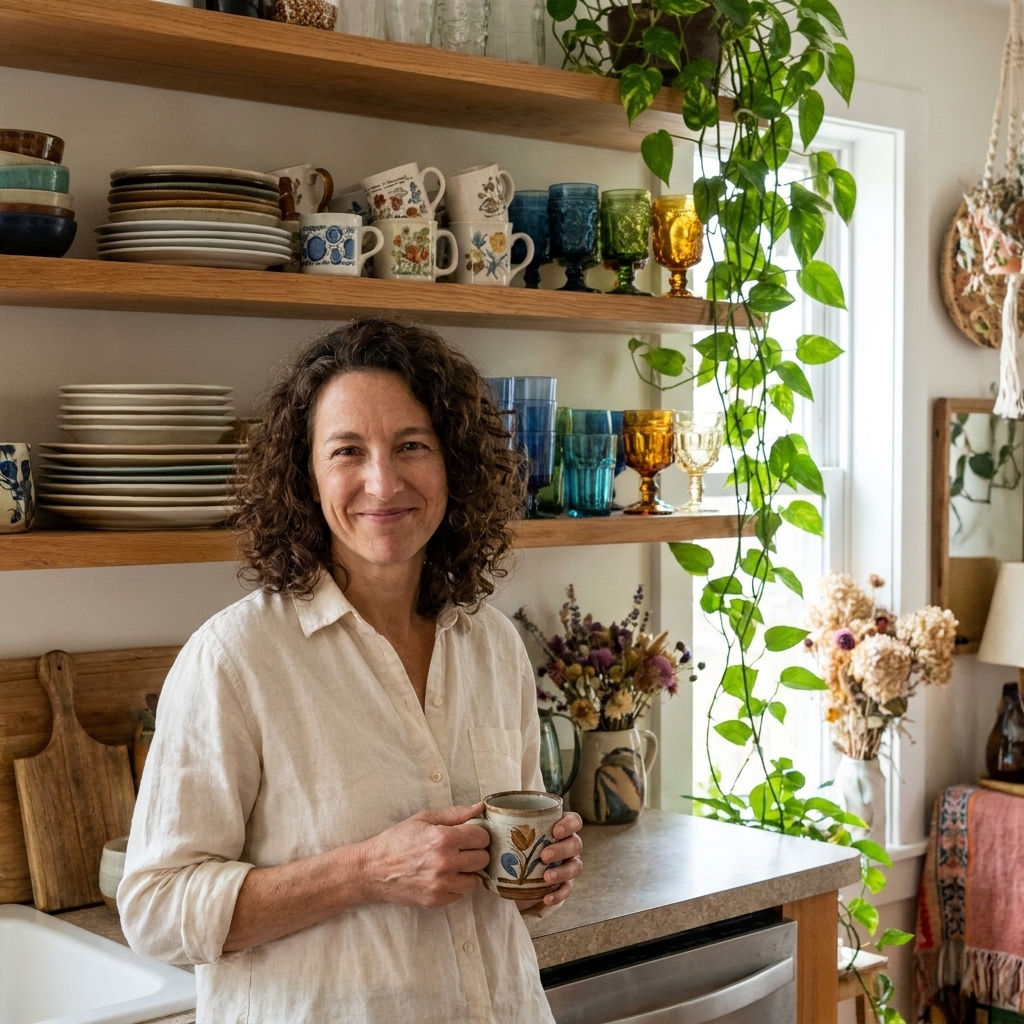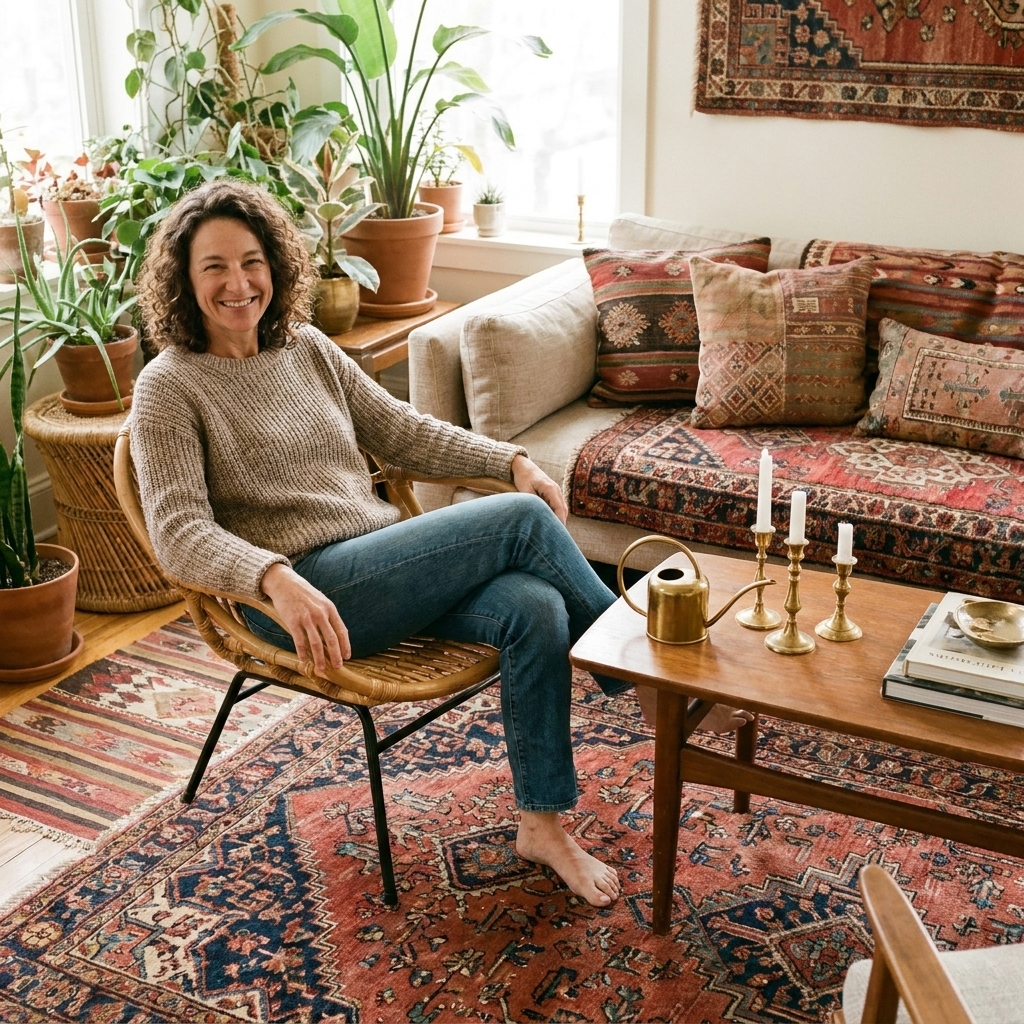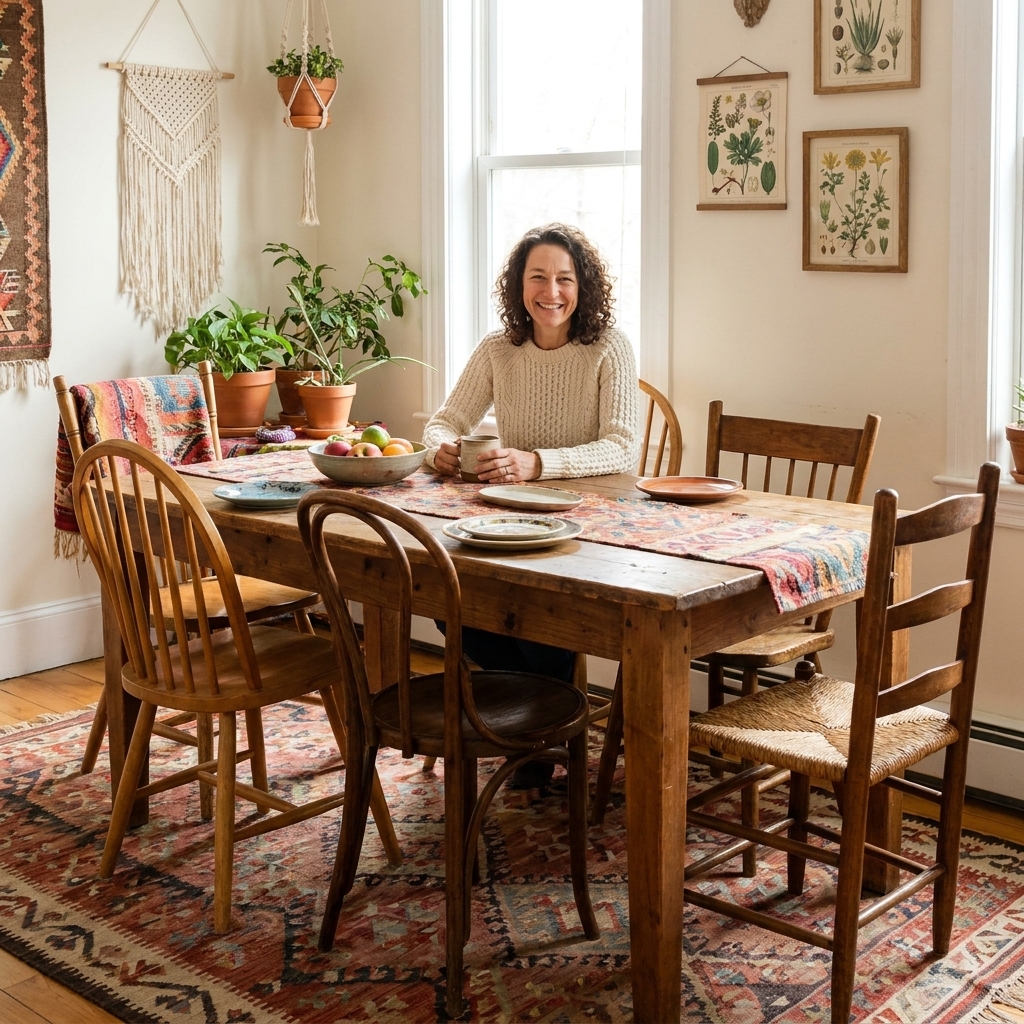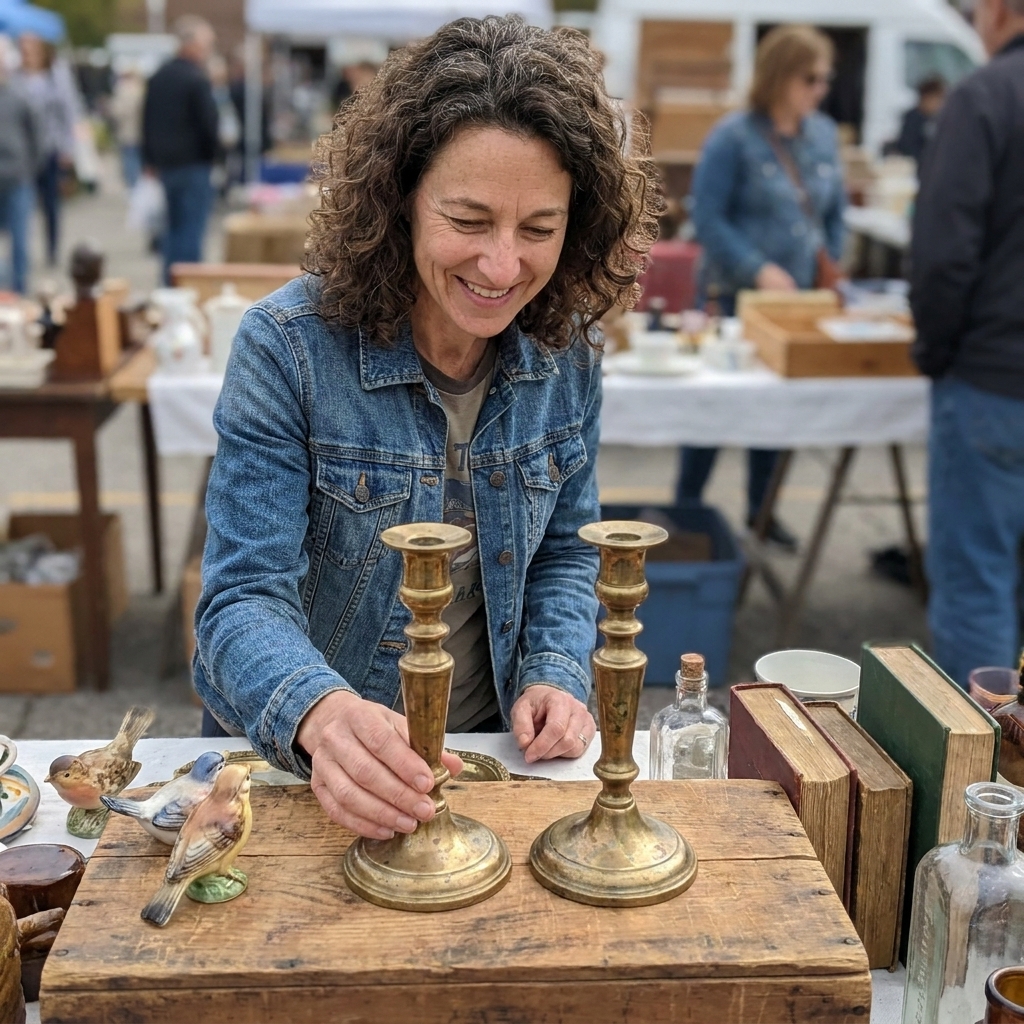

Vintage amber glass is one of those thrift store finds that instantly makes a room feel warmer, even on a gray day. I started collecting it when I was renting, when “new decor budget” meant I had to get creative. A single amber vase on a windowsill gave me that candlelit, earthy-boho glow without buying a bunch of stuff. And once you spot it, you start seeing it everywhere.
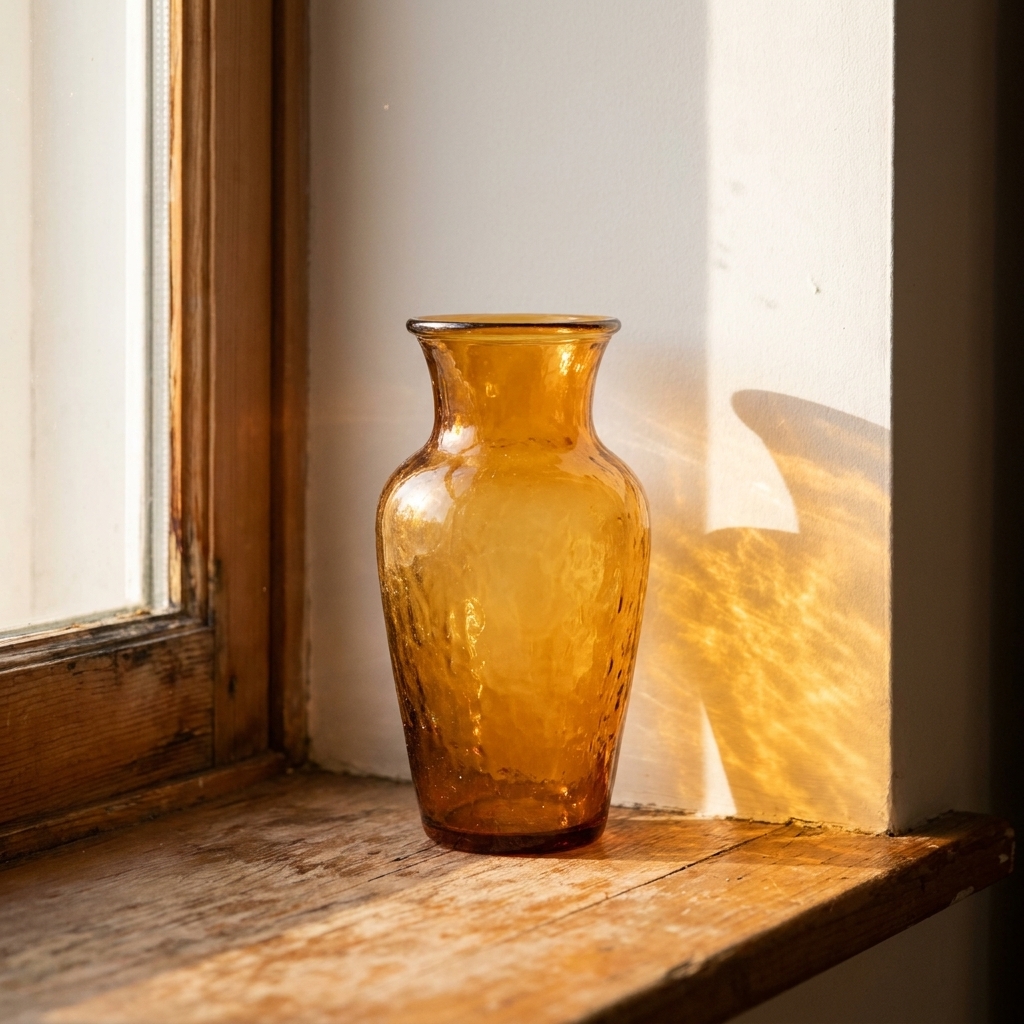
This guide is everything I wish I knew at the beginning: where to find authentic pieces for less, what to look for (and what to leave behind), and how to style amber vases and goblets so they actually enhance your natural light instead of disappearing into the background.
Why amber glass works in boho homes
Amber glass is built for the Eclectic Nook look. It plays nicely with rattan, vintage wood, brass, and woven textures, and it has that grounded, earthy tone that makes a room feel cozy instead of cold.
- It warms up natural light. Sunlight passing through amber reads like a gentle filter, especially during golden hour.
- It layers effortlessly. Amber blends with terracotta, rust, camel leather, and creamy linens without needing “matching sets.”
- It adds shine without feeling glam. If clear glass feels too stark and mirrored metals feel too flashy, amber is the in-between.
If you love decorating with texture and patina, you might also like my approach to mixing materials in Leather, Velvet, and Linen: The Texture-Mixing Formula.
Where to thrift vintage amber glass
The trick is to hunt where amber glass is still treated like “old dishes,” not “curated vintage decor.” Here are my most reliable spots, in the order I usually check them.
1) Thrift stores (shop the right aisles)
Skip the “home decor” shelf first. Go straight to the housewares and glassware section. Amber pieces are often mixed in with everyday tumblers and random vases, priced like any other glass.
- Scan low shelves. Heavier pieces often get put down low, and amber can look almost brown from above.
- Check the vase section and the barware section. Goblets and cordial glasses get separated from vases, even when they match.
- Look for lonely pieces. A single amber sherbet cup can be a future bud vase, tealight holder, or ring dish.
If you want a bigger strategy for secondhand shopping beyond glass, I keep my core thrifting mindset in Budget Boho Thrifting and a quick hit list in 10 Thrift Store Staples for Authentic Boho Style.
2) Estate sales and garage sales
Estate sales are where I find the truly vintage stuff that never got labeled as “vintage.” Early in a sale you get selection. Late in a sale you get deals. If you can only pick one, go late and be flexible.
- Bring a tote with padding. A dish towel or an old scarf prevents heartbreak.
- Ask about “the rest of the glass.” Sometimes it is still boxed under a table.
- Look for sets split across rooms. Barware in the dining room, vase in the kitchen window, candy dish in the bedroom.
3) Flea markets and antique malls
Flea markets are my happy place, but amber glass is popular and prices can reflect that. The win here is variety: swung vases, ribbed bottles, pedestal goblets, mid-century ashtrays you can repurpose as catchalls.
- Negotiate kindly. If a booth has three amber pieces you like, ask for a bundle price.
- Check for damage in bright light. Market lighting can hide chips.
4) Online marketplace pickups
Online listings are great when you want a pair of goblets for a tablescape or a tall vase for a narrow shelf. My rule: I only pay up when the shape is special or the condition is pristine. Otherwise I keep thrifting.
How to spot vintage amber glass
Not all amber glass is vintage, and not all vintage amber is worth taking home. I treat these as clues, not rules. Here is what I check in-store, usually in under a minute.
Check the color in the light
Hold the piece up to a window or your phone flashlight. Many vintage ambers glow honey-gold to whiskey-brown, but color depth varies by maker and era. Use the light test to see if the glass looks lively (glow) or dull (muddy), not as a perfect authenticity stamp.
Feel the rim and the base
Run a finger around the rim and foot.
- Good signs: a smooth rim, a solid base, gentle wear that looks like use.
- Red flags: gritty chips on the lip, sharp flakes around the foot, cracks that look like a line under the surface.
Weight can help, but it is not proof
Some older pieces can feel heavier than modern decor glass, but it is not reliable. Vintage can be thin and delicate, and modern can be chunky on purpose. I use weight as a small hint, not a deciding factor.
Check seams and mold lines (not always bad)
A visible seam does not automatically mean “new.” Lots of vintage glass was mold-made. What matters more is overall quality: consistent color, clean edges, and a finish that does not feel flimsy.
Look for the common forms
- Vases: swung vases, bud vases, bottle-style vases, ribbed cylinders
- Barware: goblets, wine glasses, cordial glasses, small tumblers
- Extras: candy dishes, ashtrays, apothecary-style jars, compotes
Quick vintage vs modern reality check
If the piece has an obviously modern “farmhouse” silhouette with perfectly uniform amber color and a brand-new sticker, it can still be pretty, but it is usually not the same as true vintage. I buy those only if they are cheap and the shape is right for my space.
Fast in-store inspection checklist
- Rim and foot: feel for chips where your fingers will touch.
- Inside haze: some cloudiness is hard-water film, but heavy etching can be permanent.
- Wobble test: set it on a flat surface and see if it rocks.
- Smell test: if the inside smells strongly like old flowers or smoke, plan on a deeper soak before you style it.
Cleaning and caring for amber glass
Amber glass is usually easy to clean, but thrift store grime can be stubborn. This is my gentle routine that keeps vintage finishes looking like themselves.
My simple wash routine
- Warm water + a drop of dish soap and a soft sponge for the outside.
- Bottle brush for vases and narrow necks.
- Rinse and air dry upside down on a towel.
For cloudy interiors
If a vase looks hazy inside, I do a soak with warm water and a splash of white vinegar, then rinse thoroughly. For stubborn mineral film, a spoonful of uncooked rice with warm soapy water swirled gently can help scrub without scratching.
Skip harsh abrasives
Avoid steel wool and gritty cleaners. They can scratch glass and make it look dull, which defeats the whole “glowy” point.
Transport and temperature tips
I wrap each piece on its own (dish towel, scarf, or tee), then pack them so they cannot clink. At home, I avoid temperature shock. No boiling water into cold glass, and no icy rinse right after a hot soak. Slow and gentle keeps thrifted pieces happier.
Styling amber glass for more light
Amber glass is at its best when it is treated like a light tool, not just a shelf object. Here are my favorite ways to style it so it actually brightens a space.
Place it where sun hits
If your shelves are deep and shadowy, amber glass can read almost brown. Instead, try:
- Window ledges (even a small bathroom window works)
- Near mirrors so the warm tone reflects back into the room
- On a light surface like a cream tray, pale wood, or woven mat
For more ideas on working with light and softening windows, see Boho Window Treatments: Sheer Linen Curtains and Bamboo Blinds.
Use odd numbers
A trio is my go-to: one tall piece, one medium, one small. If they are all the same height, the display can look like a store shelf. If they step up and down, it looks found over time.
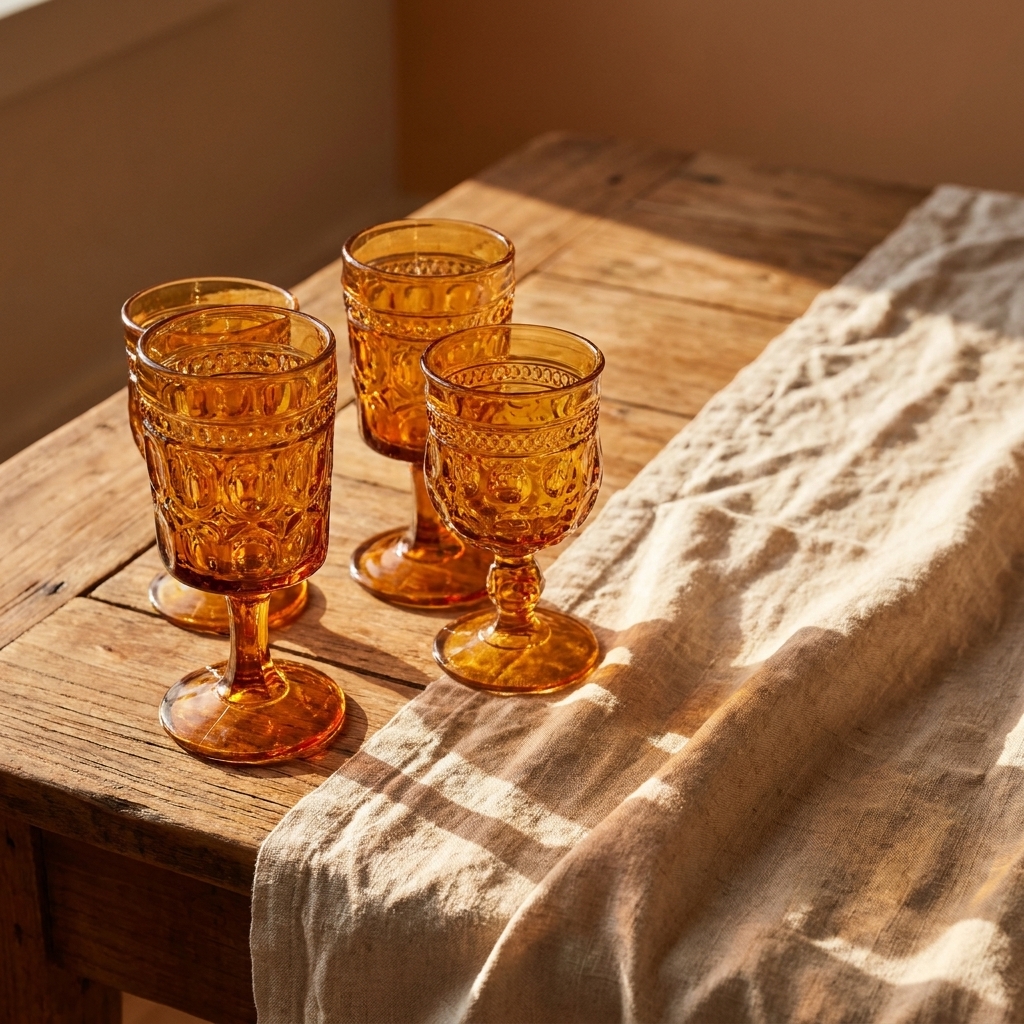
Layer amber with natural textures
Amber looks stunning next to fibers and matte surfaces. Try pairing it with:
- rattan trays and cane-front cabinets
- seagrass baskets
- hand-thrown ceramics in cream, sand, or terracotta
- linen runners and napkins
If you love baskets as much as I do, you will get a lot of styling mileage out of 7 Creative Ways to Use Woven Seagrass Baskets for Stylish Boho Storage.
Add greenery, keep stems simple
Amber glass can make foliage look extra lush. My favorite stems are the ones that feel a little wild and unfussy.
- Single branch: eucalyptus, olive, or a woody clipping from your yard
- Soft dried stems: pampas, bunny tails, or dried palms
- One dramatic leaf: monstera, bird of paradise, or a big philodendron leaf
For dried stem styling that stays airy instead of dusty, I shared my tricks in Styling Pampas Grass and Dried Botanicals.
Candlelight, safely
Amber glass turns a basic tealight into a whole mood. If you thrift small amber bowls, low compotes, or thick-walled goblets, test them as candle holders. Use stable, wide vessels that will not tip, and avoid tight-fitting votives that trap heat. If the glass is thin or the history is unknown, I use LED tealights and call it a win. Keep flames away from dried stems and never leave candles unattended.
Use goblets beyond the table
Goblets are my secret weapon for boho displays because they add height and shine without needing more furniture.
- On a bathroom tray: one goblet holding cotton rounds or rolled washcloths
- On a nightstand: a goblet as a jewelry catchall
- On open shelves: turn goblets into tiny bud vases with a single stem
If you are styling open shelves and want them to look layered instead of cluttered, my approach is in Styling Open Shelves in an Eclectic Kitchen.
Easy display recipes
Recipe 1: The sun-catcher windowsill
- 1 tall amber bottle vase
- 1 small amber bud vase
- 1 clear glass piece (to keep it from looking too heavy)
- 1 airy stem (eucalyptus or dried grass)
Keep the tallest piece off-center. Let the light do the work.
Recipe 2: The earthy console vignette
- 1 amber goblet
- 1 vintage brass or wood bowl
- 1 framed art piece leaning against the wall
- 1 small plant in a clay or woven planter
If you want help balancing mixed materials like brass and glass, you will probably enjoy How to Spot and Polish Vintage Brass.
Recipe 3: The boho table sparkle
- 2 mismatched amber goblets
- 1 neutral runner in linen or cotton
- 1 wood board or shallow bowl as a centerpiece base
- small cluster of candles
This is perfect if you lean eclectic and do not care about a perfectly matched dining set. I am fully on your team in The Art of the Mismatched Dining Set.

Common mistakes
- Buying every amber thing you see. Start with 3 to 5 pieces in different heights. Let your home tell you what shape you actually need.
- Ignoring chips on rims. Tiny flea bites on the base are fine. Chips where you touch or drink are usually a pass.
- Clustering only dark tones. If your shelf is already walnut wood and dark art, add a light element under amber glass like a cream dish, pale book stack, or woven tray.
- Overfilling vases. Amber shines when stems are simple and sculptural.
FAQ
Is amber glass safe to drink from?
I treat vintage drinkware as “use with caution.” Plain amber soda-lime glass is often fine for display, and many people do use it occasionally, but safety depends on the piece and its history. I avoid drinking from anything with cracks, heavy rim wear, cloudy etching, or unknown painted or metallic decoration, especially on the rim. If I am unsure, I use goblets for styling and stick to modern glass for everyday drinking.
How can I tell if amber glass is actually vintage?
There is no single tell. I look for a combination of clues: quality at the rim and base, the way the glass catches light, signs of normal wear, and where it came from. A piece pulled from an estate sale kitchen cabinet is often older than a brand-new decor store vase, but I still judge it on condition and craftsmanship.
What colors pair best with amber glass in a boho room?
My favorite pairings are cream, sand, camel, olive, rust, terracotta, and deep brown woods. If you want to branch into bolder palettes, I break down how I think about color families in Earth Tones vs. Jewel Tones for Eclectic Homes.
What if my home does not get much natural light?
Amber still works, but place it near the brightest spot you have and pair it with lighter backdrops. You can also cheat the glow by placing amber in front of a lamp with a warm bulb, or near a mirror to bounce light.
If your room is truly dim, you might enjoy my practical lighting approach in Stylish Grow Light Solutions for Dark Rooms, especially if you are styling amber glass alongside plants.
Start your collection this week
If you want a low-pressure starting point, aim for just two vases and one goblet. Thrift them slowly. Choose shapes you would actually use. Then style them where sunlight hits for at least part of the day. That little trio is enough to make your space feel warmer and more lived-in, without turning your shelves into a glass museum.
And if you find a single odd amber piece that makes your heart do a tiny happy flip, grab it. The best collections always start with one imperfect treasure.