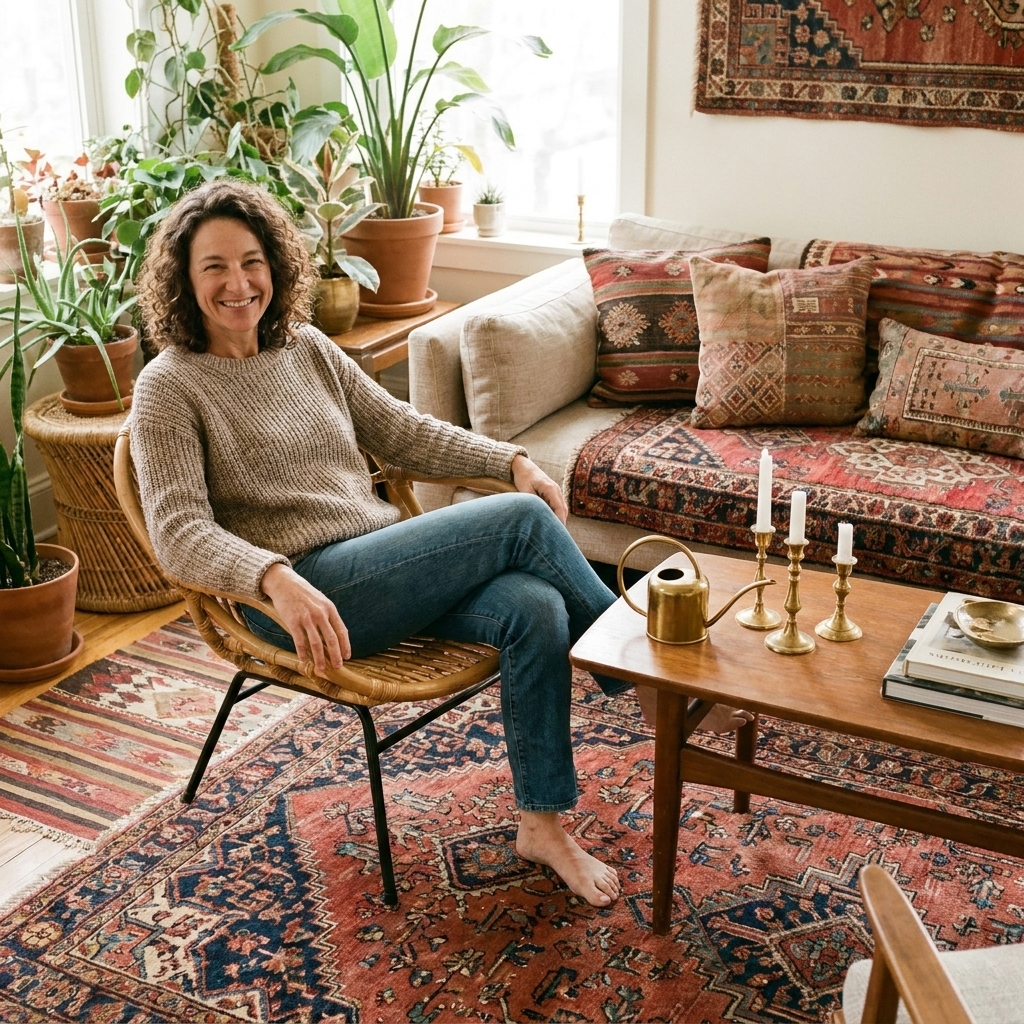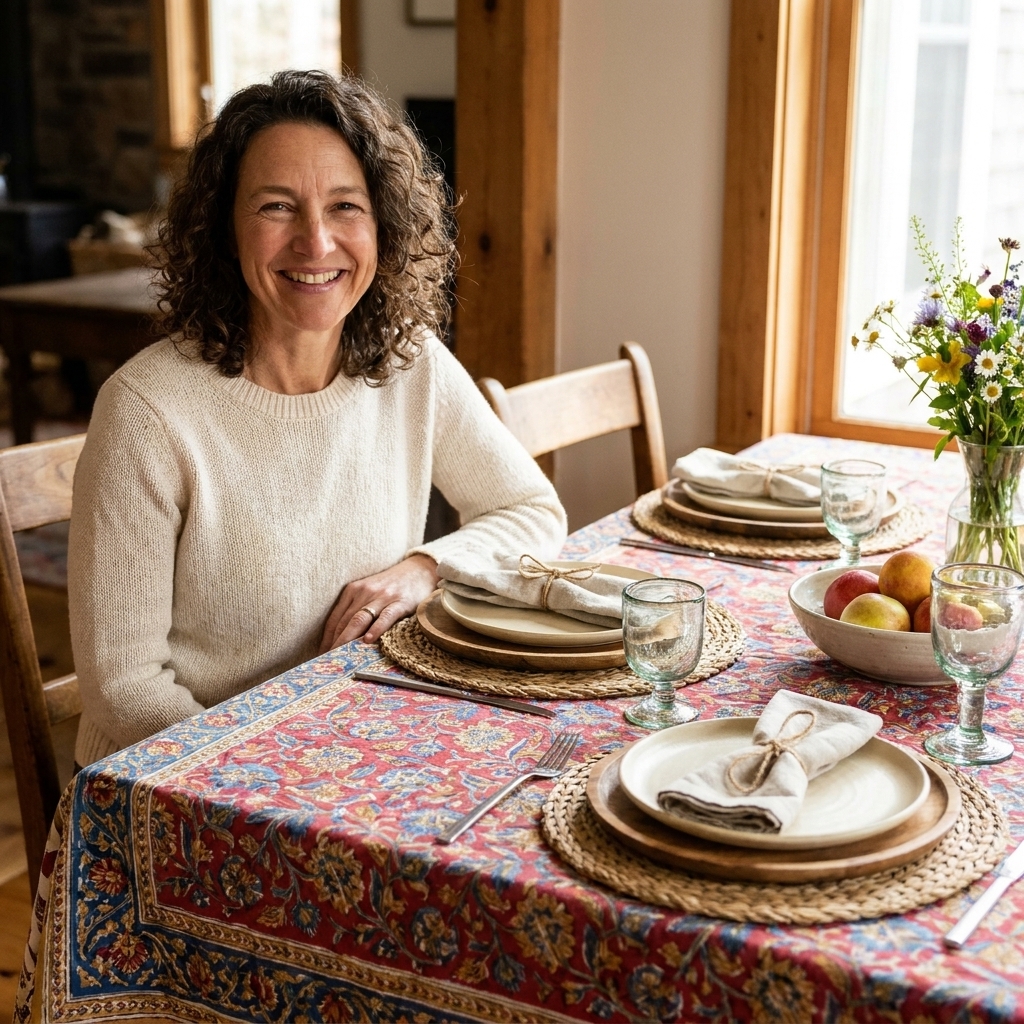

The first time I tried a mismatched dining set, it was not a grand design decision. It was a Tuesday with a wobbly hand-me-down table, two chairs that did not match each other, and a third chair I rescued from the curb because it had good bones and a little bit of drama.
That is the secret I want to share today: mismatched only looks messy when it is accidental. When it is curated, it looks collected, warm, and wildly personal, like your dining room has stories to tell. And if you love thrifting, it is one of the most budget-friendly ways to build a dining space that feels high-end without buying a full set.
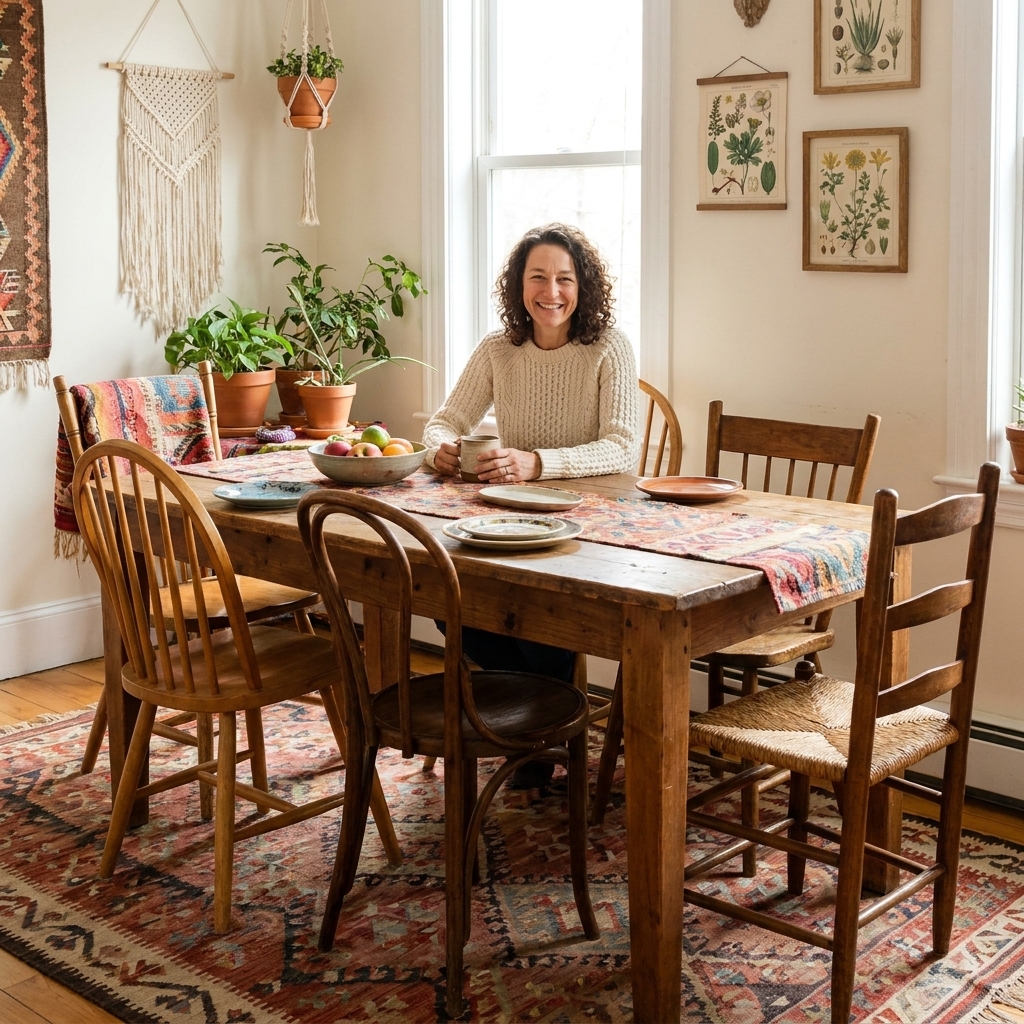
What makes a mismatched set feel intentional
If you remember one thing, make it this: your chairs can vary, but they need at least one thread that repeats. I think of it like getting dressed. You can mix patterns and textures, but you still want a shared color, silhouette, or vibe tying the outfit together.
Pick your anchor first
Your anchor is the thing that stays consistent while everything else plays around it. Choose one:
- The table (most common): the table is steady, chairs are eclectic.
- A repeated material: wood seats, cane backs, upholstered seats, bentwood curves.
- A repeated color family: all warm woods, or all cool woods, or all painted chairs in related tones.
- A repeated shape: rounded backs, ladder backs, spindle legs, chunky Parsons shapes.
If your table is already visually loud, like a heavy farmhouse trestle or an ornate vintage piece, keep the chair mix a little calmer. If the table is simple, like a basic pedestal or clean-lined rectangle, you can get bolder with chair variety.
Use the 60-30-10 mix
This is my thrifted-chair cheat code for a set of four to six chairs:
- 60% should feel related (two to four chairs that share a common style, tone, or material).
- 30% can be a secondary style (one to two chairs that complement, like cane seats with Windsor backs).
- 10% is your wild card (the statement chair, often used as a head chair).
It is the easiest way to keep the vibe collected instead of chaotic.
Thrift like a stylist
When you are building a mismatched set, you are not hunting for a set. You are hunting for good candidates. That mindset shift saves money because you stop forcing a near-match that still looks off.
Measurements to bring with you
I keep these in my phone notes, because thrift-store lighting makes me forget math.
- Seat height: aim for about 17 to 19 inches for standard 28 to 30 inch dining tables.
- Table clearance: about 10 to 12 inches between the top of the seat and the underside of the table apron is a comfortable target. Around 9 can work in a pinch, depending on the chair and apron thickness.
- Armchair check: if you want arms, measure from floor to the lowest point under the table to make sure arms can slide in.
If you have a counter-height or bar-height table, hit pause and measure. Those setups need taller seats (and often a footrest), so the standard chair numbers above will feel wrong fast.
If your chairs are going to be slightly different heights, keep the seat heights consistent first. Back heights can vary, and it can look charming. Uneven seat heights just feel like a carnival ride.
My quick chair inspection
- Wiggle test: grab the chair by the back and gently twist. If it racks side to side, it likely needs regluing.
- Joint check: look for dried glue, missing corner blocks, or cracks near the seat rails.
- Leg check: inspect the feet for splits and previous repairs.
- Comfort check: sit for 10 seconds. If it feels terrible now, it will not get better at dinner.
Loose does not scare me. Broken scares me. A wobbly chair can often be tightened with wood glue and clamps, but a snapped side rail is a bigger commitment.
When to walk away
Dining chairs take a beating. If you see major rot, active insect damage, or multiple joints failing at once, I would leave it. Same goes for deep splits through a structural rail or a seat frame that looks like it has started to crush. Some projects are charming. Some are just risky.
For more thrift mindset and strategy, this lives right at home in Budget Boho & Thrifting.
How to mix wood tones
Mixing wood tones is where a mismatched set goes from “I tried” to “designer did this on purpose.” The trick is balance and repetition.
Choose a temperature
- Warm woods: honey oak, walnut, teak, cherry. Cozy, boho, vintage-friendly.
- Cool woods: ash, weathered gray, cooler stains. Airy, Scandinavian-leaning.
- Neutral woods: natural beech, raw oak, pale finishes. Easy to blend.
You can mix temperatures, but you need a mediator. That can be a jute rug, a linen tablecloth, or even a warm-toned runner on a cooler palette.
Repeat one wood tone twice
This is the fastest way to make mixed chairs feel cohesive: repeat a tone. Two chairs in similar walnut, or two with similar honey warmth, anchors the set even if everything else varies.
Unify with sheen
Even if tones differ, you can unify the finish story. If one chair is glossy and the others are matte, it will stick out.
A light scuff-sand and a satin topcoat can help bring a set closer, but it is not magic and it is not always compatible. If a chair has a waxed or oiled finish, or you do not know what is on it, test first and prep properly so the new finish actually sticks. Sometimes the simplest move is just getting the sheen in the same neighborhood, not trying to make every undertone match perfectly.
Mixing styles and shapes
I love a dining set that looks like it has lived a few lives. Here are combos that consistently look good together, even when they come from different decades.
High-back plus low-back
Try two taller statement chairs at the heads of the table and lower, simpler chairs on the sides. It creates structure and a little ceremony.
Spindle chairs plus upholstery
Spindles bring airiness and rhythm. Upholstery brings comfort and softness. Together, they feel layered instead of matchy.
Cane or rattan with solid wood
Natural texture is a boho shortcut. If you are already using rattan in your home, you might like my breakdown of materials in Rattan, Wicker, or Bamboo?
Modern lines with one vintage curve
If your set leans modern, add one curvy vintage chair. It keeps the room from feeling too showroom. If your set leans vintage, add one clean-lined chair to keep it from feeling too themed.
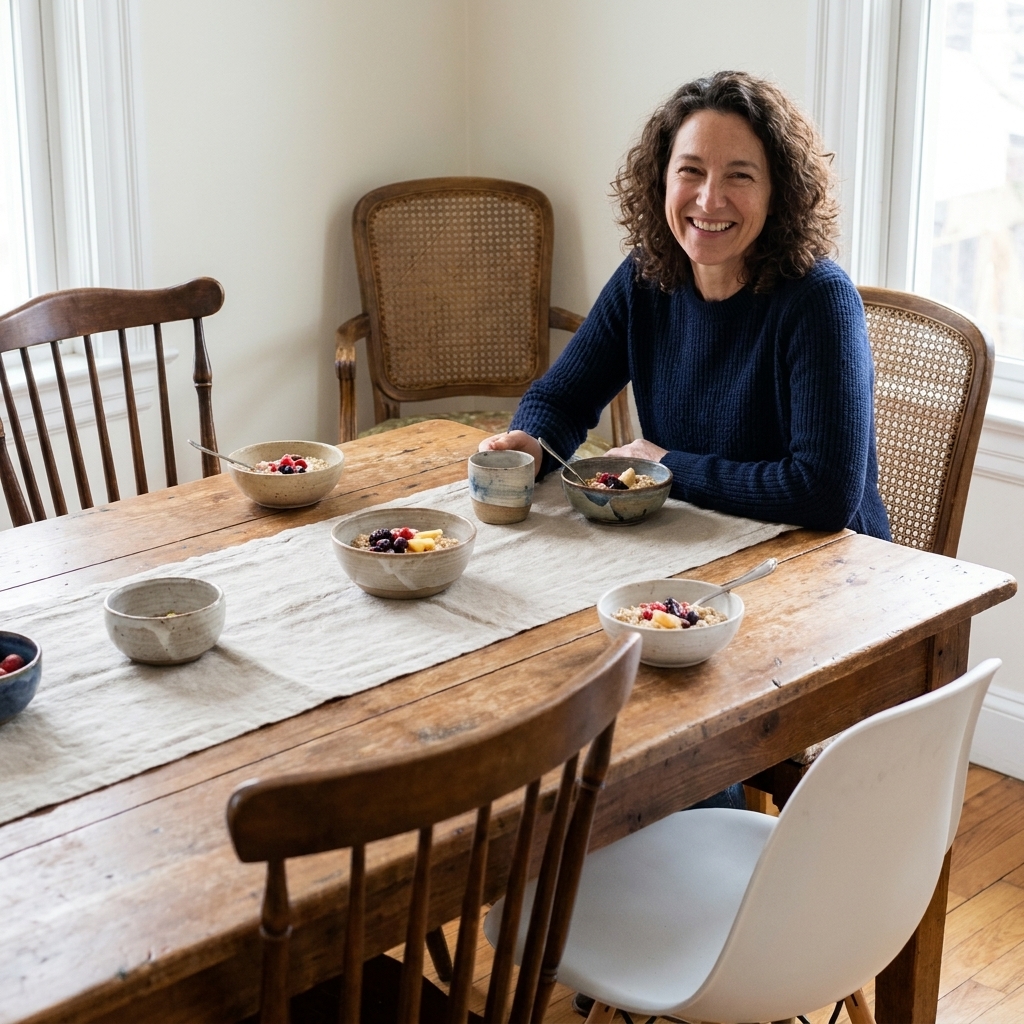
Layout tricks
Placement matters. You can make the exact same set look chaotic or curated just by rearranging.
Use head chairs for the bold picks
If you have two chairs that are larger, more ornate, or upholstered, put them at the ends of a rectangular table. This frames the whole setup and makes the mix look intentional.
Alternate shapes on the sides
If the side chairs are all different, try this pattern: A-B-A-B. Repeating the type across from each other creates visual rhythm.
Keep armchairs from bullying the table
Armchairs can look amazing, but they take up space. If your dining area is tight, use arms only at the heads, or do one single armchair as the wild card chair.
If you are dealing with a small dining nook, you might also enjoy Maximalist Boho in Small Spaces Without the Clutter. A mismatched set is perfect there because it keeps things light and flexible.
Budget-friendly ways to unify
Sometimes the thrift gods give you five perfect chairs. More often, you get five chairs with potential and three different personalities. Here is how to pull them into the same conversation without spending a fortune.
Option 1: Paint two chairs
You do not have to paint the whole set. Painting two chairs the same color creates a repeating element and makes the rest feel like a deliberate mix.
- Soft clay, warm white, and deep olive are very forgiving with mixed woods.
- Match the paint sheen across the painted pieces, usually satin for durability.
Option 2: Add matching seat cushions
One fabric repeated across seats instantly reads set. Think block print, mudcloth-inspired patterns, stripes, or simple linen.
If you want to go deeper on global textiles and how to use them without tipping into costume-y, I wrote a whole guide on Mudcloth sourcing and styling.
Option 3: Same hardware, same vibe
If two chairs have visible screws or corner brackets, swapping in matching hardware can make them feel intentionally coordinated. This only works where the hardware is truly compatible and structurally appropriate, so do not force a swap just for looks.
Option 4: One rug to rule them all
A rug is the great unifier. It visually groups the chairs and table into one zone, which makes differences feel artistic instead of accidental.
If you are thrifting rugs too, please do not skip cleaning. I have a full step-by-step here: Deep clean and deodorize secondhand vintage rugs at home.
Option 5: Be smart with thrifted upholstery
Upholstered chairs can be the coziest wild card, but I do a quick reality check first. Give them a sniff test, check seams and welting for hidden stains, and look underneath for signs of moisture or critters.
If the seat is removable, reupholstery is usually less intimidating than it looks. If it is not removable, I ask myself if I am willing to live with the fabric as-is, because deep-cleaning a thrifted upholstery mystery is not always a fair fight.
Common mistakes
Everything is different
Fix: introduce one repeating element. Paint two chairs the same color, add matching cushions, or choose two chairs with the same back style.
Seat heights are inconsistent
Fix: move the odd-height chair to a less-used spot, like a corner or desk. Replace it over time. If the chair is slightly low, a thicker seat cushion can sometimes help, but do not force it if the difference is dramatic.
The set feels heavy
Fix: add at least one lighter chair style, like a spindle-back, cane-back, or slim metal frame. Mixing in air is the quickest way to make eclectic feel elevated.
Too matchy, but still not a set
Fix: lean in. Add one chair that is clearly different, like an upholstered head chair. Once you commit to mismatch, the near-matches stop looking like mistakes.
A simple formula
If you want a no-stress plan, this is my favorite thrifted dining chair recipe for a set of six:
- 2 matching head chairs (statement or slightly larger)
- 2 matching side chairs (simple, sturdy, comfortable)
- 2 wild cards that share one element (same wood tone, same material, or same general era)
It is balanced, it is flexible, and it lets you shop slowly. That is the real budget win: you can build your set over time instead of buying something you do not love just to be done.
FAQ
Should all dining chairs be the same height?
The seat height should be as consistent as possible for comfort. Back heights can vary and still look great, especially if you use taller chairs at the heads of the table.
How many different chair styles is too many?
In most dining rooms, two to three chair styles is the sweet spot. If you go beyond that, make sure you have strong repetition through color, material, or cushions.
Is it okay to mix upholstered and wood chairs?
Yes, and it often looks more inviting. Keep upholstery tones within the same palette as the room, and repeat that fabric or color somewhere else, like a table runner or curtains.
What if I can only find chairs one at a time?
That is normal. Start with one anchor pair (even if it is just two similar chairs), then build outward. A mismatched set is supposed to evolve. The collected over time look is the point.
The goal is a room that feels like you
I will always choose a dining space that feels lived-in over one that looks like it came in a single shipping box. Mismatched thrifted chairs are one of the easiest ways to get that layered, global, story-filled feel on a real-life budget.
If you try this and end up with one chair you secretly love the most, that is not a problem. That is personality. And honestly, that is the whole reason I thrift in the first place.