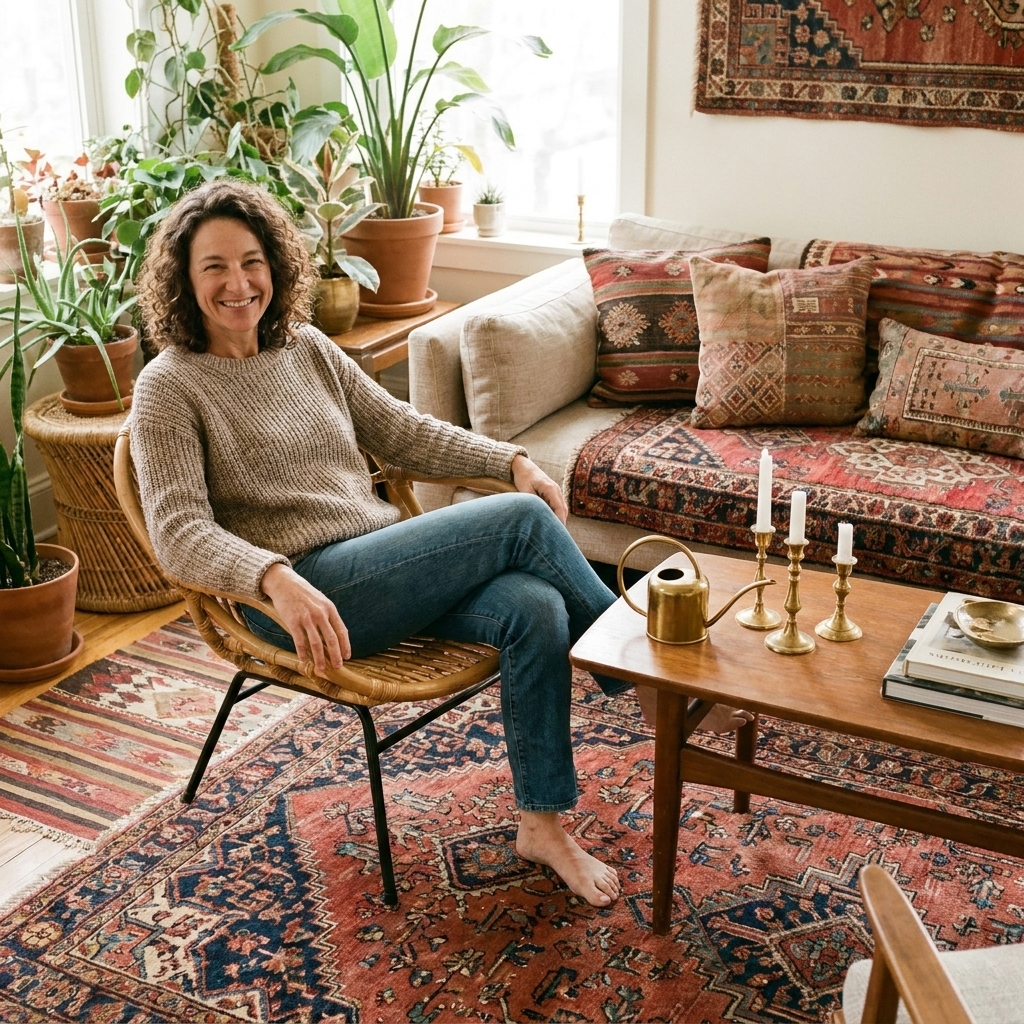

The first time I brought home a vintage Kantha quilt, I told myself it was “just for the couch.” Two days later it had been on the couch, then the end of my bed, then pinned up behind my dining table as a backdrop for a very dramatic thrifted mirror moment. If you love a home that looks collected, cozy, and a little bit global, Kantha is one of those magical textiles that can move around your space and make everything feel warmer.
Kantha quilts are also perfect for budget decorating because they are hardworking. A single piece can act like a throw, a wall tapestry, a table covering, or even a lightweight curtain panel. The key is learning how to spot a good one secondhand and how to use it without accidentally shredding older cotton with the wrong hardware.
What a Kantha quilt is
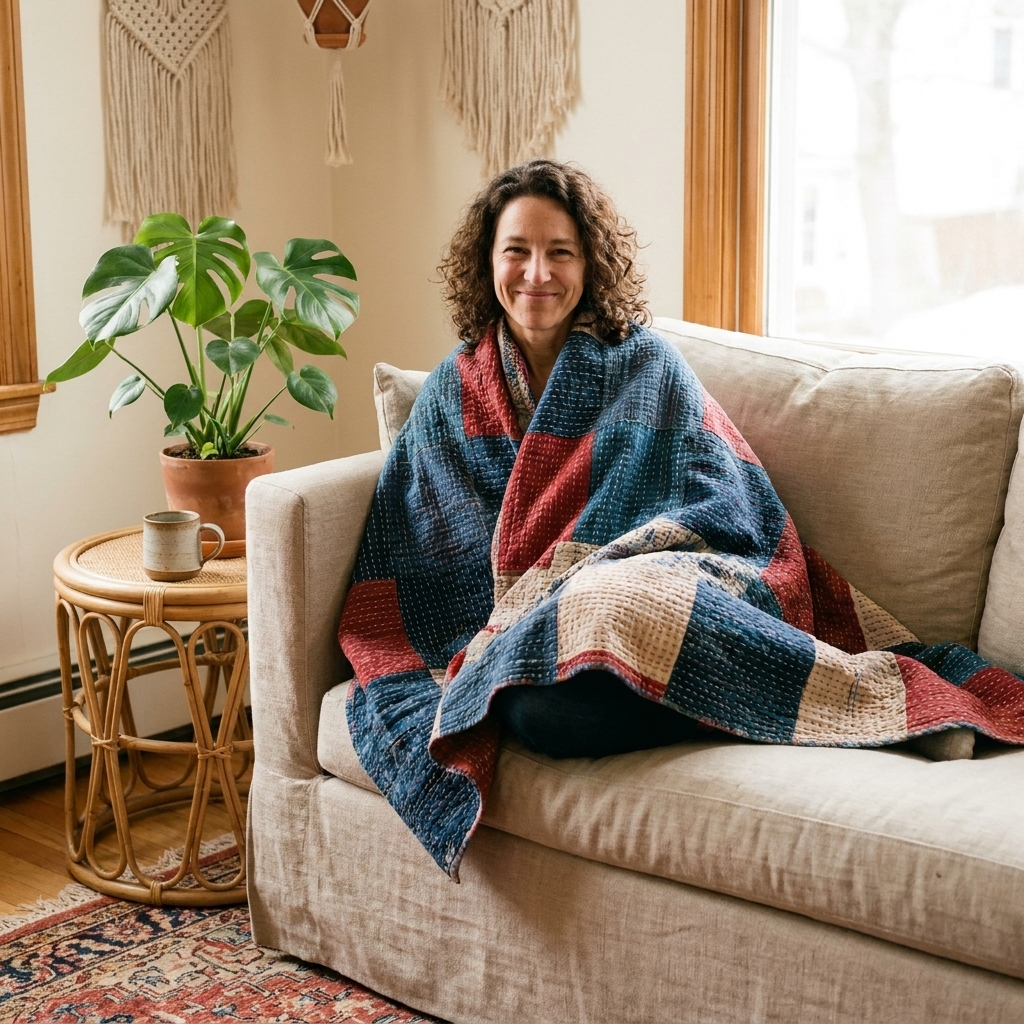
Kantha is a running-stitch tradition from South Asia, and in home decor it often refers to quilts and throws made by layering fabric and stitching it together. Many pieces you see in the vintage market come from India and Bangladesh, and many are made from repurposed sari or cotton cloth, though not all. Materials and construction can vary by maker and by era, and modern “Kantha style” throws can be newer fabric with decorative stitching.
Most of the ones I thrift are lightweight and drapey rather than puffy like a bed quilt. Think breathable layers with lots of movement. That drape is exactly what makes them so versatile for decorating.
Where to thrift Kantha
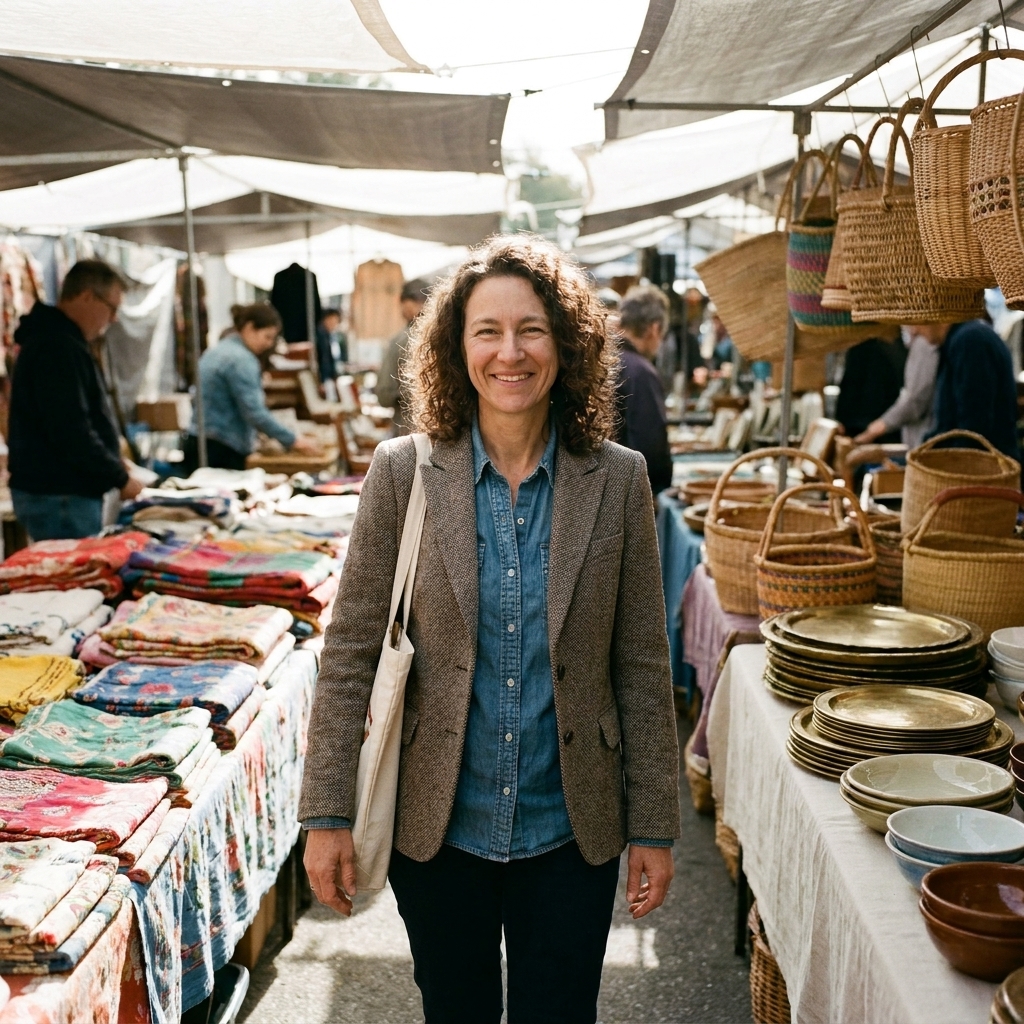
You can find Kantha in thrift stores occasionally, but the most reliable “secondhand” sources are estate sales, flea markets, and resale shops that get imported textiles. I treat it like vintage rugs. I prefer seeing it in person so I can inspect it by hand.
If you love the hunt, my best thrifting days usually involve a mix of stops. I’ll do one local thrift, then an estate sale, then a flea market loop where the textile sellers tend to set up.
More general thrifting strategy is over here: Budget Boho Thrifting, and if you want a deeper flea market game plan, I keep my go-to tactics in Flea Market and Estate Sale Secrets for Authentic Global Decor.
My favorite places to look
- Estate sales: Check linen closets, guest room blankets, and “misc textiles” piles. Sometimes quilts are bundled together.
- Flea markets: Look for vendors who sell vintage saris, block prints, or brass. Kantha often shows up in the same booth.
- Consignment and vintage home shops: Prices can be higher, but you can often find larger, nicer-condition pieces.
- Thrift store blanket racks: Rare, but worth a quick scan every time. I look for all-over hand stitching and that soft, slightly rumpled cotton.
What I personally skip
- Heavy stains that feel oily: Some stains never fully come out and can attract dust over time.
- Fabric that sounds “crispy”: That can signal damage, stiffness from old storage conditions, or a finish that will not drape nicely.
- Musty odor that punches you in the face: Light thrift smell is normal. Deep mildew smell is a bigger project.
- Loose layers separating everywhere: A little shifting is fine. But if the layers are separating across big sections, it’s better as a decorative drape than anything that gets tugged on daily.
How to spot a good one
When I’m standing in a thrift aisle holding a textile the size of a small octopus, I use a quick checklist so I do not talk myself into a “fixer” that will annoy me forever.
Quick inspection checklist
- Stitching: Look for rows of running stitches. Uneven is normal. Huge gaps plus lots of loose threads means it will snag easily.
- Fabric strength: Hold it up to light. If you see lots of thin, worn spots that look sheer, plan to use it as a wall hanging or decorative throw, not upholstery.
- Edges: Edges take the most abuse. Fraying is normal, but you want it to feel stable enough to handle.
- Repairs and patches: Patches can be a plus. They add story and usually mean someone cared for it.
- Size: Measure mentally. If you want curtains, you need length and width. If you want a tapestry, slightly oversized is your friend.
Vintage vs “Kantha style”
One quick reality check I use when shopping: some pieces are truly older, made from reused cloth with visible wear and repairs, and some are newer throws made to look vintage. Neither is automatically “bad,” but they behave differently. Newer pieces often have stronger fabric and more even stitching. Older ones have that softened-by-time texture, but they can be fragile in high-friction spots.
If you’re trying to build a home with authentic, story-filled textiles in general, you’ll probably also enjoy Authentic Mudcloth: Sourcing and Styling Global Textiles. The “inspect before you commit” mindset is the same.
Cleaning and deodorizing
Most Kantha quilts in the vintage market are cotton, but they are layered and stitched, and older dyes can be unpredictable. I treat them gently at first, then get more aggressive only if I need to.
My low-stress cleaning routine
- Shake it out outdoors and brush off dust.
- Spot test color with a damp white cloth on a bright area and a dark area.
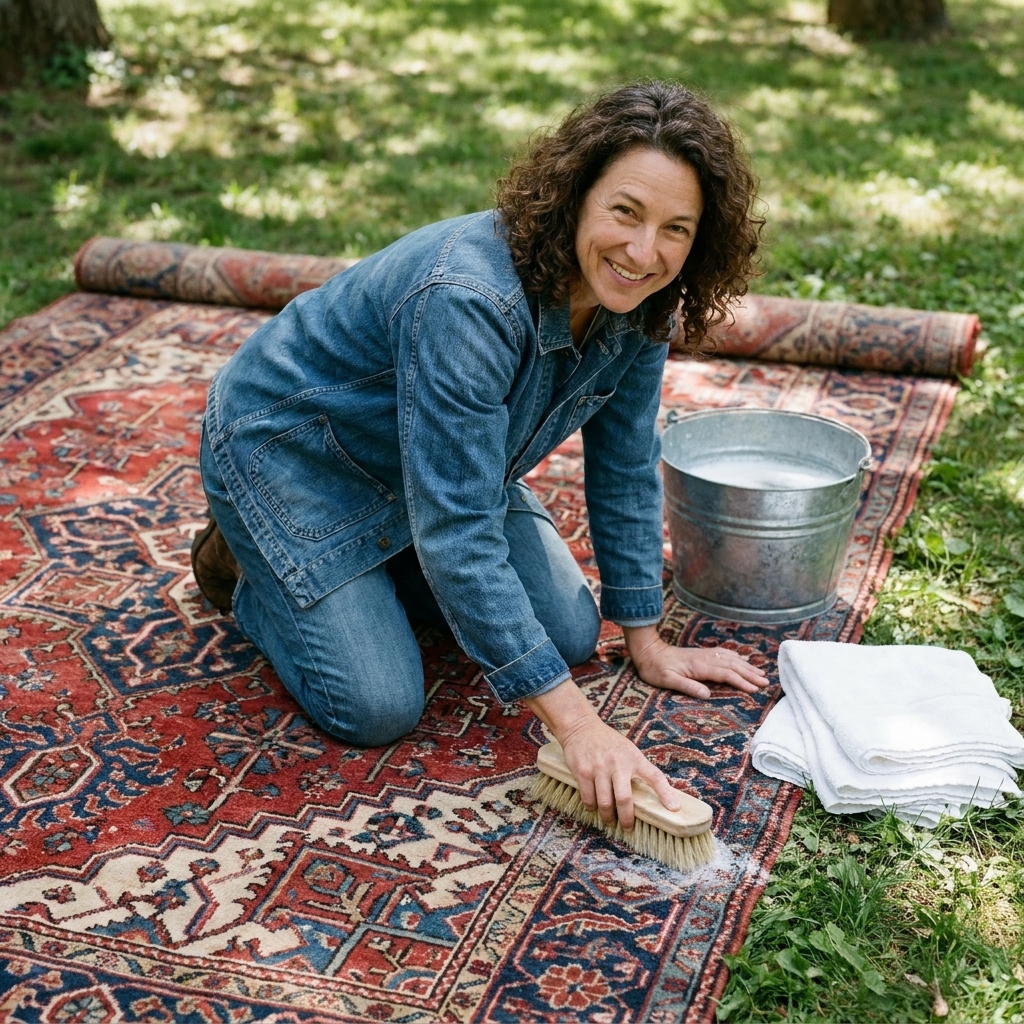
- When in doubt, hand wash first in cool water with a mild detergent, then press out water with towels. No wringing.
- If you do machine wash, wash it alone on a very gentle, short cycle in cold water. I avoid heavy agitation, and I will use a color-catcher sheet if the spot test looks even slightly suspicious.
- Air dry if you can. If you must use a dryer, do low heat and pull it out while slightly damp to finish drying flat.
For heavier thrift-store odor situations, the same general approach I use for old rugs can help (gentle deodorizing, lots of fresh air, patience). If you’re dealing with other secondhand textiles too, this is a useful companion read: Deep Clean and Deodorize Secondhand Vintage Rugs at Home.
Important: If your Kantha has lots of visible wear, delicate patches, or those thinning areas that look almost see-through, treat it like a fragile vintage garment. Hand wash, support the fabric fully when lifting it wet, and keep it in the “pretty, low-stress” category of use.
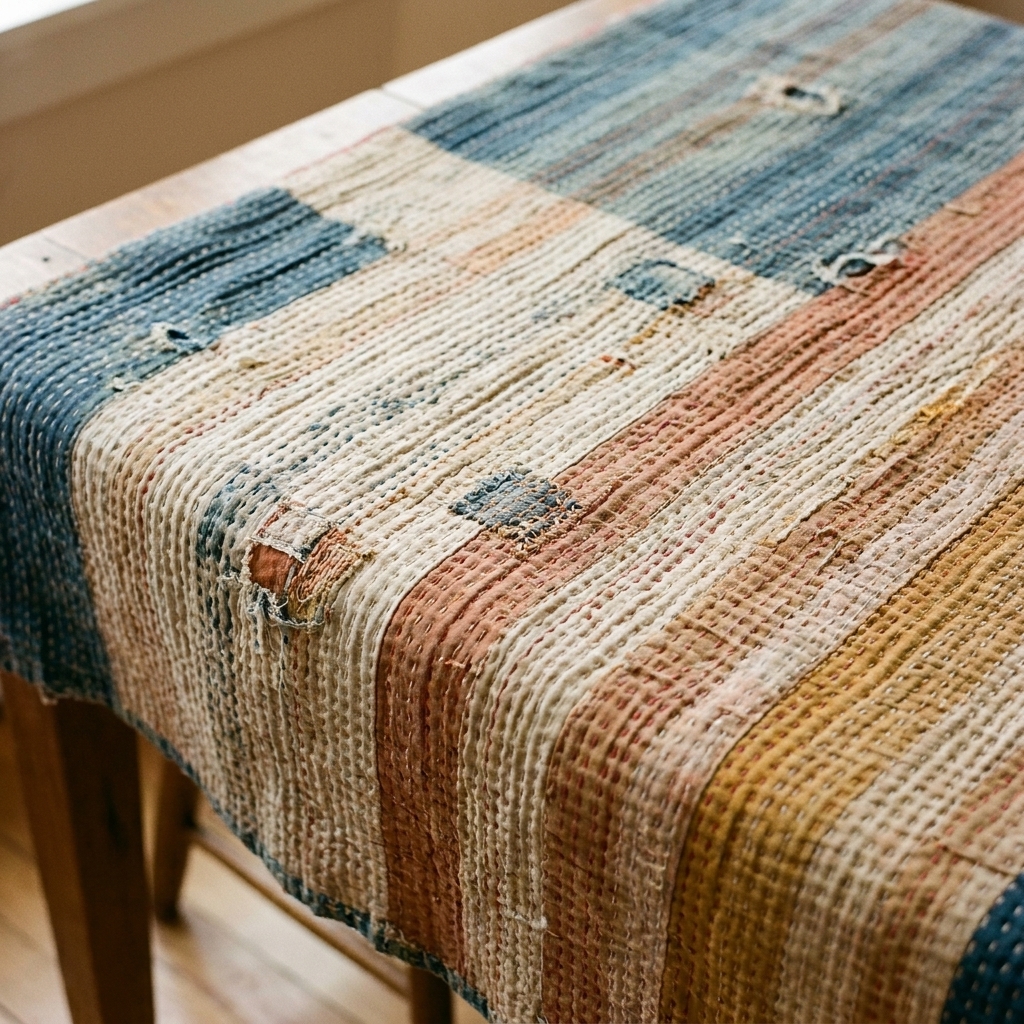
Decor uses that look intentional
The secret to decorating with Kantha is treating it like a real design element. That means repeating a color from it somewhere else in the room, giving it clean edges and clean lines where possible, and choosing placement that makes sense for wear and tear.
1) Wall tapestry with structure
A Kantha on the wall is instant warmth. I love it behind a bed, behind a sofa, or in a hallway where art feels too flat.
- Best method: a rod and a sleeve or header so the weight is spread out.
- Clip rings can work: but on fragile fabric, clips create point stress. If I use clips, I clamp them onto a sturdy folded hem or onto a separate strip of fabric that I hand tack to the top edge (easy to remove later).
- No-hole rental trick: use removable hooks rated for the weight of the rod, not just the quilt.
- Extra polish: steam lightly first so it hangs flatter.
If you like the idea of textiles acting as wall art, you’ll also like Decorating with Large-Scale Macrame Wall Hangings. Same soft sculpture energy, different texture.
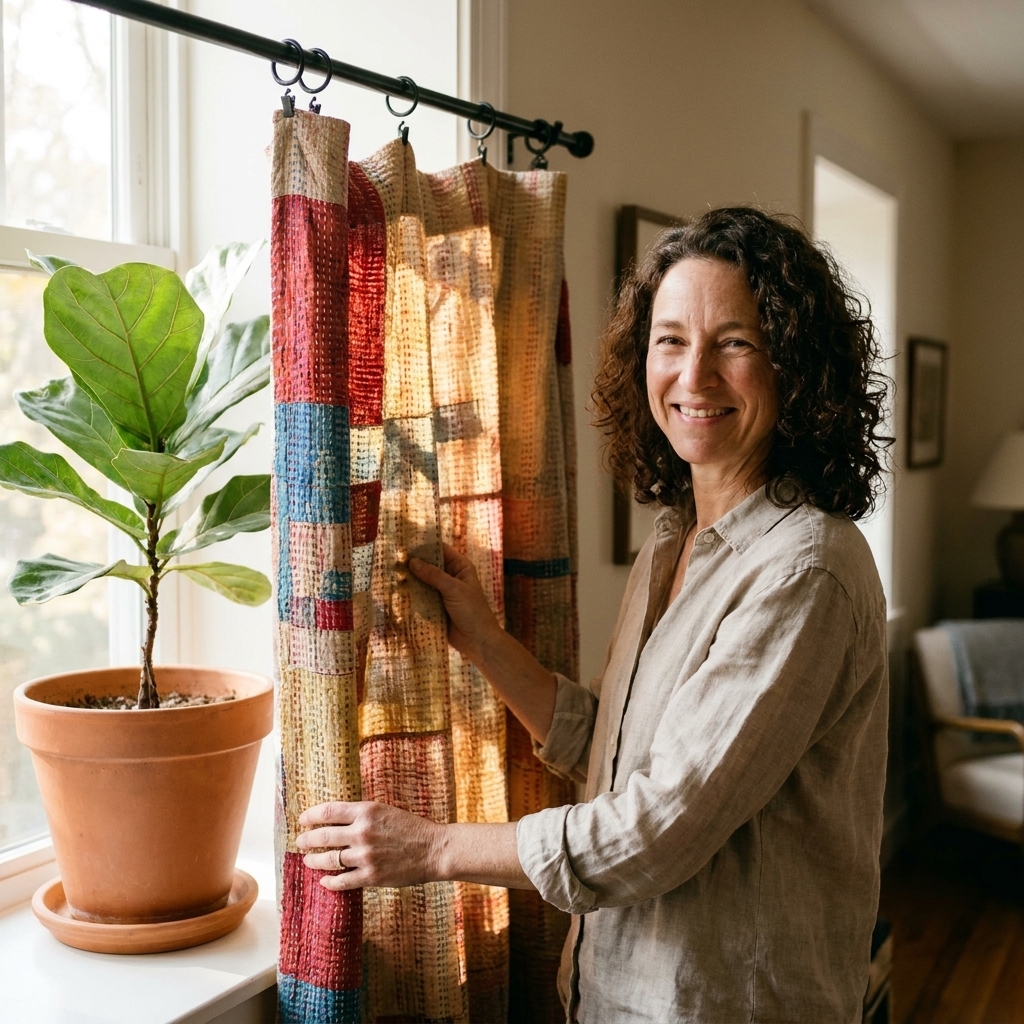
2) Curtain panels for a cozy glow
Kantha makes surprisingly beautiful curtains because it filters light in a warm, lived-in way. It’s especially good in bedrooms, reading nooks, and dining areas.
- Easiest approach: use clip rings and hang it like a panel.
- What to watch: sun fading. If the window gets strong direct light, I treat Kantha as an occasional layer, or I put a sheer behind it and rotate panels seasonally.
- Length fix without regret: instead of iron-on hem tape on vintage cloth, I usually clip it at the height I want, or do a loose hand stitch. If you do use hem tape, test on a hidden corner first, use low heat, and use a pressing cloth so you do not scorch or set adhesive into the fibers.
For more window layering ideas, I love pairing this with the strategies in Boho Window Treatments: Sheer Linen Curtains and Bamboo Blinds.
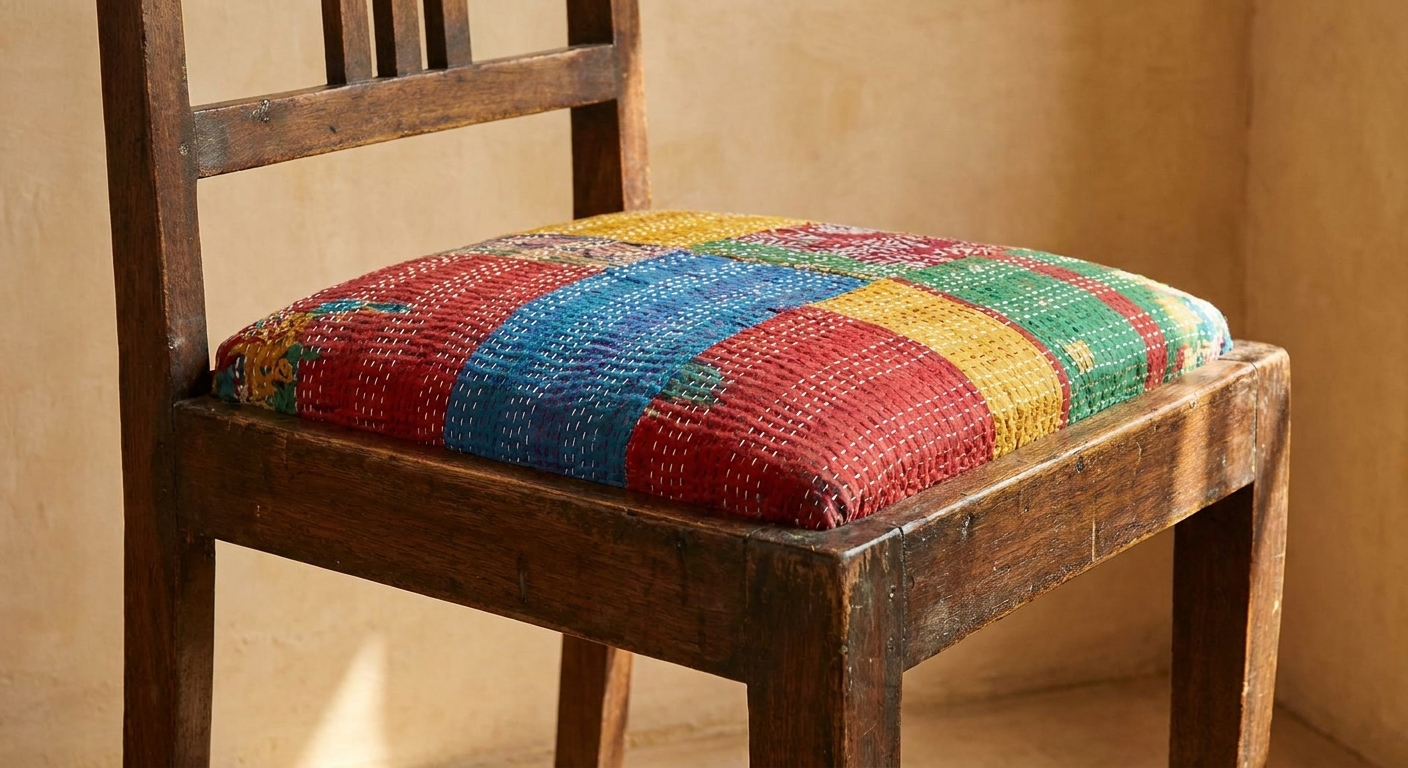
Kantha as easy upholstery
Yes, you can upholster with Kantha, but I recommend doing it in a way that respects the fabric’s age. I think of it as wrap upholstery first, and permanent upholstery second.
Wrap a dining chair seat
If you have thrifted dining chairs with removable seats, Kantha is a fun way to bring color in without buying pricey fabric.
- Unscrew the seat from the chair base.
- Remove the old fabric carefully and keep it as a pattern.
- Add fresh batting if needed.
- Place your Kantha so a strong section sits where you actually sit.
- Staple underneath, pulling evenly. Fold corners neatly like wrapping a present.
I go deeper into this type of project here: Budget Seat Reupholstery for Thrifted Dining Chairs. Even if you choose a different textile, the step-by-step method is the same.
For sofas: drape first
If your goal is “new vibe, zero commitment,” use Kantha like a throw and tuck it strategically. This is especially good for rentals and for anyone living with pets or kids.
- Drape across the back and seat, then tuck into creases with a wooden spoon handle.
- Use upholstery pins in hidden spots if needed.
- Layer a second neutral throw underneath if you want less slipping.
There’s a whole method to making this look polished: Budget Sofa Revival: Draping Throws Over Worn Upholstery.
More ways to use one
If you have one good quilt and you want maximum decorating mileage, these are my favorite move-it-around-the-house uses.
- Bed topper: Layer it over crisp cotton sheets for an instant lived-in look. For more bed layering ideas, see How to Style a Boho Bed.
- Table covering: Use it as a casual tablecloth for breakfast nooks or outdoor dinners. I love this look with imperfect ceramics and wood, like the styling in Eclectic Tablescapes with Block Print and Natural Wood.
- Bench or daybed cover: Drape and tuck for a tailored look without sewing.
- Floor cushion wrap: Wrap around an oversized cushion insert and hand stitch the back closed with big, visible stitches.
- Room divider softness: Hang one from a ceiling-mounted curtain track to break up a studio space. If you like ceiling textiles, you’ll enjoy Ceiling Draping 101: Hanging Sheer Fabrics for the mechanics.
Placement notes
- Skip damp spots: If a textile has ever had a mildew smell, I keep it away from moisture-prone rooms unless I am fully confident it is clean and dry.
- Be picky with sun: Direct sun will fade it, and faster than you think. I treat my favorite Kantha like art and give it breaks from bright windows.
Make it feel cohesive
Kantha can be bold. That’s part of the charm. The trick is giving it a few friends in the room so it looks chosen, not random.
My three-echo rule
Pull three small echoes from the quilt into the space:
- One color echo (a pillow, a book spine, a candle, a piece of art)
- One texture echo (rattan, wood, linen, leather, brass)
- One pattern echo (a smaller-scale print that does not compete)
If pattern mixing makes you nervous, I have you covered here: How to Mix Bold Patterns Without Clashing. Kantha plays really nicely with stripes, small geometrics, and simple block prints.
Best pairings
- Rattan and cane: airy, warm, and never too precious
- Vintage brass: adds a little glow and makes the colors feel richer
- Lots of plants: green is the ultimate neutral with colorful textiles
If you’re already deep in a rattan era, you might like How to Restore and Hydrate Thrifted Rattan and Wicker Furniture to keep those pieces looking fresh next to your textiles.
Common questions
Can I cut a vintage Kantha quilt?
You can, but I only do it if the piece is already damaged beyond display quality, or if I am saving the best sections. If you cut, finish the raw edges. Even a simple folded hem with a straight stitch can prevent a lot of unraveling.
Will it bleed color in the wash?
Sometimes, yes. Even cold water can pull dye from certain older fabrics. That’s why I spot test, wash alone, keep cycles short, and default to hand washing when I see any sign of instability.
How do I hang one without ruining it?
Distribute the weight across the top edge. A rod sleeve or a fabric header is the gentlest option. If you use clip rings, add a protective folded hem or a separate strip so the clips are not biting directly into a fragile edge.
What if it has holes?
Small holes can be charming, especially for wall use. For anything that gets friction, like seating, position the hole away from high-wear zones or patch it with a similar-weight cotton on the back.
The bottom line
A vintage Kantha quilt is one of the most flexible thrift finds you can bring home. It can act like art, like upholstery, like a curtain, like a throw, and it does not demand perfection. In fact, the tiny flaws and repairs are the whole point.
If you’re building a layered boho home on a budget, Kantha is one of those textiles that makes your space feel collected instead of decorated. And once you have one, you start seeing all the spots in your home that could use a little softness.